
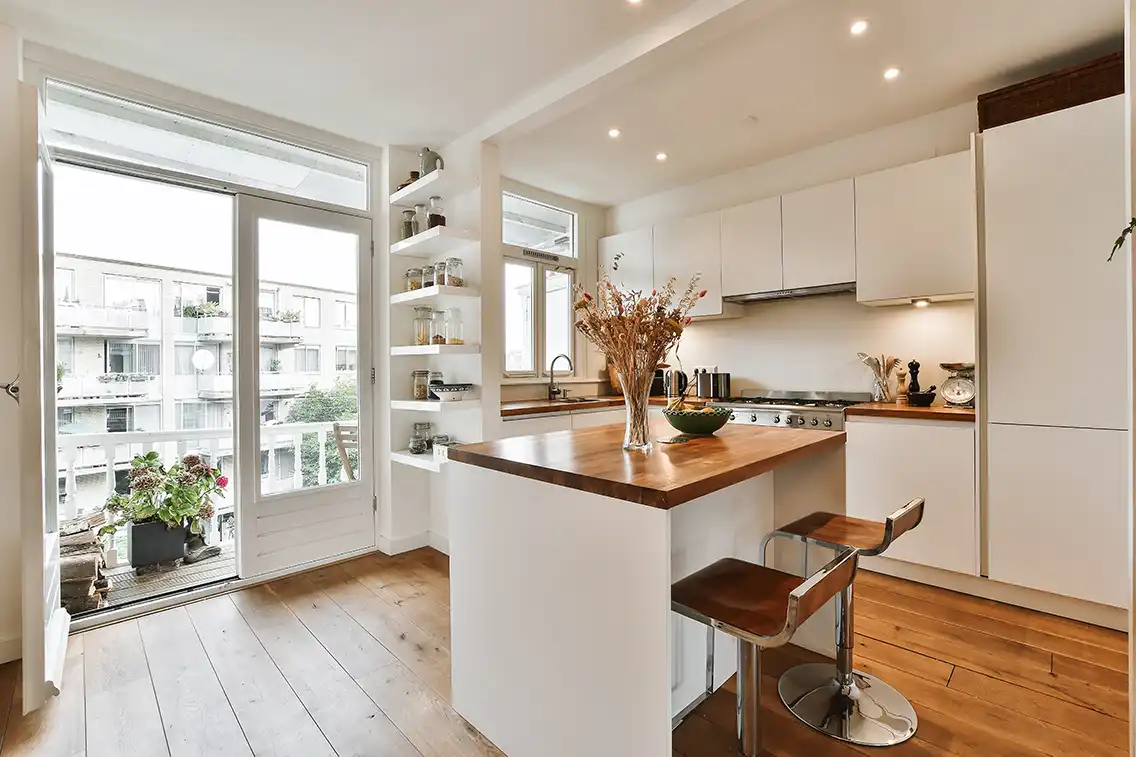
Gone are the days when the kitchen was a strictly utilitarian space hidden at the back of the house, accessible only to the cook or domestic help. In modern Bangladesh, particularly in urban hubs like Dhaka, Chittagong, and Sylhet, the kitchen has evolved into the heart of the home. It is no longer just a place to cook; it is where families reconnect after a long day in traffic, where guests gather during Eid parties, and where lifestyle meets functionality.
However, designing an open kitchen in the context of a Bangladeshi home comes with a unique set of challenges. Unlike Western kitchens, our culinary culture involves high-heat cooking, heavy spices, and “tarka” (tempering) that produces smoke and strong aromas. Furthermore, the humidity of our monsoon season requires specific material choices that can withstand moisture.
As a premier interior design firm in Bangladesh, DIT Studio understands these nuances. We believe that an open kitchen shouldn’t just look good in a 3D render; it must work practically for your daily life in Gulshan, Banani, Dhanmondi, or Uttara. This guide will walk you through everything you need to know to design the perfect open kitchen that balances modern aesthetics with traditional Bengali functionality.
1. Assess Your Lifestyle: Is an Open Kitchen Right for You?
Before you knock down walls, it is crucial to evaluate how your household functions. In the bustling urban landscape of Dhaka, space is a premium, and how you utilize it defines your comfort.
The Social Aspect
Do you enjoy hosting dinner parties? If you live in a flat where the dining and living spaces are compact, opening up the kitchen can visually double the size of your common area. It allows the host to chat with guests while finishing the biryani or plating the dessert, making the process of entertaining seamless.
Family Supervision and Safety
For young families, an open layout is often a safety requirement. It allows parents to keep an eye on children playing in the living room while preparing meals. However, safety is paramount.
- Childproofing: In an open setup, the kitchen is accessible. Ensure you install child-proof locks on cabinets containing cleaning supplies or sharp objects.
- Rounded Edges: We recommend rounded countertop edges (bullnose or bevel) to prevent injuries, especially in high-traffic zones.
- Flooring: Opt for anti-slip tiles. In Bangladesh, where oil spills and water are common in the kitchen, glossy tiles can be a hazard. Matte finish or rustic tiles are safer and hide smudges better.

Privacy vs. Openness
In traditional Bangladeshi culture, there is often a desire to keep dirty dishes or the “mess” of cooking hidden from guests. If this is a concern, consider a hybrid approach. A raised breakfast bar can hide the countertop clutter from the view of someone sitting on the living room sofa.
2. The Challenge of “Desi” Cooking: Ventilation is Key
This is the single most critical factor for kitchen interior design Bangladesh. Western design blogs often overlook the intensity of South Asian cooking. If you are frying fish or tempering spices with dried chilies, the aroma—while delicious—can become overpowering if it settles into your living room curtains and upholstery.
High-Performance Extraction
You cannot compromise on the range hood. For an open kitchen in Bangladesh, a standard chimney is often insufficient.
- Suction Power: Look for a chimney with a suction capacity of at least 1200–1400 m³/hr.
- Baffle Filters: These are best suited for Indian/Bangladeshi cooking as they effectively separate oil and spices from the smoke.
- Ducting: Ensure the exhaust is ducted out of the building properly. Recirculating hoods (which just filter air) are rarely effective for our style of cooking.
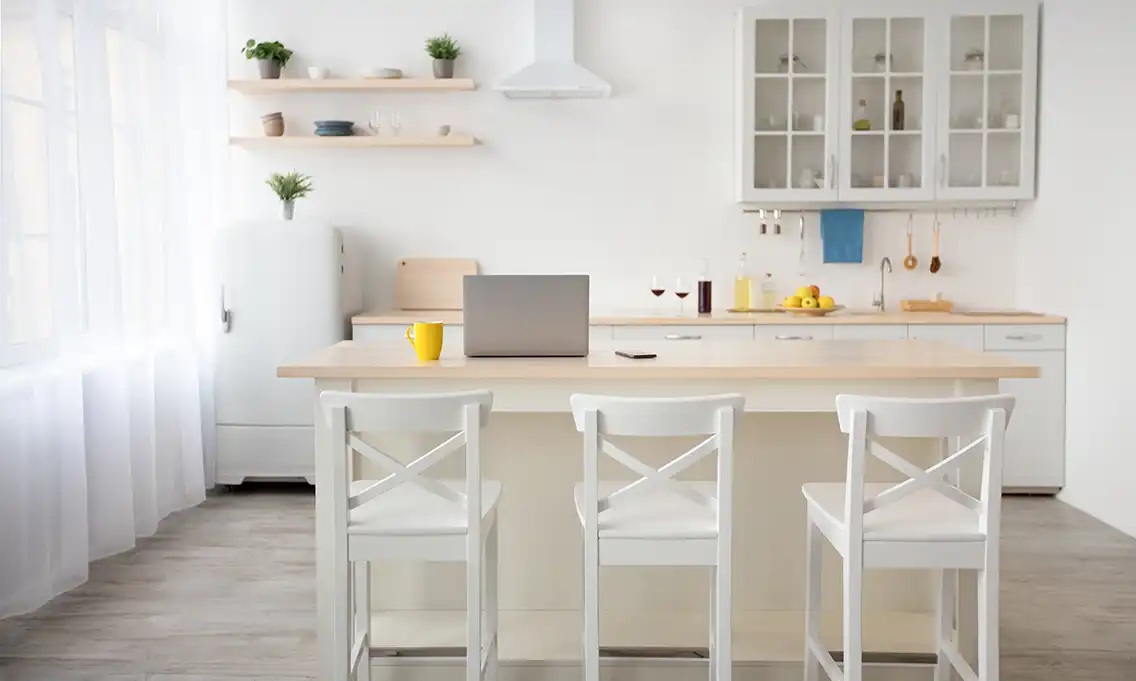
Cross Ventilation
In addition to mechanical ventilation, maximize natural airflow. If your kitchen window faces a prevalent wind direction (often south/south-east in Dhaka), keep it accessible. A high-quality exhaust fan acts as a secondary support system to the chimney.
3. Zoning and Layout Strategies
An open kitchen usually connects the dining and living rooms without a partition, but the layout depends entirely on your apartment’s structure.
The Golden Triangle
Regardless of the layout, the “Golden Triangle” rule applies. The distance between your stove, sink, and refrigerator should be unobstructed. In open layouts, ensure that foot traffic from the living room doesn’t cut through this triangle.
Connecting the Dining Area
If your kitchen connects directly to the dining space, consider integrating the two.
- The Peninsula: If you don’t have space for a standalone island, a peninsula (attached to the wall on one side) works perfectly as a serving counter or a buffet station during family gatherings.
- Visual Continuity: Use consistent design elements. If your living room has warm wooden accents, carry that timber tone into the kitchen cabinetry. This makes the transition seamless.
The Island Bar: Function over Form
In many luxury apartments in areas like Baridhara or Bashundhara, island bars are highly requested. However, an island requires significant clearance space (at least 3-4 feet on all sides).
- Multifunctionality: Use the island for prep work, as a breakfast counter for quick meals before school/office, or as a homework station for kids while you cook.
- Storage: The base of the island is prime real estate. Use it for deep drawers to store heavy pots (dekchi/patil) that are common in Bengali households.
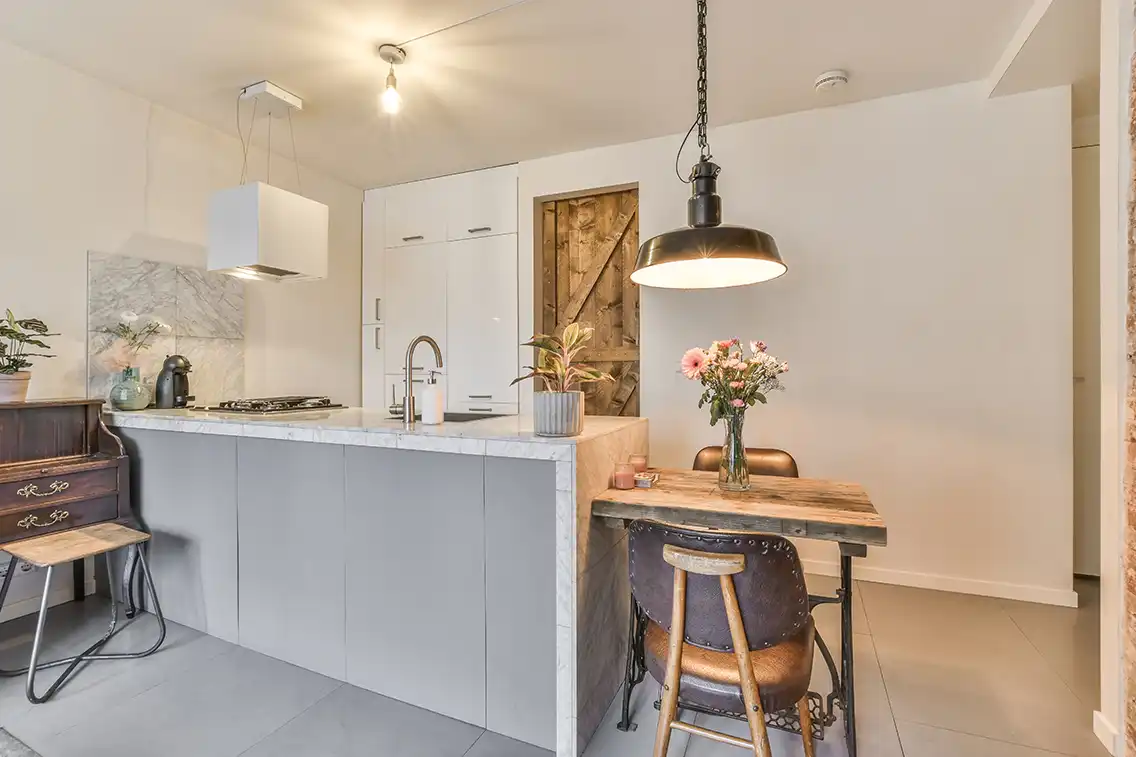
4. Material Selection for the Bangladesh Climate
Bangladesh has a hot, humid, and monsoon-heavy climate. Materials that work in Europe or North America often fail here due to moisture and termites.
Cabinetry: Combating Humidity and Termites
- Marine Plywood (BWP): For the “wet areas” (under the sink), Boiling Waterproof Plywood is non-negotiable to prevent rotting.
- HPL (High-Pressure Laminate): This is durable, scratch-resistant, and comes in various finishes.
- PVC Boards: For areas highly prone to termites, high-density PVC boards are a great waterproof and termite-proof solution, though they require expert installation to look premium.
- Acrylic: For a high-gloss, modern luxury look, acrylic allows for easy cleaning of oil splatters, though it shows fingerprints easily.
Countertops: Durability First
- Granite: Still the king of Bangladeshi kitchens. It is heat resistant, scratch-resistant, and can handle the heavy pounding of a mortar and pestle (sheel pata).
- Quartz: Offers a more uniform, modern look than granite and is non-porous (stain resistant), making it excellent for turmeric and oil spills.
- Avoid: Porous marbles or wooden countertops near the sink, as they will stain or rot in our humid environment.
5. Smart Storage Solutions for Local Needs
A Bangladeshi kitchen holds more items than a typical Western kitchen. We buy rice in bulk (25kg bags), have large containers for various lentils (dal), and possess an array of appliances like blenders, grinders, and rice cookers.
Vertical Storage
In compact Dhaka flats, floor space is limited. Utilize the height. Install cabinets all the way to the ceiling. The highest shelves can store items used infrequently, such as large serving platters for parties or extra dinner sets.
Specialized Drawers
- Thali Baskets: Wire baskets designed to hold plates vertically are essential.
- Spice Pull-outs: A narrow pull-out rack near the stove for keeping the essential spices (cumin, turmeric, chili powder) within arm’s reach.
- Grain Drawers: heavy-duty, deep drawers at the bottom capable of holding heavy weight for rice and flour storage.
6. Lighting: Setting the Mood
In an open kitchen, lighting serves two purposes: functionality and aesthetics. Since the kitchen is visible from the living area, the lighting must be layered.
- Task Lighting: Under-cabinet LED strips are essential for illuminating the countertop where you chop vegetables and prep food. This prevents shadows cast by overhead lights.
- Ambient Lighting: Recessed ceiling lights provide general illumination.
- Feature Lighting: Pendant lights over the island or breakfast bar act as a focal point, bridging the gap between “kitchen utility” and “living room decor.”
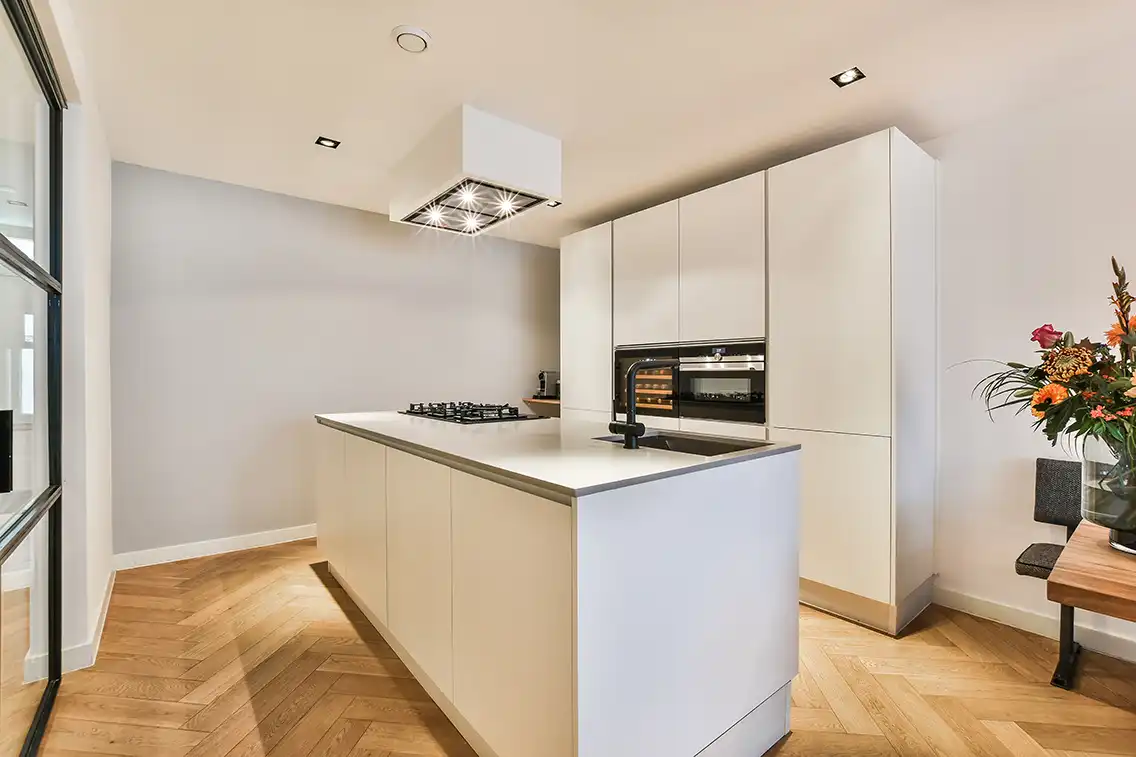
7. The “Semi-Open” Compromise: Glass Partitions
Sometimes, clients love the look of an open kitchen but are terrified of the smell or noise traveling to the living room. Or perhaps the building structure contains a column that cannot be moved.
The Solution: Glass Partitions.
Using sliding glass doors or a fixed glass wall maintains the visual connection—making the apartment look bigger—while physically containing the cooking fumes and noise of the blender.
- Clear Glass: For maximum openness.
- Fluted/Frosted Glass: For a bit of privacy, obscuring the view of a messy countertop while still letting light through.
- Black Aluminum Frames: Gives a sleek, industrial, modern touch that is very trendy in Dhaka’s interior scene right now.
8. Common Mistakes to Avoid in Bangladesh
- Ignoring the “Wet” Kitchen Concept: If space permits (like in large penthouses), consider a small, enclosed “dirty kitchen” for heavy frying and dishwashing, keeping the open kitchen strictly for light prep and serving.
- Wrong Flooring Transition: Ensure the transition between the living room (often tiles or wood) and the kitchen (tiles) is flush to prevent tripping hazards.
- Overlooking Power Outlets: Modern kitchens have microwaves, ovens, mixers, toasters, and water filters. Plan your electrical layout early to avoid visible extension cords.
9. Why Professional Design Matters
Designing an open kitchen is not just about picking pretty tiles; it is about structural engineering, ergonomic planning, and understanding MEP (Mechanical, Electrical, Plumbing) systems. A DIY approach often leads to plumbing disasters or ventilation failures that are costly to fix later.
At DIT Studio, we specialize in home interior design Bangladesh homeowners trust. We navigate the complexities of local building codes, source the best materials from trusted local vendors, and manage the entire renovation process to ensure your home is both beautiful and built to last.
Conclusion
An open kitchen can revolutionize the way you live, bringing light, air, and conversation into the heart of your home. Whether you are renovating an old apartment in Old Dhaka or designing a new flat in Bashundhara, the key lies in balancing the open aesthetic with the practical demands of Bangladeshi life.
Ready to transform your space? DIT Studio is here to bring your vision to life with professional interior design services in Bangladesh. Let’s create a kitchen that you will love for years to come.