
“Design is a plan for arranging elements in such a way as best to accomplish a particular purpose.” – Charles Eames.
In the bustling urban landscape of Bangladesh—particularly in densely populated hubs like Dhaka, Chittagong, and Sylhet—this quote holds profound significance. For the average homeowner in Gulshan or the flat owner in Mirpur, interior design is far beyond mere aesthetic appeal. It is a strategic necessity.
With real estate prices soaring per square foot in areas like Banani and Dhanmondi, the luxury of sprawling space is becoming a rarity. Modern flats are becoming more compact, challenging homeowners to fit their lives into tighter footprints. This is where the art of space maximization comes into play. It aims to make a residence not just visually pleasing, but manageable, organized, and deeply functional.
At DIT Studio, we believe that a well-designed home shouldn’t feel like a compromise. Before delving into the specific benefits, it is crucial to understand what space management truly entails in the context of Bangladeshi architecture.
Understanding Space Management in the Local Context
Space management, or space maximization, is the convergence of art and engineering to utilize every square inch of a property to its fullest potential. Its primary purpose is to manipulate the layout and decor of rooms to make even the smallest 1,000-square-foot flat feel like a spacious 1,500-square-foot sanctuary.
In Bangladesh, where families often live together in multi-generational settings, space management also considers the “traffic” within a home—how people move from the drawing room to the dining area, and how privacy is maintained. It requires technical knowledge regarding structural beams, natural light sources, and ventilation—factors that professional interior designers handle with expertise.
Let’s explore the multifaceted benefits of professional space maximization and how it transforms homes across Bangladesh.
1. Aesthetics: The Visual Expansion of Space
Space management is not solely about the physical arrangement of furniture; it heavily relies on visual perception. A visually stunning and tidy environment appears spacious, regardless of its actual square footage. In the context of home interior design in Bangladesh, aesthetics play a pivotal role in combating the “closed-in” feeling often associated with city apartments.
The Power of Color and Light
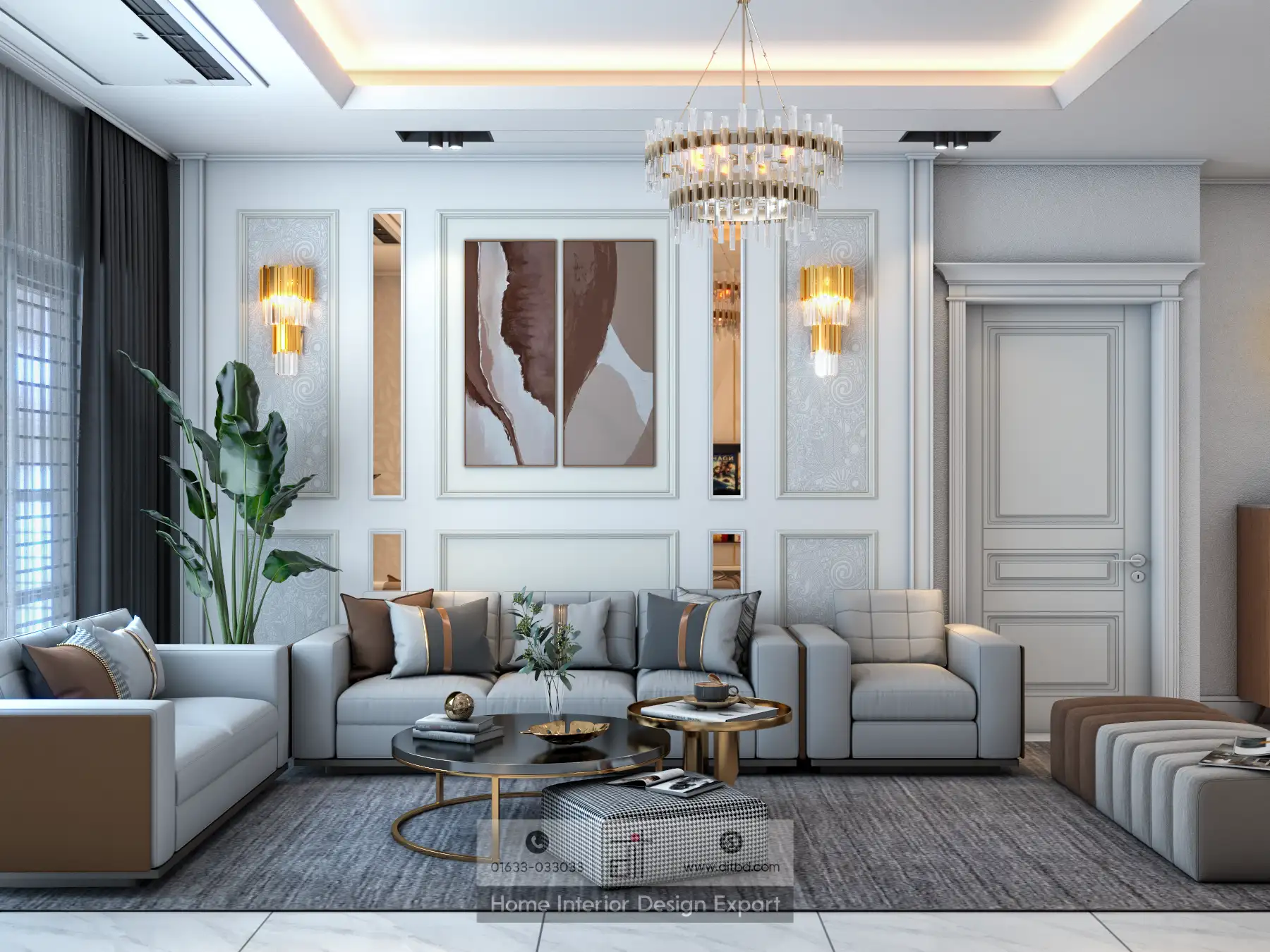
In a country with a tropical climate, lighting and color are essential. A small bedroom in a darker, lower-floor apartment can be transformed by using light, neutral palettes—shades of off-white, cream, or soft pastels common in modern Bangladeshi decor. These colors reflect light, making walls seem to recede.
- Mirrors: Strategic placement of mirrors in narrow corridors or dining areas can double the visual depth of a room.
- Proportion: Avoiding heavy, ornate furniture in small rooms. While traditional Bangladeshi teak furniture is beautiful, oversized pieces can choke a small room. Sleek, contemporary designs often work better for space optimization.
If you use overly bold colors on every wall or clutter the space with countless decorative items—a common mistake in DIY decoration—the space will look dull and oppressive. Too many elements can dampen the mood, which is the antithesis of what effective space management achieves.
2. Comfort and Climate Control
Without comfort, a residence cannot be called a home. Interior professionals maximize space specifically to enhance livability, considering factors such as ergonomics, temperature, and acoustics, which are vital in our noisy, humid environment.
Ventilation and Airflow
In cities like Dhaka, humidity is a constant challenge. Space planning involves arranging furniture to ensure that windows and balcony doors are not obstructed, allowing the southern breeze ( দখিনা বাতাস ) to flow through the home.
- Home Office: In a work-from-home setup, comfort might involve an ergonomic chair and positioning the desk to avoid glare from the harsh midday sun while ensuring the AC airflow reaches the user efficiently.
- Bedroom: Arranging the bed away from the direct path of the door for privacy, while ensuring the wardrobe placement doesn’t block the ceiling fan’s circulation radius.
3. Flow of Movement: The “Drawing-Dining” Dynamic
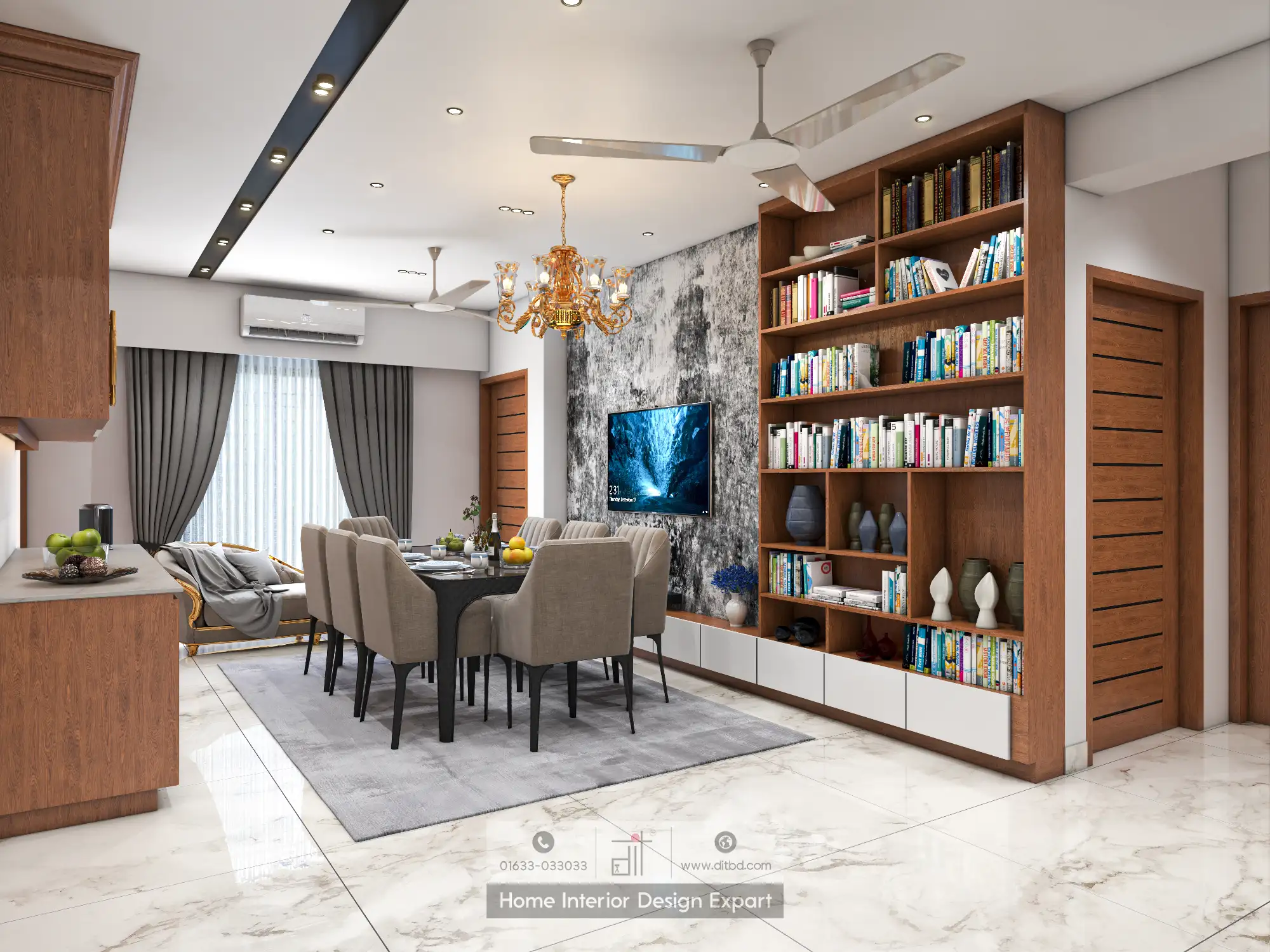
The flow of movement is a critical consideration in space management. A well-designed space allows for easy, intuitive movement without bumping into furniture. In Bangladeshi culture, the connection between the “Drawing Room” (formal living) and “Dining Space” is often seamless but needs distinct zoning.
Navigating Social Spaces
We love to entertain guests. A well-planned layout ensures that when guests arrive, there is a clear pathway to the seating area without encroaching on the private zones of the house.
- Retail Analogy: Just as a retail store in Jamuna Future Park arranges displays to guide customers, a home helps move inhabitants logically.
- Residential Application: This involves understanding scale. Interior experts explore the placement of sofas, center tables, and dining sets relative to the scale of the room to avoid a cluttered feel. A 6-seater dining table in a room meant for a 4-seater creates bottlenecks; a professional designer would suggest an extendable table instead.
4. Optimization of Space: Vertical Solutions
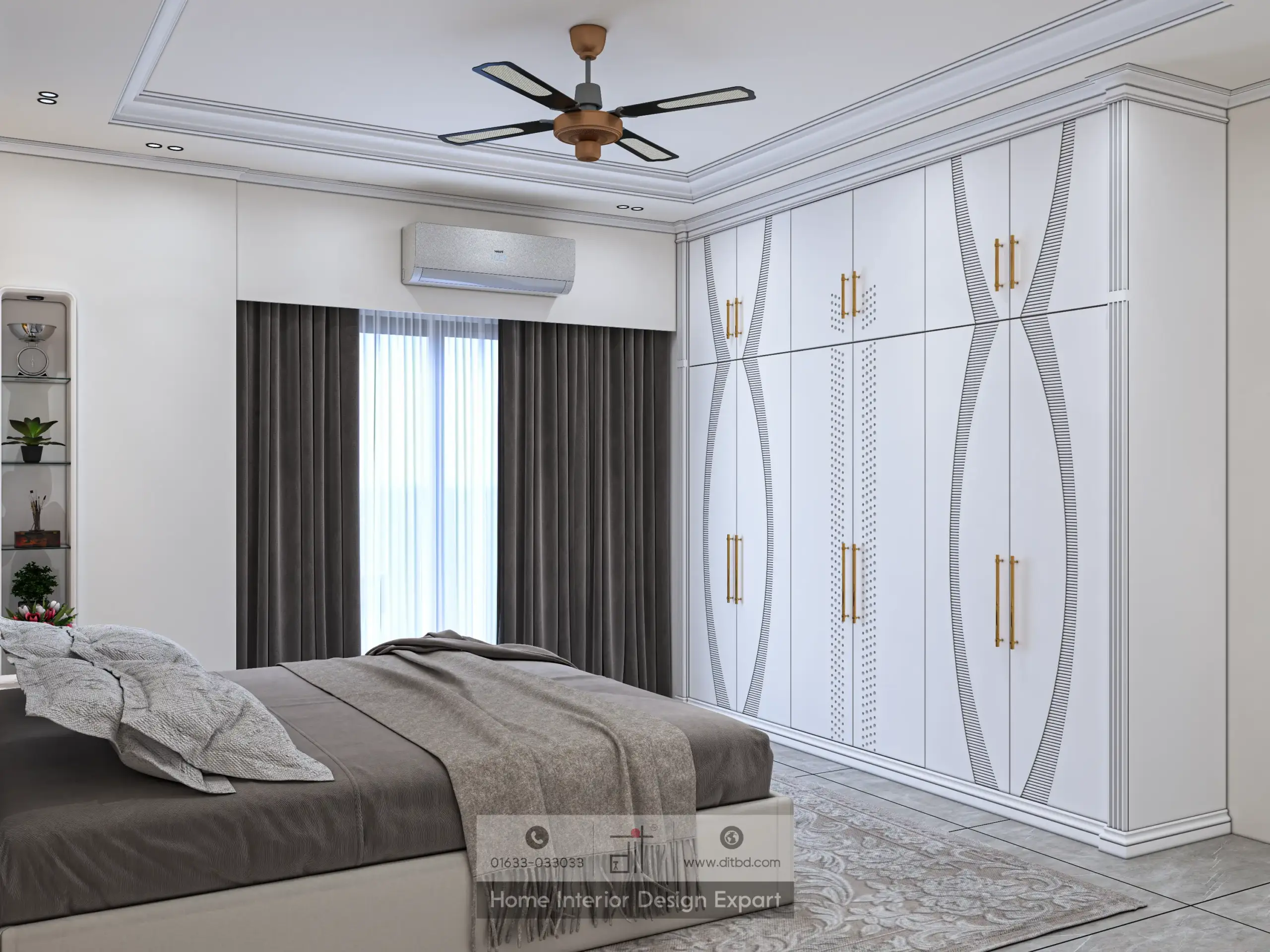
Optimizing space is particularly important in small or compact areas, such as flats in highly dense areas like Moghbazar or Mohammadpur. This involves creative solutions that utilize the often-ignored asset: height.
The Kitchen Challenge
The kitchen is often the busiest room in a Bangladeshi home. Transforming a compact cooking area into a modular kitchen is the ultimate space optimizer.
- Vertical Storage: Utilizing wall-mounted cabinets that reach all the way to the ceiling (lofts) allows for the storage of large cooking vessels (dekchi/patil) that are used infrequently.
- Open Shelves: Mixing closed cabinets with open shelves prevents the kitchen from feeling boxy while keeping spices and essentials handy.
Bedroom Innovations
In a small bedroom, standard furniture can consume all available floor space.
- Multifunctional Furniture: Beds with hydraulic storage underneath are perfect for storing winter blankets (lep/toosh) and seasonal clothing.
- Integrated Design: Floor-to-ceiling closets utilize vertical space for maximum storage, keeping the floor clear for prayer mats or movement.
5. Improving Empathy: Universal Design for Multi-Generational Living
Good interior designers understand the philosophy of Universal Design—creating spaces accessible to everyone. In Bangladesh, it is common for parents or grandparents to live with their children. A home design must cater to the agility of a teenager and the mobility constraints of a senior citizen simultaneously.
Accessibility Matters
Homeowners often overlook accessibility until a need arises. However, interior experts maximize space with empathy in mind.
- Clear Pathways: Space management ensures layouts are not complicated. There must be enough space for a walker or wheelchair to navigate through the hallway or into the bathroom.
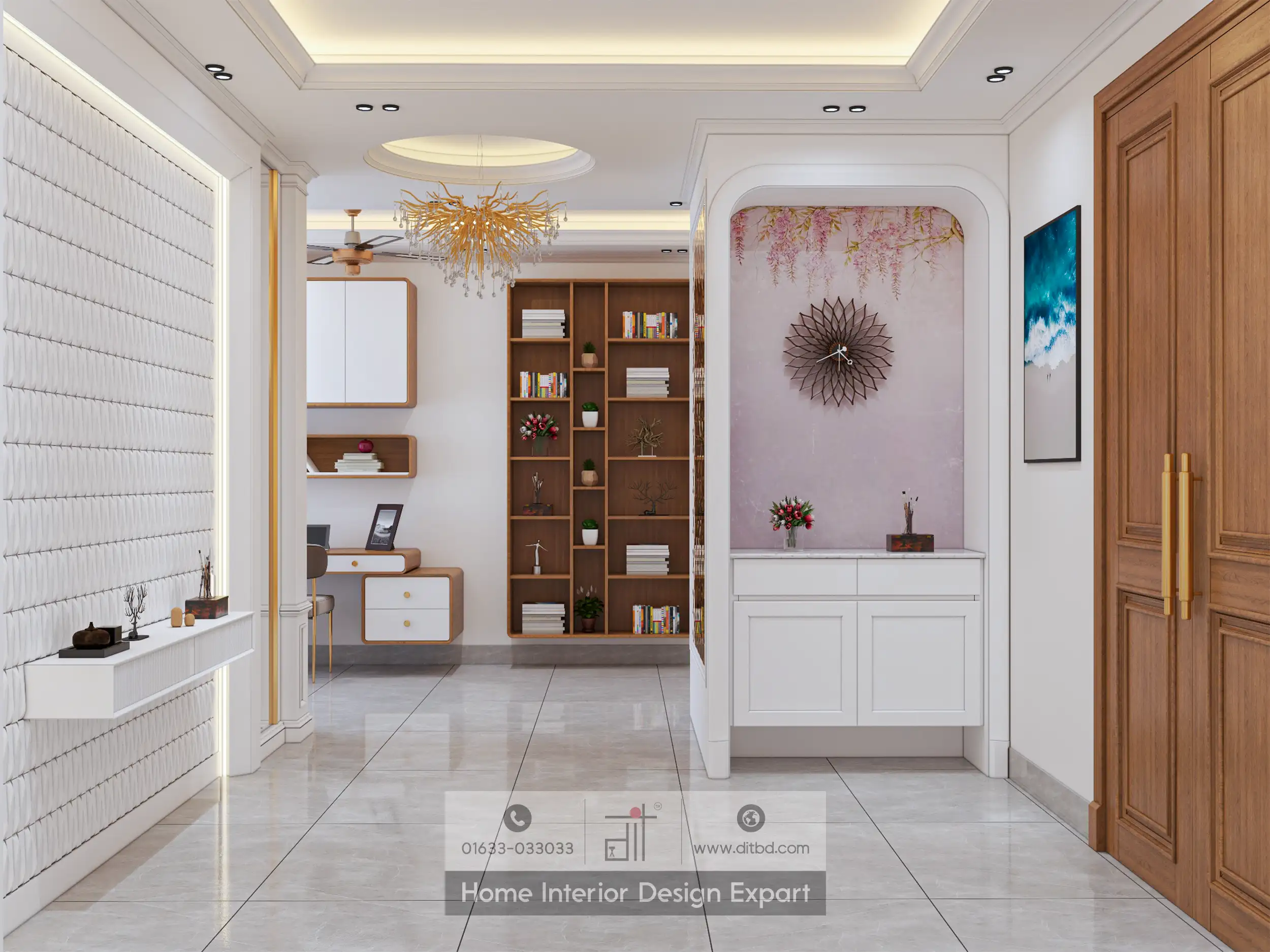
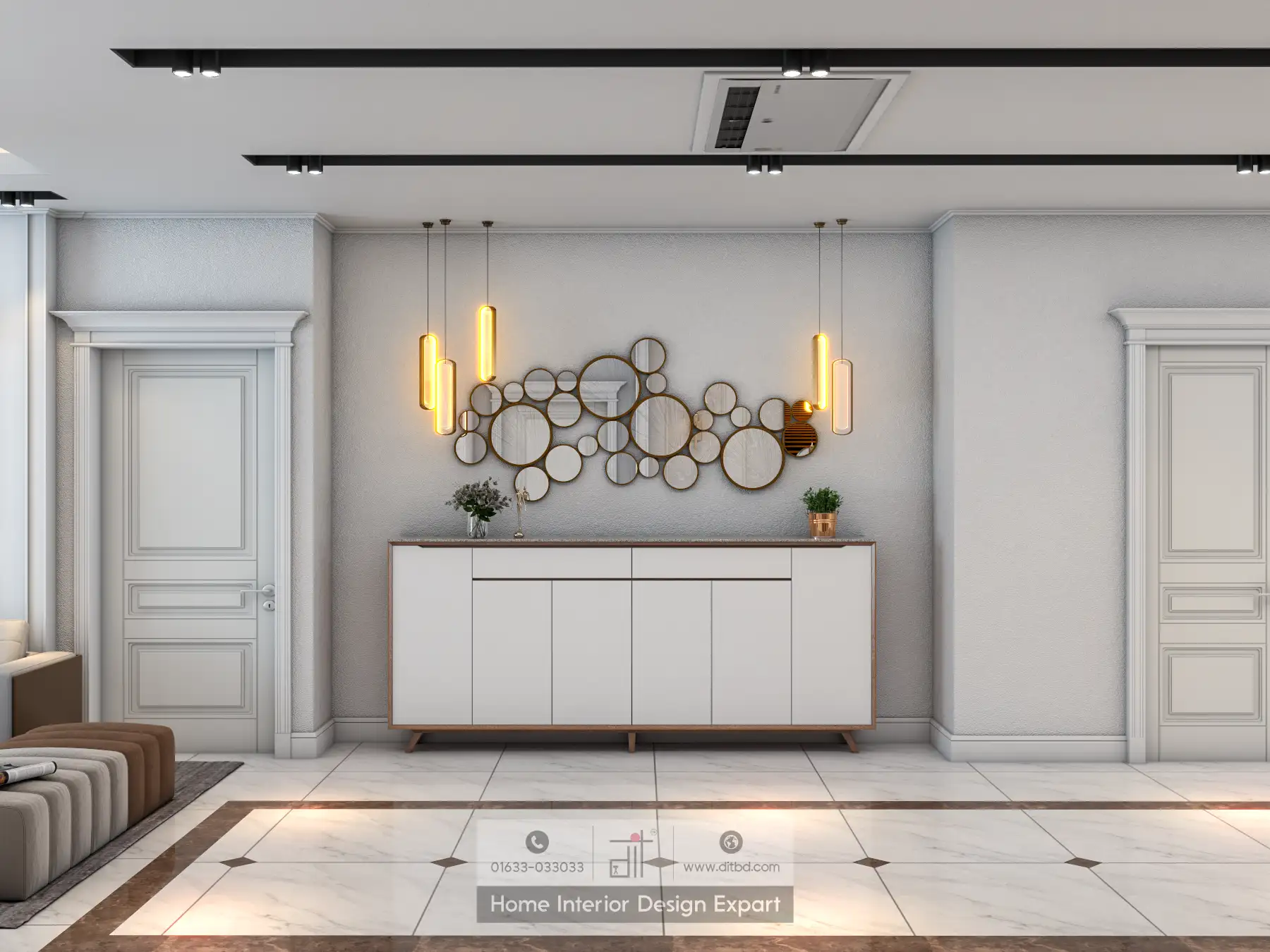
- Entrance: The foyer or entrance should be clutter-free. Shoe cabinets should be sleek and tucked away to prevent tripping hazards.
Space maximization is not just about fitting things in; it is about inclusion. It ensures that senior citizens are not confined to a single room due to poor layout but can roam freely and safely.
6. Modular Design: Flexibility for the Future
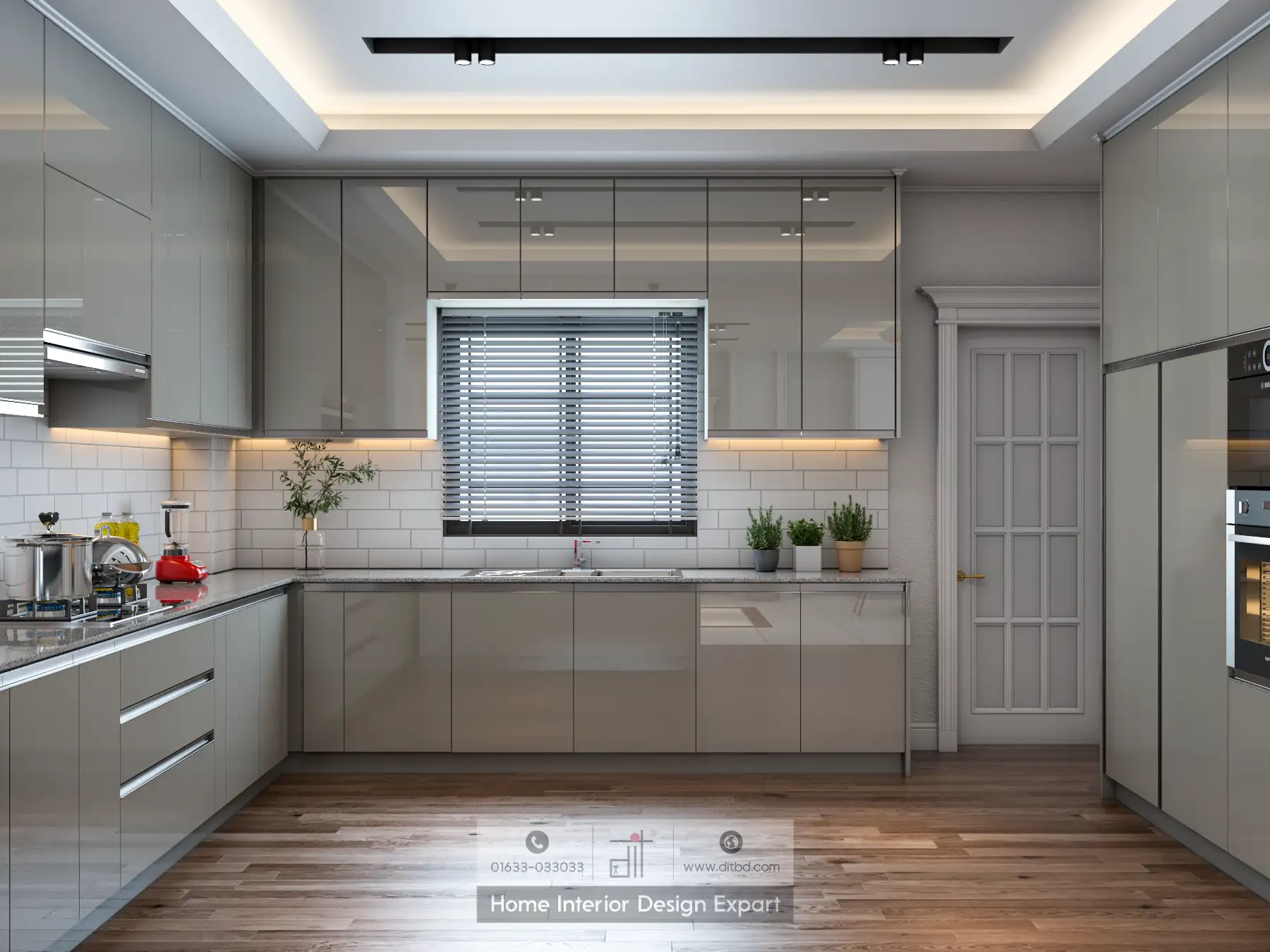
Modular design involves using standardized units to create flexible spaces. This approach is gaining immense popularity in interior design Bangladesh trends because it allows for easy reconfiguration.
Adaptability
- Furniture: Modular sofas can be rearranged. For a large family gathering (Daawat), the sectional can be broken apart to provide more individual seating.
- Storage: Modular wardrobes and kitchen units can often be disassembled and moved if you decide to shift to a new flat—a practical consideration for renters in Dhaka.
7. Safety Considerations in High-Density Living
A well-designed space must be safe. In the context of Dhaka’s high-rise building culture, safety is paramount.
Fire and Electrical Safety
- Exits: Space management involves arranging furniture to ensure that doors to the stairwell or fire exit are never blocked.
- Cord Management: With the number of appliances increasing (air purifiers, IPS units, stabilizers), managing electrical cords is vital to prevent tripping and electrical fires. Professional designers plan layouts that hide these cords safely while keeping them accessible for maintenance.
- Kitchen Safety: Ensuring the gas burner is positioned away from curtains and that there is adequate ventilation for gas leaks is a critical part of the design layout.
8. Sustainability and Local Materials
Sustainability is becoming an increasingly important consideration in space management. This involves designing spaces that are environmentally friendly and energy-efficient—crucial for reducing electricity bills during the peak summer months.
Natural Light and Air
Space management prioritizes natural light. By using sheer curtains and placing mirrors opposite windows, you can reduce the need for artificial lights during the day.
Local Materials
Incorporating local materials not only supports the economy but also suits the climate.
- Jute and Cane: Using jute rugs or cane furniture adds texture without adding visual weight.
- Terracotta: Using terracotta tiles in balconies or accent walls keeps the space cool and adds a touch of traditional Bengali heritage.
9. Cultural Nuances: Designing for the Bangladeshi Lifestyle
Generic design advice often fails because it doesn’t account for culture. A trusted interior design company in Bangladesh knows that a home here functions differently than a home in Europe or America.
- The Shoe Zone: In our culture, we do not wear shoes inside the house. A designated, well-ventilated space for shoes at the entrance is mandatory to avoid clutter and odors.
- Prayer Space: Almost every Bangladeshi home requires a clean, quiet space for prayer. Space maximization involves carving out a peaceful corner, determining the Qibla direction, and ensuring it remains undisturbed by high-traffic areas.
- Heavy Cooking: Our cuisine involves turmeric and oil fumes. An open kitchen might look modern, but without a high-powered chimney and proper partitioning (like glass sliders), the smell will permeate the upholstery. Designers here know how to balance the “open look” with practical containment.
10. The Role of Professional Renovation
Many homeowners attempt to manage space themselves or rely solely on contractors (raj mistri). While contractors are skilled at execution, they often lack the vision for space planning. They might build a cabinet where you tell them, without analyzing if it blocks the flow of light.
Professional designers use 3D visualization to show you exactly how the space will function before a single brick is laid. They provide “Turnkey Solutions”—handling everything from the initial layout to the final installation of lights. This saves you from the chaos of managing carpenters, painters, and electricians separately.
Cost vs. Value
While there is a cost associated with hiring an interior design firm, the value lies in avoiding costly mistakes. Buying furniture that doesn’t fit, blocking ventilation that leads to mold, or poor lighting that causes eye strain are expensive errors to fix later. A professional design works within your budget—whether it’s a luxury project in Baridhara or a budget-friendly renovation in Uttara—to give you the best possible living standard.
Conclusion
Interior design is ultimately about enhancing the quality of life for the inhabitants. It is about transforming a “flat” into a “home” that welcomes you after a long day in Dhaka traffic. To improve the standard of life at home, there is no alternative to intelligent space management.
Whether you are looking to renovate an old apartment or design a new one from scratch, maximizing your space is the key to a stress-free, harmonious life. It requires a balance of aesthetics, functionality, empathy, and technical skill.Ready to transform your space? At DIT Studio, we specialize in crafting interiors that blend modern functionality with local cultural needs.