
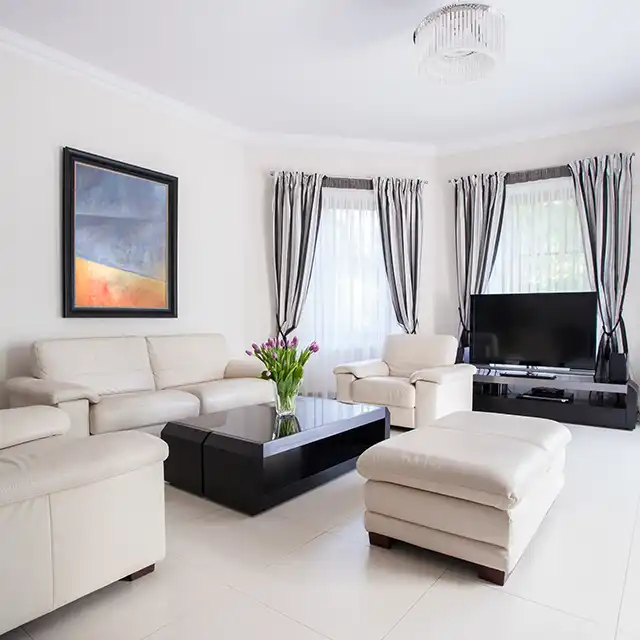
In the bustling urban landscape of Dhaka, from the busy streets of Motijheel to the residential avenues of Bashundhara, your home is your sanctuary. The moment you step through your door, the chaos of the city should fade away, replaced by a sense of calm and belonging. The living room—often referred to locally as the “drawing room” or “family living”—is the heart of this experience.
However, designing a living room in Bangladesh comes with unique challenges. Whether you are dealing with the compact square footage of a flat in Mirpur or the expansive open layouts of a luxury apartment in Gulshan, the goal remains the same: balancing comfort with style. It is not just about aesthetics; it is about creating a space that serves your family’s specific needs while withstanding the local climate.
At DIT Studio, we believe that functionality creates the foundation for beauty. Here is our comprehensive guide to designing a living room that is as practical as it is stunning.
1. Understanding Your Lifestyle: The Bangladeshi Context
Before buying a single piece of furniture or selecting a paint color, you must analyze how you live. In Bangladesh, our lifestyle often revolves around community and family, which significantly dictates space planning.
The “Adda” Culture vs. Formal Hosting
Ask yourself: How do you use this room?
- The Formal Drawing Room: In many traditional Bangladeshi homes, there is a clear separation between the formal guest area and the family living space. If this is your setup, the formal room needs to be pristine, impressive, and ready for guests at a moment’s notice.
- The Family Lounge: If you are in a modern flat where spaces blend, your living room might double as a TV room, a play area for children, or a spot for evening tea and “adda” with friends.
Multi-Generational Living
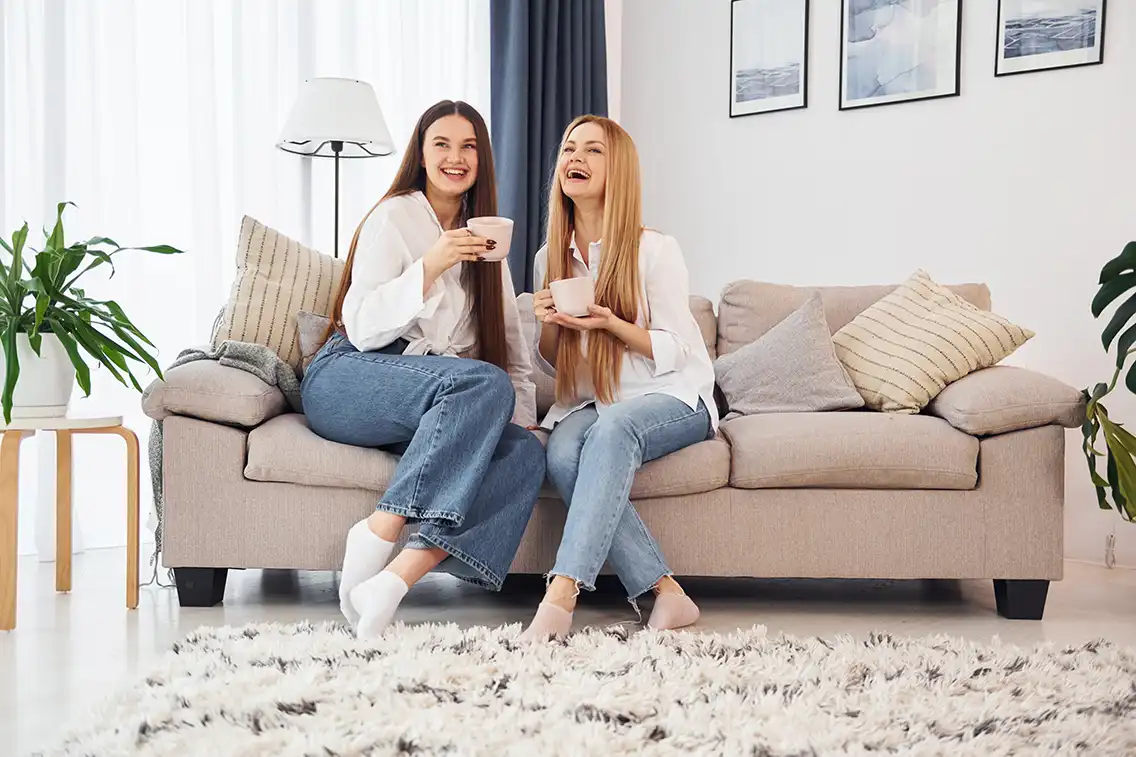
Many of our clients in Dhanmondi and Uttara live in joint families. This requires a design that accommodates elderly parents (who need firm, high seating) and toddlers (who need soft edges and safe play zones) simultaneously. Understanding the flow of traffic—how people move from the entrance to the seating area to the dining space—is crucial to avoid congestion.
2. Strategic Space Planning and Layout
One of the biggest issues in Dhaka apartments is the presence of structural columns and beams that can disrupt a layout. Professional interior decoration involves working with these elements, not against them.
Defining Zones in Open Plans
Modern architectural trends in Bangladesh lean towards open dining-living combinations. While spacious, this can feel chaotic without visual boundaries.
- Rug Demarcation: Use a large area rug to anchor the living room seating, visually separating it from the dining table.
- Console Tables: Place a slim console table behind the sofa to create a subtle barrier between the eating and lounging zones.
- Decorative Partitions: Consider laser-cut Jali work or wooden slats. These maintain airflow (crucial in our humid climate) while providing visual privacy.
The Focal Point
Every great room needs a focal point. In Western design, this is often a fireplace. In Bangladesh, the focal point is usually the TV media wall or a stunning view from a veranda. Arrange your furniture to orient towards this feature, but ensure the layout encourages conversation. Avoid pushing all furniture against the walls—a common mistake that actually makes a room look smaller and less inviting.
3. Furniture Selection: Ergonomics Meets Durability
Furniture is the backbone of functionality. In a market flooded with options, selecting the right pieces requires a keen eye for quality and scale.
The Sofa: The Centerpiece
The sofa is likely the most used piece of furniture in your home.
- Scale and Proportion: An overstuffed Victorian-style sofa might look grand in a showroom, but it can swallow a standard 1,500 sq ft flat’s living room. Opt for sleek, modern profiles that offer deep seating without bulky armrests.
- Ergonomics: Ensure the seat height and depth support good posture. If you have elderly family members, avoid low-slung, ultra-soft sofas that are difficult to stand up from.
Versatility with Ottomans and Nesting Tables
Space constraint is a reality for many homeowners in Dhaka. Multifunctional furniture is the solution.
- Storage Ottomans: Instead of a heavy wooden coffee table, consider a large upholstered ottoman. It serves as a footrest, extra seating when extended family visits during Eid, and a coffee table (just add a tray). Plus, the internal storage is perfect for hiding newspapers, remote controls, or toys.
- Nesting Tables: These are lifesavers for compact spaces. Stack them away when not in use, and spread them out when serving snacks to guests.
4. Climate-Adaptive Design Considerations
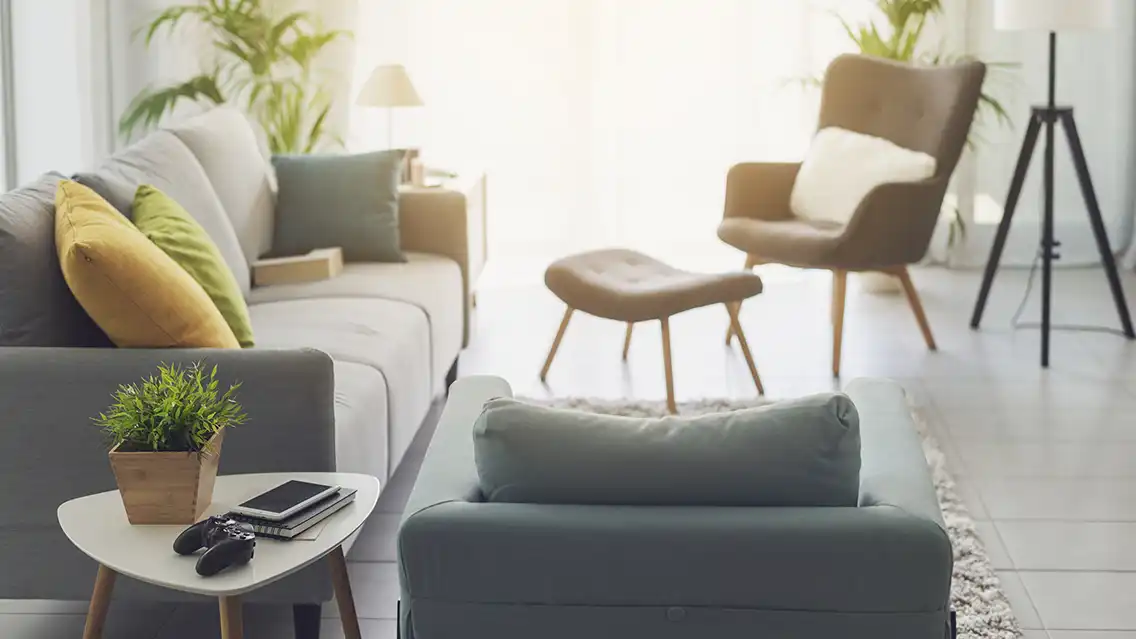
Designing for Bangladesh means acknowledging our distinct climate: high humidity, intense monsoon rains, and urban dust.
Material Selection
- Wood: While traditional Segun (Teak) is beloved for its durability, it can be heavy and expensive. Modern interior design often utilizes high-quality treated plywood or marine ply with veneers for built-in cabinetry, which resists warping in humidity better than untreated solid wood.
- Fabrics: Velvet may look luxurious, but it traps heat and dust. For a non-AC living room or for homes in dusty areas, breathable fabrics like cotton blends, linen, or high-performance synthetic blends are superior. They are easier to clean and cooler to the touch.
Ventilation and Airflow
Never block the airflow from the veranda or windows. Cross-ventilation is essential to keep the room feeling fresh and to prevent mold growth during the rainy season. Ensure your window treatments (curtains or blinds) can be fully drawn back to let light and air in.
5. Smart Storage Solutions
Clutter is the enemy of a functional living room. In a busy household, “stuff” accumulates quickly.
The Shoe Cabinet Dilemma
In our culture, we typically remove shoes at the door. Without a designated spot, the entrance becomes a pile of footwear.
- The Solution: Integrate a stylish shoe cabinet near the entrance that blends with the living room decor. A unit with a seat allows you to sit while putting on shoes, and the top can serve as a display area for artifacts or fresh flowers.
Vertical Storage
Utilize vertical wall space. Floor-to-ceiling shelving units can house books, decorative items, and media equipment while drawing the eye upward, making the ceiling feel higher. This is particularly effective in apartments with standard 9-foot ceilings.
6. Lighting: Setting the Mood
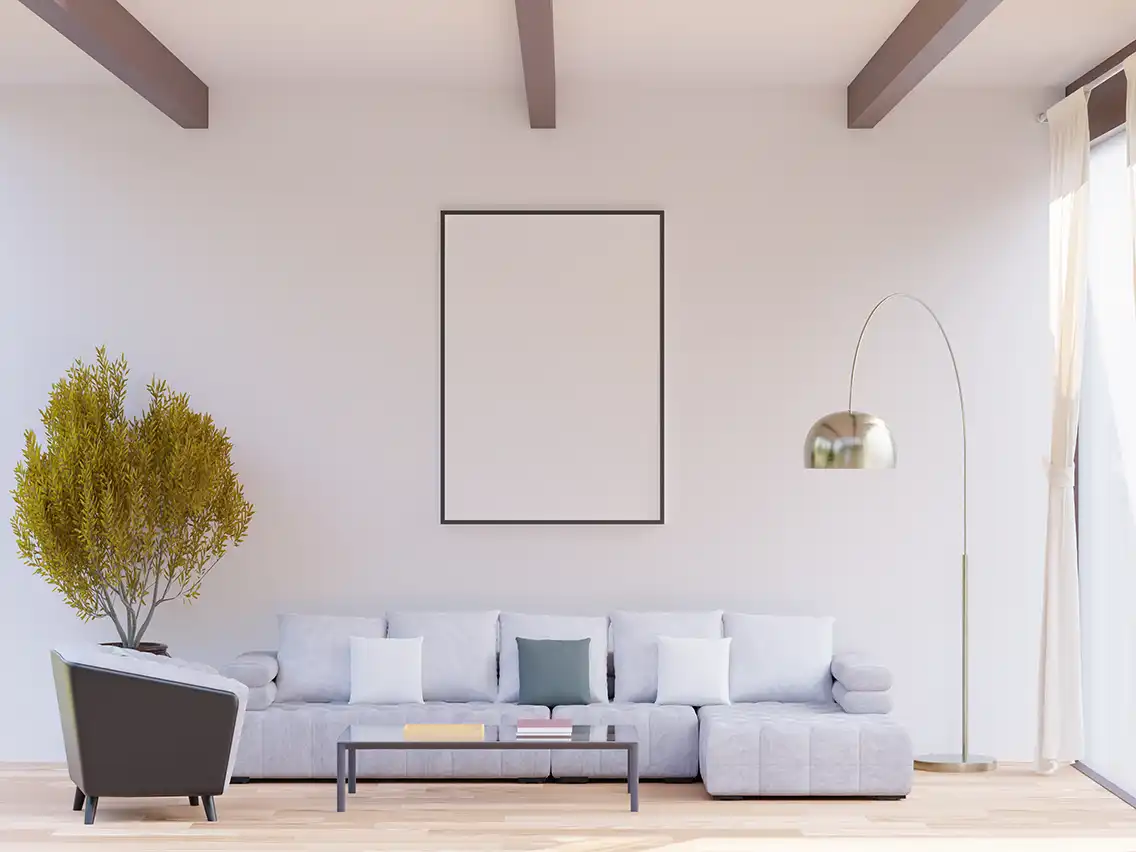
Lighting in Bangladeshi homes often relies too heavily on a single bright tube light. To create a truly designed look, you need layers.
- Ambient Lighting: This is your general light. False ceilings with recessed LED lights are popular in Dhaka for providing even, glare-free illumination.
- Task Lighting: Add a floor lamp beside a reading chair or table lamps on side tables. This is crucial for activities like reading the newspaper or knitting.
- Accent Lighting: Use strip lights behind the TV unit or focused spotlights to highlight artwork or architectural features.
- Natural Light Optimization: Place mirrors on walls opposite windows. This reflects natural light deep into the room, which is especially helpful during load-shedding hours during the day.
7. Technology and Cable Management
Modern homes are tech-heavy. From smart TVs to Wi-Fi routers and gaming consoles, the cables can be unsightly and dangerous.
- Concealment: Plan your electrical points behind the TV unit. Use cable organizers or PVC pipes within the wall (chasing) during the renovation phase to hide wires completely.
- Smart Integration: Consider smart switches that allow you to control lighting and fans via your phone—a convenient feature when you are comfortable on the sofa and do not want to get up.
8. Budgeting for Your Renovation
When planning your home interior design in Bangladesh, budget allocation is key. While costs vary wildly based on materials (e.g., local tiles vs. imported Italian marble), here is a strategic way to categorize your spending:
- High Priority (Splurge): Spend on the sofa and the flooring. These take the most wear and tear.
- Medium Priority: Custom cabinetry and lighting fixtures.
- Low Priority (Save): Soft furnishings like cushions, rugs, and curtains. These can be swapped out easily to refresh the look without a major expense.
9. Common Mistakes to Avoid
- Over-decorating: We often feel the need to fill every corner. Negative space (empty space) is essential for the eye to rest.
- Ignoring Scale: Buying a chandelier that is too small for the room or a rug that floats in the middle of the floor (the rug should slide under the front legs of the sofa).
- Poor Lighting Color: Mixing cool white (daylight) and warm white bulbs in the same fixture creates a jarring effect. Stick to warm white (3000K-4000K) for living areas to create a cozy atmosphere.
10. Why Professional Guidance Matters
While DIY can be fun, the technical aspects of design—electrical layouts, material procurement, and spatial ergonomics—can be overwhelming. This is where expert interior design solutions come into play. A professional team ensures that your vision is executed flawlessly, saving you from costly mistakes and sourcing issues common in the local market.
Conclusion
Designing a functional living room in Bangladesh is a journey of balancing tradition with modernity. It is about creating a space that handles the monsoon humidity, accommodates the joy of an Eid gathering, and provides a quiet corner for relaxation after a long day in Dhaka traffic.
By prioritizing layout, choosing climate-appropriate materials, and integrating smart storage, you can elevate your living space from ordinary to extraordinary.
Ready to transform your home? At DIT Studio, we specialize in creating bespoke interiors that reflect your personality and meet the demands of Dhaka living. Let’s create a space you’ll love coming home to.