
The kitchen is often described as the heart of the home, but in a Bangladeshi household, it is arguably the engine room. From the early morning preparation of school tiffins to the elaborate arrangement of weekend family dinners, the kitchen witnesses high-intensity activity unlike any other room. Whether you reside in a compact apartment in Dhanmondi or a spacious duplex in Bashundhara, the functionality of your kitchen directly impacts your daily life.
However, keeping this vital space tidy, clean, and safe is a challenge. Many homeowners in Dhaka struggle with poorly planned kitchens that look chaotic and feel cramped. It is arguably the most challenging task to make a kitchen functional and stylish simultaneously, especially given the architectural constraints of modern urban apartments.
This is where the expertise of a professional design team becomes indispensable. Small or large, an interior designer can add immense value to your kitchen in detailed ways that go far beyond simple decoration. Here is why investing in professional kitchen interior design is a necessity for the modern Bangladeshi home.
The Challenge of the Bangladeshi Kitchen
Designing a kitchen in Bangladesh requires a nuanced understanding of local cooking habits and environmental conditions. Unlike Western kitchens, which may see light usage, a Bangladeshi kitchen deals with heavy-duty cooking.
1. Handling Heavy Usage and Spices
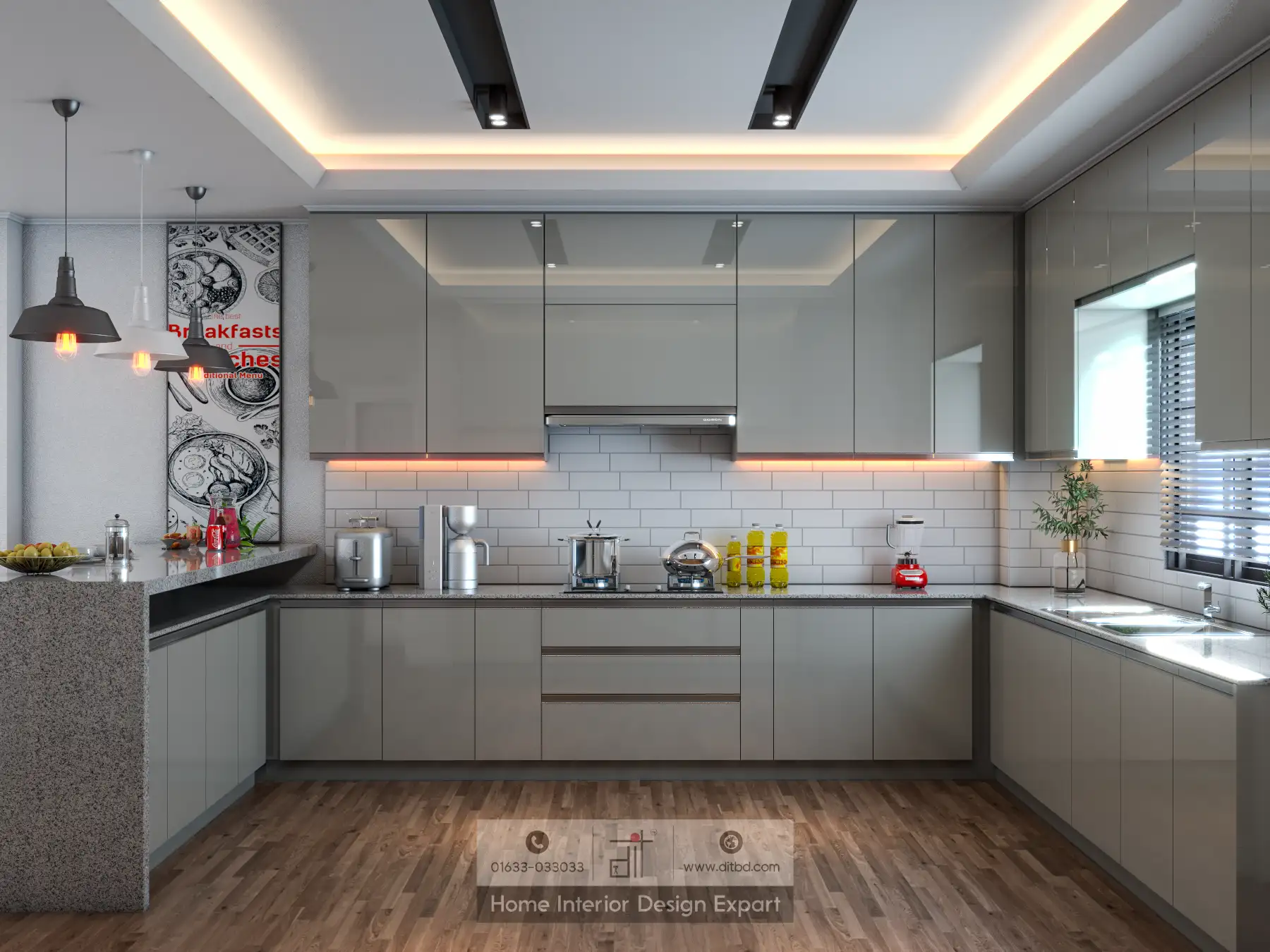
Our cuisine involves the use of turmeric, oil, and strong spices that can stain surfaces and produce grime. A generic design often overlooks the need for easy-to-clean backsplashes and oil-resistant countertop materials. Professional designers select materials that withstand the rigors of deshi cooking without losing their shine.
2. Climate Considerations
Bangladesh is a humid country. In areas like Chittagong or Sylhet, and even in the concrete jungle of Dhaka, moisture is a constant enemy. Poorly designed cabinets made from low-grade particle board often swell and rot within a few years due to the monsoon humidity. Expert designers prioritize water-resistant materials like Marine Plywood or Boiling Water Proof (BWP) boards to ensure longevity.
3. Ventilation Needs
The aroma of frying onions is delightful, but not when it lingers in your living room curtains. Proper ventilation planning, including the strategic placement of chimneys and exhaust systems, is critical in high-density living areas like Gulshan or Banani, where cross-ventilation might be limited.
Functionality: Finding Utensils at Easy Reach
Nowadays, most of us deal with busy schedules and midnight meal cravings. Imagine wanting to prepare a quick snack peacefully, but you cannot find the spatula or the specific spice jar you need. You rummage through cluttered cabinets and countertops, knocking over steel pots and waking up the household. This is not an ideal kitchen scenario.
Leading interior designing firms understand the importance of keeping the kitchen organized and accessible at all times. They implement the “Golden Triangle” rule—optimizing the distance between the stove, sink, and refrigerator—to ensure a seamless workflow.
Smart Storage Solutions
To combat clutter, designers utilize:
- Cutlery Organizers: Dedicated drawers with partitions for spoons, knives, and spatulas.
- Pull-out Pantries: Tall units that slide out to reveal stored dry goods, perfect for narrow spaces.
- Corner Units: Utilizing the often-wasted “blind corners” in L-shaped kitchens with “Magic Corner” or “Carousel” units.
- Spice Racks: Dedicated, easy-to-reach shelves or pull-outs specifically designed for the array of spices used in Bangladeshi cooking.
By studying your cooking habits—whether you bake occasionally or make chapatis daily—designers integrate storage at eye level for frequently used essentials. For heavy items like large rice drums or pressure cookers, they create reinforced lower cabinets, ensuring you do not have to strain your back.
Space Optimization in Urban Apartments
Space is a premium commodity in Dhaka. Developers often minimize kitchen square footage to maximize living and bedroom areas. Interior design for your kitchen gives you the freedom to maximize this limited space through smart, technical decisions.
Vertical Integration
Designers make use of ceiling heights to create loft storage. This is the perfect place to keep large degchis (cooking pots) and dinner sets that are only used during Eid or large family gatherings. This strategy keeps the countertop and flooring free, providing you with ample space for pre-cooking preparation, such as chopping vegetables or marinating meat.
The Rise of the Modular Kitchen
Nowadays, modular kitchens are in high demand across Bangladesh because of their space-friendly design. These factory-finished setups can make even the smallest kitchens look comfortable and spacious. Common layouts include:
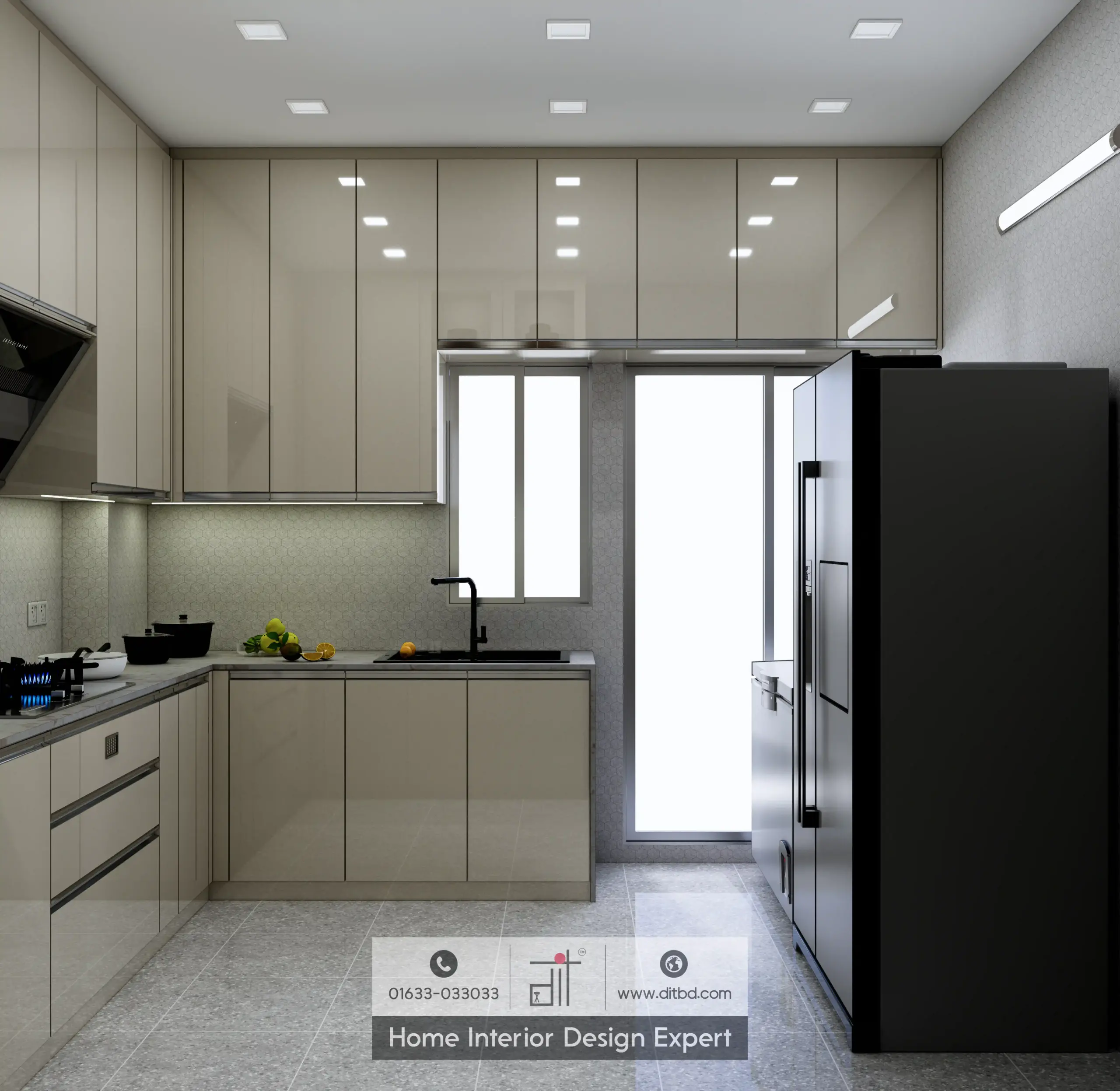
- L-Shaped Kitchens: Ideal for small to medium flats in areas like Uttara or Mirpur, offering excellent corner utilization.
- Parallel (Galley) Kitchens: Perfect for narrow spaces, offering two long working areas.
- U-Shaped Kitchens: Best for larger homes where the kitchen is a dedicated room, offering maximum storage and counter space.
- Island Kitchens: A growing trend in luxury apartments, providing a central hub for cooking and socializing.
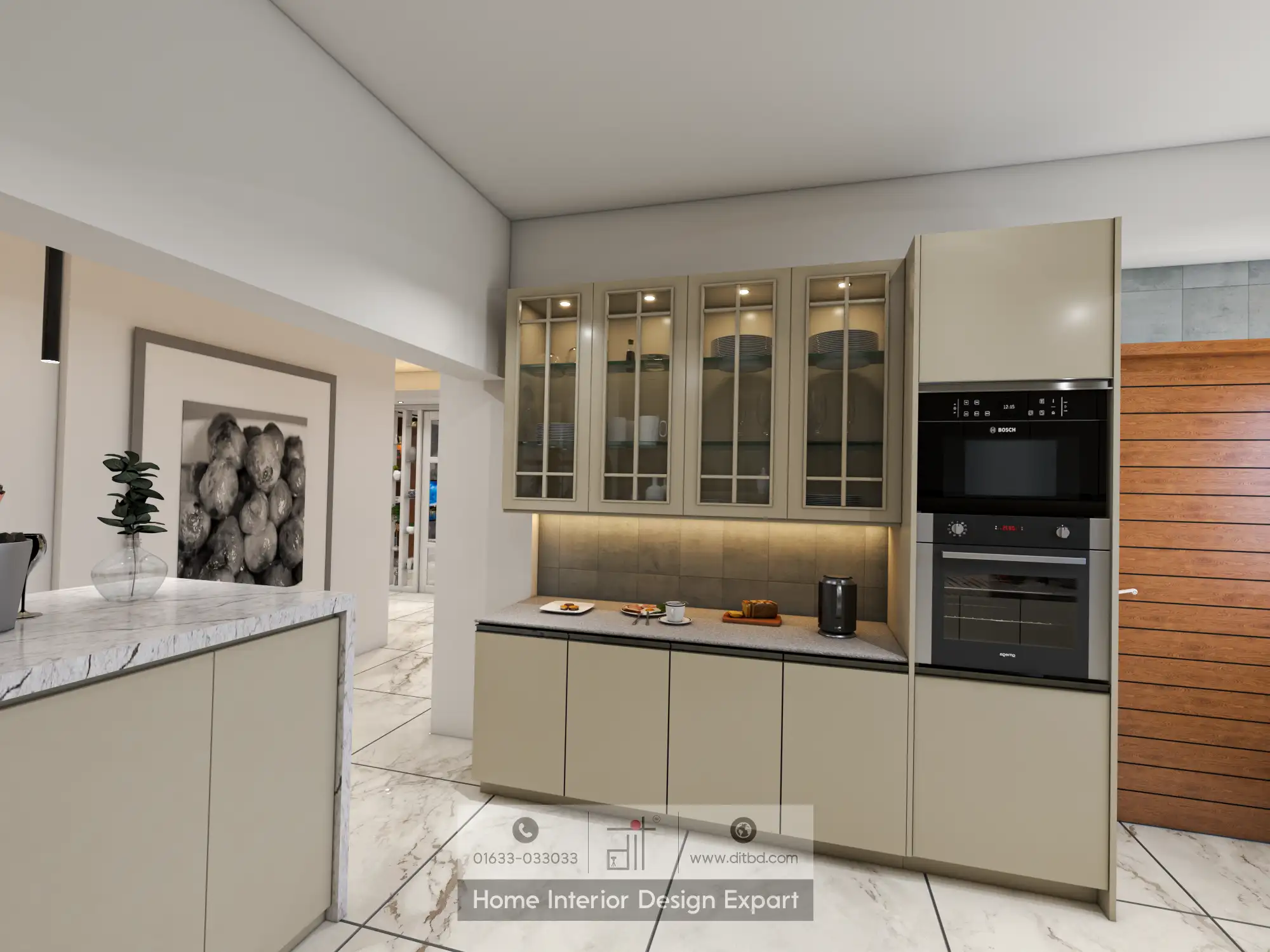
If you have no option to extend your kitchen space beyond its given square feet, opting for a modular setting is essential. It ensures that essential appliances—from microwaves to water purifiers—fit perfectly without making the space feel crowded.
Materials and Durability: Built for Bangladesh
A major mistake many homeowners make is prioritizing aesthetics over durability. In our local context, materials must be robust.
Countertops
While white marble looks luxurious, it stains easily with turmeric. Professional designers often recommend:
- Granite: Extremely durable, heat resistant, and available in various patterns.
- Quartz: Engineered stone that is non-porous and highly resistant to stains and scratches.
- Solid Surface: Allows for seamless joints and integrated sinks.
Cabinet Finishes
The finish of your cabinets defines the look of the kitchen.
- Acrylic: High-gloss, reflective surfaces that make small kitchens look bigger. Easy to clean but prone to scratches.
- Laminates: Cost-effective and available in thousands of textures (wood grain, matte, solid colors).
- PU Lacquer: A premium, ultra-smooth finish often seen in high-end homes in Baridhara.
Good Mood Brings Good Food: The Psychology of Design
You spend a significant amount of time in the kitchen when at home. Whether it is the homemaker or the working professional prepping meals for the week, the environment matters. “Good mood brings good food” is not just a saying; it is a reality. Color psychology plays a massive role here.
Lighting and Ambiance
Builders and contractors often neglect lighting, installing a single tube light that casts shadows on your workspace. Interior designers use a layered lighting approach:
- Task Lighting: Under-cabinet strip lights that illuminate the countertop for safe chopping and cooking.
- Ambient Lighting: Ceiling lights for general illumination.
- Accent Lighting: To highlight decor or glass cabinets.
Color Palettes
To cook without added stress, you need to be surrounded by colors that uplift you. While white and gray are commonly used because they reflect cleanliness, they can feel sterile if not balanced correctly.
- Warm Tones: Soft yellows or earthy terracottas can stimulate appetite and make the space feel cozy.
- Cool Tones: Blues and greens create a calming effect, counteracting the heat generated by the stove.
Designers study how color affects well-being and avoid using colors that might feel overwhelming in a small space. For example, painting a small, windowless kitchen in dark red might make it feel claustrophobic. Instead, they might use light neutrals to make the kitchen look well-lit and airy, adding pops of color through backsplashes or accessories.
Personalization: Your Kitchen, Your Story
Home is a private place, and the kitchen is arguably the most personal space within it. You do not cook or use your kitchen in the same way your neighbors do. Your cooking expertise, preferences, and lifestyle are unique. That is why you need a customized kitchen that reflects your story.
Multi-Generational Needs
In many Bangladeshi families, multiple generations live together. The kitchen design must accommodate the grandmother who prefers traditional cooking methods and the younger generation who might prefer using an air fryer or oven. Designers create zones to ensure these activities can happen simultaneously without conflict.
The Social Kitchen
If you are an avid cook who loves entertaining, your interior design team can place a multifunctional island bar. This works as a meal preparation countertop and a seating area. Placing some bar stools against the counter allows family members to sit and chat while you cook, turning the chore of cooking into a social activity.
For kitchens that cannot fit an island, smart solutions like pull-out tables or breakfast counters attached to the wall can provide that necessary seating space without consuming floor area permanently.
Go Relevantly Trendy
Every few months, Pinterest and Instagram are flooded with new interior trends. While it is tempting to copy a design you saw online, not every trend works in the Bangladeshi context. For instance, open shelving looks beautiful in photos but can be a nightmare to maintain in dusty Dhaka conditions where grease and dust combine to coat everything.
To keep you out of confusion, interior experts blend trends that will be functional and relevant for you. They act as a filter, distinguishing between fleeting fads and timeless design. What is trendy today might not age well. Designers think ahead, integrating features like soft-close hinges and hydraulic lift-ups that remain functional and modern for years to come.
Safety and Hygiene: A Priority, Not an Option
A messy kitchen can be a dangerous place, especially for kids and the elderly.
- Gas Safety: Ensuring the gas cylinder is housed in a ventilated cabinet or piping is routed safely.
- Electrical Safety: Placing plug points away from water sources (sinks) and using high-quality switches for heavy appliances like mixer grinders and ovens.
- Flooring: Installing anti-skid tiles is non-negotiable. Kitchen floors often get wet or oily, and slip-and-fall accidents are common.
Furthermore, the kitchen is prone to bacterial growth. Working in an unhygienic kitchen can be detrimental to health. Interior designers prioritize dense, anti-bacterial materials for countertops and cabinets that do not harbor pests or bacteria. They seal crevices where cockroaches—a common pest in Dhaka apartments—could hide.
The Value of Professional Guidance
Hiring an interior design firm for your kitchen might seem like an added expense initially. However, when you consider the cost of correcting mistakes, the waste of materials, and the daily frustration of a poorly planned space, you will realize that it is an investment, not an expense.
From navigating the complex supply markets of Hatirpool or Panthapath to managing carpenters and electricians, a turnkey interior design solution takes the burden off your shoulders. We can help you navigate these choices, ensuring you get the best value for your budget. If you are looking for experienced interior designers in Dhaka, it is crucial to choose a partner who understands both the art of design and the science of construction.
Conclusion
Your kitchen deserves to be more than just a room for cooking; it should be a space that inspires creativity, ensures safety, and brings the family together. Whether you are renovating an old flat in Old Dhaka or designing a new apartment in Mirpur, professional intervention ensures that every inch of space is utilized effectively.
At DIT Studio, we understand the pulse of the Bangladeshi homeowner. We combine modern aesthetics with practical functionality to create kitchens that survive the test of time and trend. Don’t let a cluttered, dysfunctional kitchen dampen your culinary spirit. Embrace a design that works for you.