
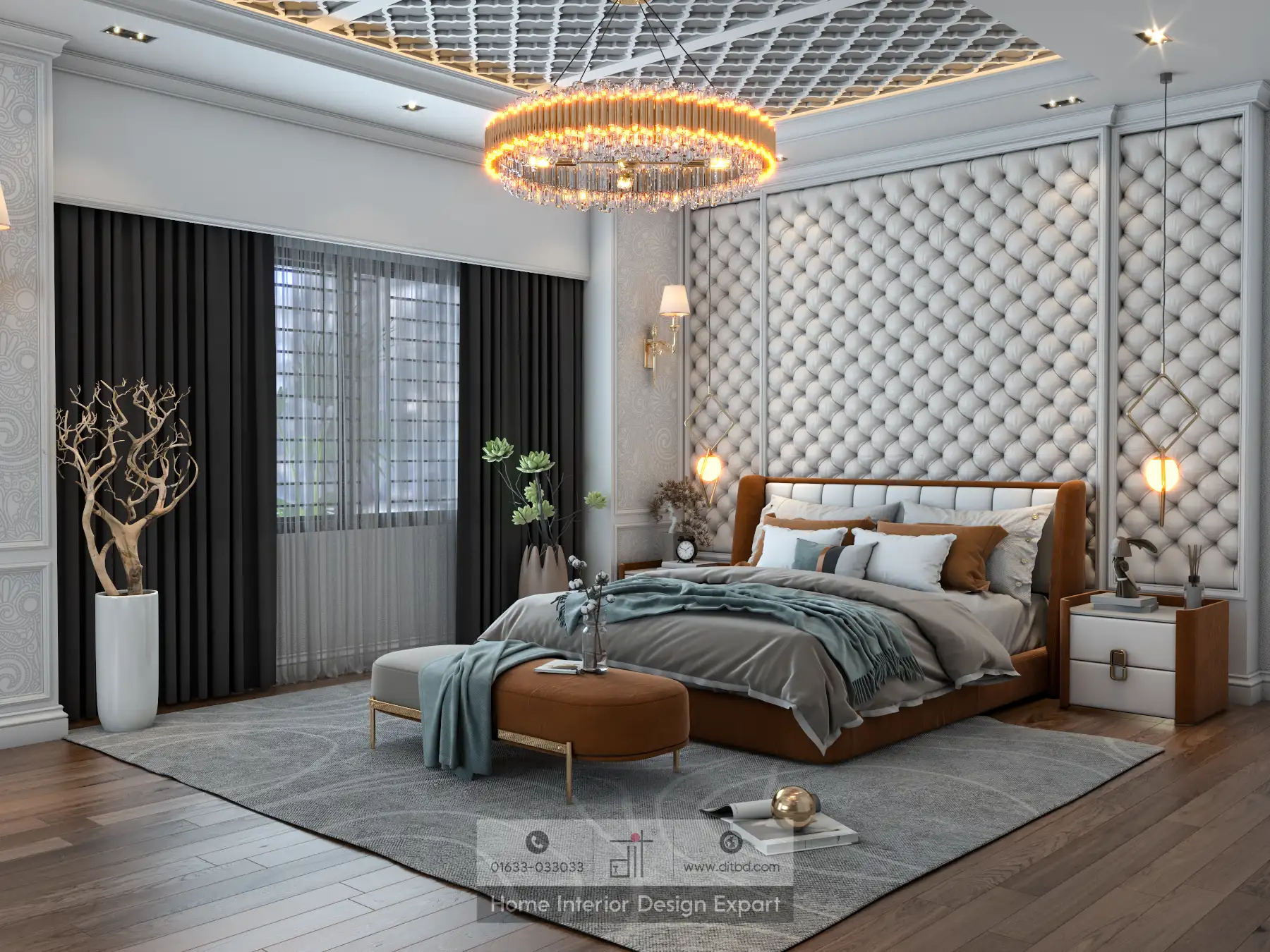
Your bedroom is lit all wrong, and you might not even realize it.
Most bedrooms rely on a single harsh overhead fixture-bright enough to get ready in the morning but terrible for winding down at night. That glaring ceiling light triggers your brain’s alertness mechanisms when you should be preparing to sleep. It casts unflattering shadows, makes everything look less inviting, and creates a sterile atmosphere in what should be your personal sanctuary.
Here’s what many people miss: bedroom lighting design isn’t an afterthought. It’s foundational.
The right lighting can improve your sleep quality, elevate your mood, enhance the beauty of your space, and fundamentally change how you feel in your bedroom.
At DIT Studio, we’ve learned that lighting is often the single most impactful change we make in bedroom redesigns. When we get it right, clients tell us they sleep better, feel more relaxed, and can’t imagine going back to their previous setup. That’s the result of understanding how lighting actually works and designing it strategically.
Why Bedroom Lighting Is More Than Just Brightness
Think about lighting functionally, and you miss everything that matters. Yes, you need to see to get ready in the morning. But bedroom lighting affects three critical dimensions of your life such as sleep quality, emotional wellness, and aesthetic beauty.
Sleep quality
Sleep quality is perhaps the most important. Your body operates on circadian rhythms-internal patterns tied to light and darkness that regulate sleep-wake cycles, hormone production, and digestion. When your bedroom lighting conflicts with these rhythms (bright overhead light when your body expects dimness), you’re literally fighting your biology. You take longer to fall asleep and sleep less deeply.
Mood and mental health
Mood and mental health are directly influenced by light. The colors and intensity of light in your bedroom affect your stress levels, anxiety, and general emotional state. Warm, soft light signals safety and relaxation. Harsh, cool light triggers alertness and tension. Your bedroom lighting literally shapes how you feel stepping into that space each day.
Aesthetics matter too
The same bedroom can look beautiful or bland, spacious or cramped, depending on how it’s lit. Lighting reveals color, emphasizes textures, creates depth, and draws attention to design features you’ve invested in. The scientific reality is powerful: proper bedroom lighting isn’t complicated or expensive, but it is essential for a truly functional, beautiful, restful bedroom.
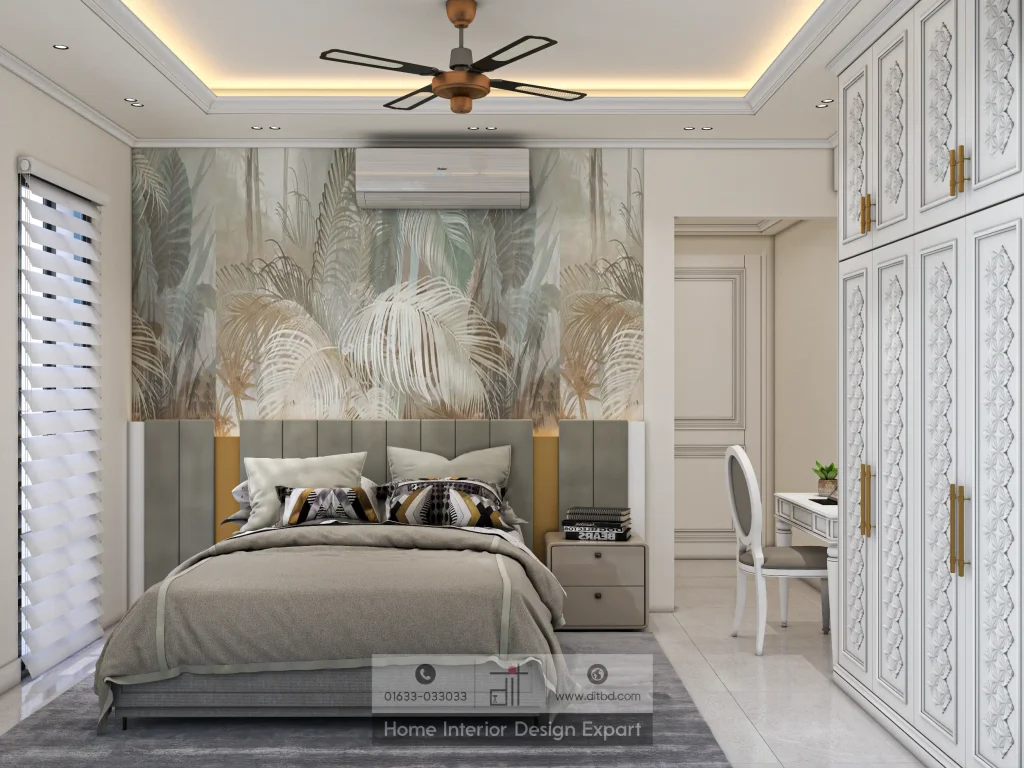
Understanding the Three Layers of Bedroom Lighting
Professional lighting designers think in layers. A well-lit bedroom combines three distinct types of lighting, each with a specific purpose. Together, they create flexibility-you can adjust mood and functionality to match different times of day and activities.
Ambient Lighting: The Foundation
Ambient lighting is your general, background illumination. It sets the overall mood and provides basic visibility. Most bedrooms make their biggest mistake here: relying on a single bright overhead fixture.
In Dhaka apartments, the standard solution is a harsh ceiling light, often too bright and positioned poorly. Better ambient lighting options include:
- Dimmer switches on ceiling fixtures to adjust brightness according to time of day
- Soft, diffused ceiling fixtures (fabric shades, frosted covers) that spread light evenly
- Indirect lighting that bounces light softly throughout the room
- Multiple light sources positioned to create even illumination without dark corners
The goal is ambient light that’s present without being aggressive-illumination you barely notice because it’s so even and comfortable.
Task Lighting: Function Without Compromise
Task lighting is focused light for specific activities: reading in bed, applying makeup at a vanity, finding items in your wardrobe, or working at a desk. The problem with relying solely on ambient ceiling light is that it often leaves shadows exactly where you need light.
Strategic task lighting solves this. Examples include:
- Bedside reading lamps positioned to illuminate your book without light bleeding into the room
- Vanity lights flanking a mirror, providing even illumination for grooming
- Wardrobe interior lighting (LED strips built into custom wardrobes) for easy item-finding
- Desk lamps for any work area in the bedroom
The key is placement. A bedside lamp positioned on a nightstand 30cm from where you’re reading delivers perfect light. At DIT Studio, when we design custom wardrobes and furniture, we often integrate task lighting into the design itself. Shelves get subtle lighting underneath. Vanity areas include integrated lighting.
Accent Lighting: Mood and Drama
Accent lighting is the decorative, mood-setting layer. It’s subtle but powerful, drawing the eye to design features, creating depth, and establishing the emotional tone of the space.
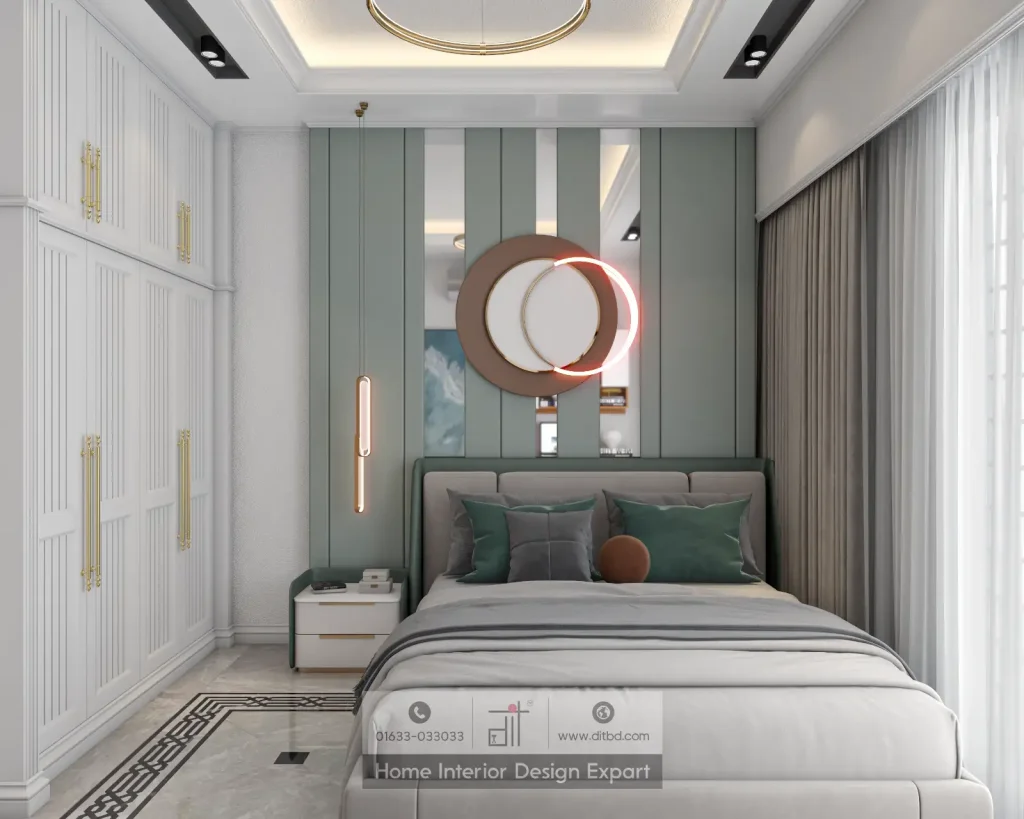
Accent lighting includes LED strips behind headboards, wall sconces flanking the bed, uplighting on walls, and decorative fixtures that add visual interest. The psychological impact is significant. Warm accent lighting creates intimacy and relaxation. When DIT Studio designs custom furniture, we think about accent lighting opportunities from the start. A headboard isn’t just a headrest-it’s a chance for beautiful integrated lighting.
The Sleep Connection: How Lighting Affects Your Rest
Let’s get specific about sleep, because this is where lighting design has the most immediate, measurable impact.
Your body has circadian rhythms-24-hour cycles that regulate sleep, alertness, hormone production, and other biological functions. These rhythms are primarily controlled by light exposure. Bright light tells your brain “it’s daytime, be alert.” Dim light tells your brain “it’s nighttime, prepare for sleep.”
When you’re exposed to bright light in the evening (harsh overhead lights, screens emitting blue light), your brain’s circadian rhythm gets confused. Your body suppresses melatonin production (the hormone that makes you sleepy) and keeps you in an alert state. You lie in bed unable to fall asleep, or fall asleep but sleep fitfully.
Color temperature matters immensely. Color temperature is measured in Kelvin (K). Warm light (2700K-3000K) contains more red and orange wavelengths and signals “evening.” Cool light (5000K and above) contains more blue wavelengths and signals “daytime alertness.” For bedrooms, you want warm light, especially in the hours before bed.
Blue light is particularly powerful in disrupting sleep. Your eyes are extremely sensitive to blue wavelengths-they trigger alertness more than any other color. This is why late-night phone scrolling makes falling asleep harder. Even overhead lights running cool (around 4000K) can inhibit melatonin production if you’re exposed close to bedtime.
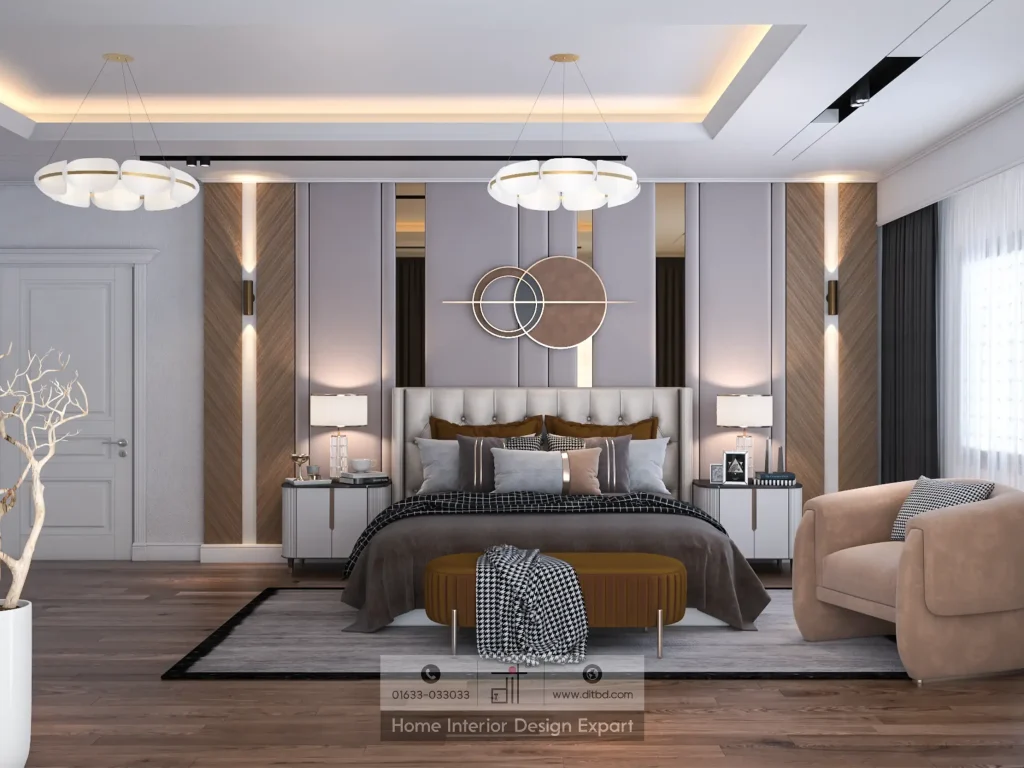
Here’s the practical framework for bedroom lighting and sleep:
In the morning, brighter, cooler light helps you wake up. During the day, bedroom lighting matters less. One to two hours before bed, shift to warm, dimmed lighting. This signals your body to begin producing melatonin. Dim your ambient lights to 30-50% brightness. At bedtime, bedroom light should be minimal-darkness is your friend.
A well-designed bedroom accommodates this progression. Dimmers on ambient light let you gradually dim as evening approaches. Accent lighting remains soft and warm.
The honest truth: Proper bedroom lighting can meaningfully improve your sleep quality without any medication or complicated routines. Most people report better sleep within the first week of implementing thoughtful lighting design.
The Mood & Wellness Angle
Beyond sleep, bedroom lighting profoundly affects your daily emotional state and sense of wellbeing.
Colors and light intensity influence psychological state in measurable ways. Warm, soft light induces relaxation, comfort, intimacy, and a sense of safety. Your nervous system literally calms in response. Harsh, bright light triggers the opposite response: alertness, tension, stress.
Dhaka’s climate and daylight patterns add another layer. During monsoon season, natural light diminishes, and artificial lighting becomes even more important for mood regulation. Well-designed bedroom lighting compensates for seasonal variations in daylight, keeping your mood stable year-round.
Here’s a practical insight:
A dimmer switch is one of the best investments you can make for bedroom wellness. The ability to adjust light intensity as your evening unfolds is transformative. Gradually dimming the ambient light creates a physical transition into relaxation. Your nervous system calms, and you prepare for restorative sleep. This simple feature meaningfully improves daily wellbeing.
Strategic Placement & Design Tips for Small Dhaka Bedrooms
Small bedrooms present unique lighting challenges but also unique opportunities. Here’s how to make lighting work beautifully in compact spaces:
- Tip 1: Layer your lighting: A single bright ceiling light in a small room looks harsh. Distributing light across ambient, task, and accent layers creates balance and flexibility. You can adjust brightness without overwhelming the space.
- Tip 2: Wall sconces free up bedside table space: Instead of bedside lamps (which occupy surface real estate), wall-mounted sconces provide reading light while keeping tables clear. This makes the room feel larger.
- Tip 3: Accent lighting draws eyes upward: Uplighting on walls or accent lighting near the ceiling creates visual height. Even a small room feels more spacious with good vertical lighting.
- Tip 4: Proper placement eliminates shadows: Poor lighting leaves dark corners that make small spaces feel smaller and more claustrophobic. Strategic light placement illuminates these areas, making the entire room feel brighter and more open.
- Tip 5: Multiple light sources create visual depth: A single light source flattens a space. Multiple sources at different heights create layers of light and shadow that add visual interest and sophistication.
At DIT Studio, lighting placement is an integral part of space planning. When we design a bedroom, we’re thinking about light paths, shadow patterns, and how each light source contributes to the overall design.
Choosing the Right Light Fixtures for Your Bedroom Style
Beyond placement and brightness, the actual fixtures you choose matter aesthetically and functionally.
- Ceiling fixtures set the tone for the entire room. In bedrooms, you want soft, diffused fixtures rather than bare bulbs. Fabric shades or drum lights distribute light evenly.
- Pendant lights over bedside tables or reading nooks add sophistication and visual interest.
- Wall sconces flanking a bed or vanity are elegant and practical.
- Table lamps on nightstands provide task lighting with style.
Strip lighting and built-in LED features are increasingly popular for accent lighting-they’re efficient, long-lasting, and create stunning visual effects when built into custom furniture.
In Dhaka, balancing modern and traditional design preferences is often important. Quality lighting fixtures aren’t cheap, but they’re an investment in your bedroom’s function and aesthetic.
DIT Studio sources high-quality fixtures that match your design vision. When we design custom furniture, we often integrate lighting into the design itself-creating seamless, professional results.
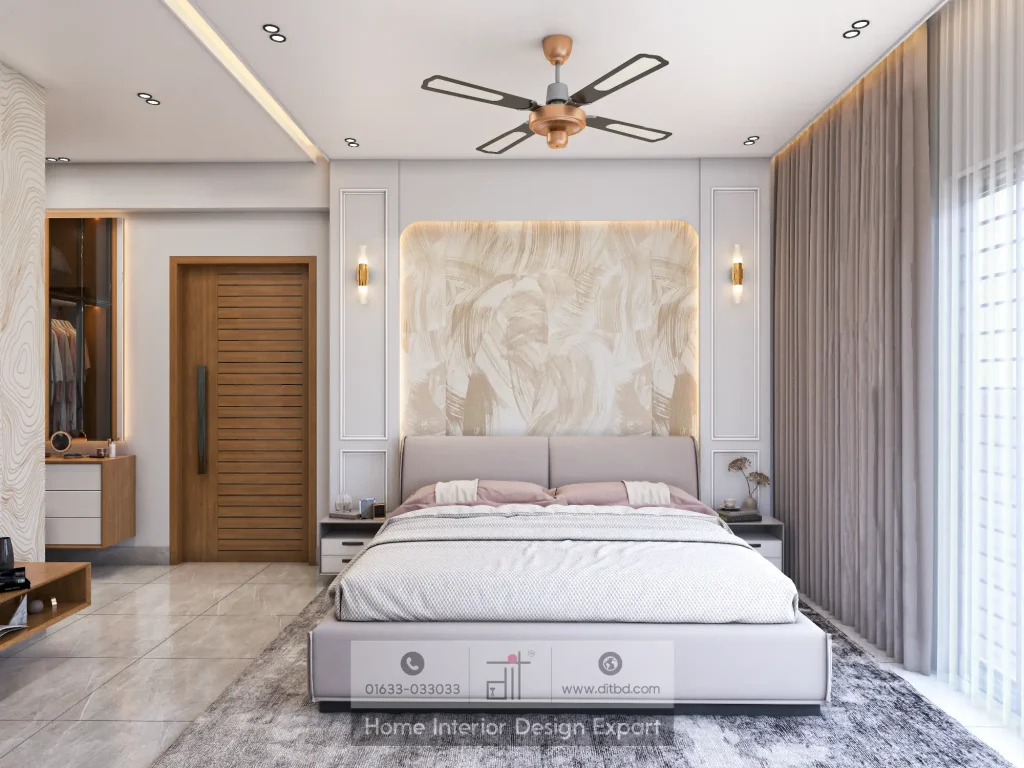
Color Temperature & the 3D Visualization Advantage
The Kelvin scale measures light color temperature-how warm or cool light appears. For bedroom design, understanding this matters profoundly.
- 2700K (Warm White): Ideal for bedrooms. Signals “evening” to your body, feels cozy and intimate, and is flattering to skin tones. Most bedroom lighting should fall in this range.
- 3000K (Soft White): Slightly cooler but still warm. A good option for task lighting.
- 4000K (Neutral White): More clinical. Fine for bathrooms but generally not ideal for bedrooms.
- 5000K+ (Cool White/Daylight): Very bright and alert-inducing. Useful for mornings but not evening lighting.
The challenge: you can’t know how a light color temperature will look in your actual room until you try it. Paint samples viewed in the store look different in your home. Fixtures that look perfect in a showroom might look different under your ceiling.
This is where DIT Studio’s 3D visualization becomes invaluable. We create a detailed 3D model of your bedroom with your chosen colors, materials, and lighting. You see how warm light illuminates your wall colors. You see how accent lighting affects the overall mood. This visual confirmation eliminates guessing and the risk of expensive mistakes. You can see how different color temperatures look before you buy a single fixture.
Designing Your Bedroom Lighting Plan: A Practical Framework
Now, let’s move from understanding lighting to actually designing it for your bedroom.
- Step 1: Assess your current situation: Do you have harsh overhead lighting that’s your only bright option? Are there areas that lack adequate task lighting? Does your lighting support evening wind-down?
- Step 2: Identify activities and timing: What activities happen in your bedroom? When do they happen? What lighting does each activity require?
- Step 3: Plan your three lighting layers: How will you provide ambient illumination? What activities need focused task lighting? What mood do you want to create with accent lighting?
- Step 4: Consider controls: Dimmers for ambient lighting are essential. Separate switches for different layers let you adjust mood without overwhelming the space.
- Step 5: Account for color temperature: Plan for warm light throughout. Ensure warm light can be dimmed for pre-sleep hours. Avoid cool white light except perhaps for early-morning task lighting.
- Step 6: Think holistically: How do lighting fixtures complement your bedroom’s color palette? Do they match your aesthetic? How does lighting interact with furniture placement and room layout?
The professional advantage:
Lighting design has nuances that DIY often misses. At DIT Studio, lighting is never an afterthought. It’s part of integrated bedroom design from the beginning. When we design custom furniture, we’re thinking about how lighting interacts with it. The result is a bedroom where every element works together to create a space that’s beautiful, functional, and genuinely conducive to rest and wellbeing.
For complementary guidance on how color interacts with your lighting design, see “Choosing the Right Bedroom Color Palette for 2026: Trends, Psychology & Personal Style”
Transform your bedroom into the restful retreat you deserve. Book a design consultation with DIT Studio and let’s create a custom lighting plan that improves your sleep and transforms your space. We’ll show you exactly how it looks in 3D before we build it.
FAQs: Bedroom Lighting Design
Q1: What’s the difference between warm light (2700K) and cool light (5000K), and which should I choose?
Warm light (2700K-3000K) is ideal for bedrooms because it signals “evening” to your body, promotes melatonin production, and feels cozy and intimate. Cool light (5000K+) is bright and alert-inducing, which suppresses melatonin. For bedroom relaxation and sleep, always choose warm light. Save cool light for bathrooms or kitchens. You can use slightly cooler light (4000K) for morning task lighting, but evening lighting should always be warm.
Q2: How many light fixtures do I really need in a small bedroom?
Small bedrooms benefit from three layers of lighting:
- Ambient (overhead or wall-mounted)
- Task (bedside or vanity lights), and
- Accent (wall sconces or LED strips
This typically means 3-5 fixtures total, depending on your room layout. Wall sconces can serve double duty as both task and accent lighting. The key is flexibility-you want to be able to adjust brightness and mood without relying on a single harsh overhead light. During your DIT Studio consultation, we’ll recommend the specific number and placement for your bedroom.
Q3: Can I add better lighting to my bedroom without rewiring the entire room?
Yes. Wireless LED lights, battery-powered accent lighting, and plug-in fixtures can improve lighting without electrical work. However, if you’re adding hardwired fixtures (wall sconces, ceiling lights), rewiring is usually necessary.
At DIT Studio, we can assess your bedroom’s electrical layout and recommend solutions that minimize renovation costs. Often, smart placement of fixtures (like wall sconces instead of table lamps) achieves better lighting without extensive rewiring.
Q4: Will investing in a dimmer switch really make that much difference in my sleep quality?
Absolutely. A dimmer switch is one of the highest-ROI bedroom investments you can make. The ability to gradually reduce light brightness in the evening helps your body naturally prepare for sleep by signaling circadian rhythms and enabling melatonin production.
Most clients report noticeably better sleep within the first week of using dimmers. It’s a simple, affordable change (1,500-3,000 BDT for a quality dimmer switch) that delivers measurable wellbeing improvements.