
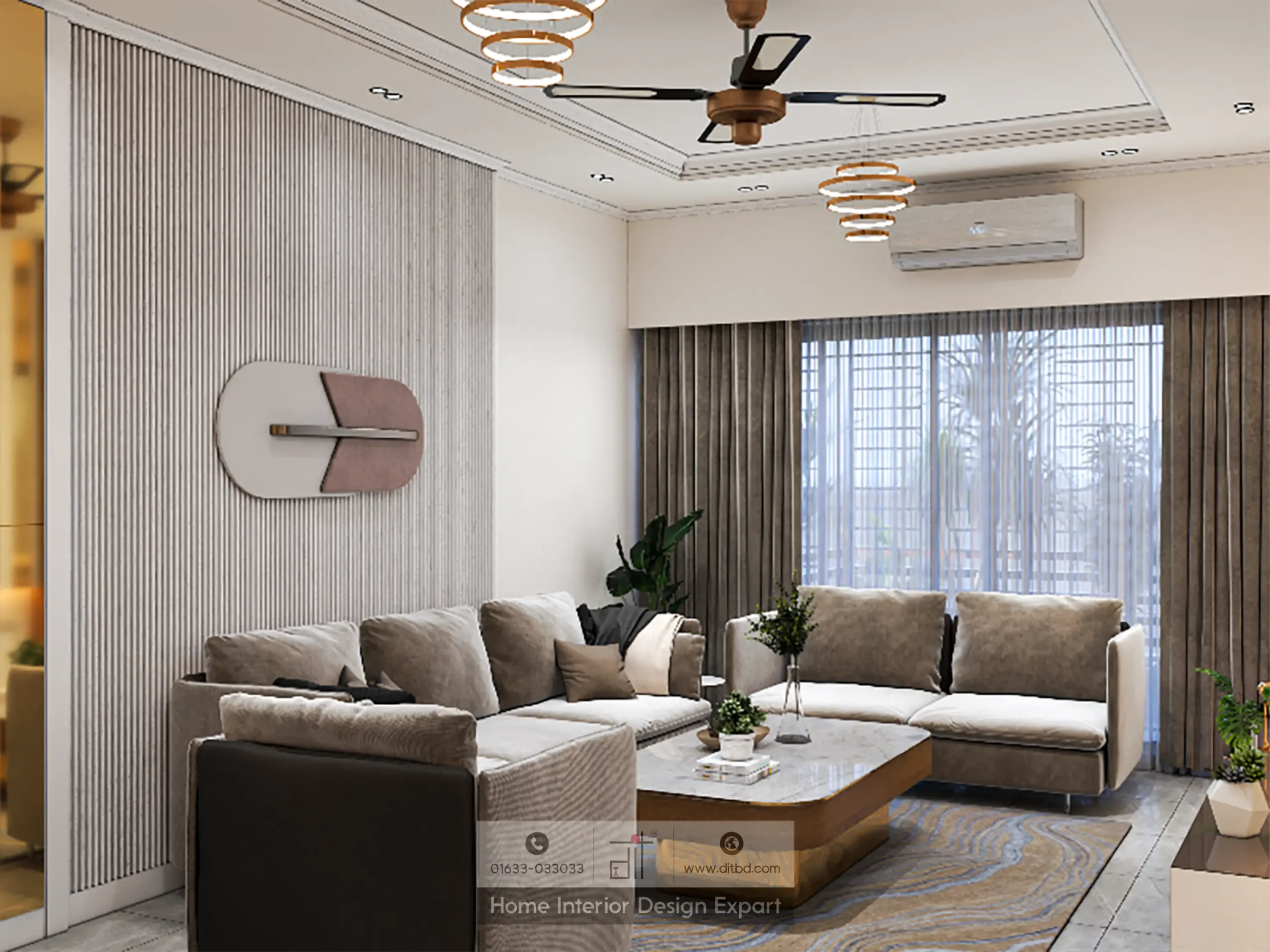
You’re standing in your 950-square-foot apartment in Gulshan or Banani, and the living room feels smaller than it should. Your new sofa takes up an entire wall. The TV unit you bought blocks half the natural light. The space feels cramped despite being relatively empty.
This is the reality for countless Dhaka families. Apartment sizes are shrinking while design expectations remain high. You want a space that’s beautiful, functional, comfortable, and feels spacious-all in a room that might be 12 by 14 feet if you’re lucky.
Here’s the truth that a poorly designed small space feels claustrophobic; a well-designed one feels intentional. The difference isn’t square footage-it’s thoughtful design decisions that make every inch work harder and every moment feel better.
Common problems emerge again and again in Dhaka’s compact apartments. Sofas that are standard-size furniture store inventory swallow the room, leaving no breathing space. TV units designed for larger homes dominate compact living rooms, blocking movement and natural light. Single overhead lighting creates harsh shadows that make rooms feel even smaller and more institutional. There’s no sense of flow, no visual depth, no breathing room.
The real problem is generic furniture doesn’t fit non-standard small spaces. IKEA and mass-produced furniture are designed for average apartments in different climates, with different ceiling heights, different window placements. Off-the-shelf solutions inevitably feel wrong in Dhaka’s specific apartment configurations.
Here’s where custom design creates real value. DIT Studio manufactures furniture in-house, which means we create pieces proportional to your actual space. Your sofa isn’t 95 inches wide because standard ones are-it’s 78 inches because that’s what your room breathes with. Your TV unit doesn’t tower over the space; it’s designed to your exact dimensions and ceiling height. Every piece is created to fit your flat specifically, not to fit a generic template.
Space that actually breathes is achievable even in Dhaka’s compact apartments. It requires intentional decisions, custom proportions, and smart design strategies-but it’s absolutely possible. And once you experience a small space that feels spacious, you’ll never accept cramped again.
Idea 1-Choose Furniture That Fits (Not Oversized Pieces)
The number-one mistake we see that homeowners buying standard-size furniture for non-standard small spaces. This single choice determines whether your living room will feel spacious or cramped.
A standard sofa is typically 90-96 inches wide. A standard TV unit is often 60-80 inches, with deep cabinetry extending two feet or more into the room. These proportions work beautifully in spacious homes. In a compact Dhaka apartment, they’re devastating. Your sofa becomes a monumental piece that defines the entire room. Your TV unit blocks movement, dominates the space, and consumes square footage you desperately need.
Custom-made furniture proportional to your space. At DIT Studio, we approach this differently. If your living room works best with a 78-inch sofa instead of 96 inches, that’s what we build. A slender 36-inch TV unit instead of a 72-inch entertainment center. Compact side tables proportioned to your actual seating, not generic oversized pieces. Coffee tables that don’t obstruct movement through the room.
This sounds simple, but it’s transformative. When every piece of furniture is proportional to your space, the room suddenly breathes. You can move freely. You can see across the room. The space feels intentional rather than cluttered.
Material choice reinforces this. Lighter colors and cleaner lines feel less visually heavy. A slim-profile sofa in a light neutral fabric takes up less visual real estate than a deep, dark, oversized piece. A simple wooden side table feels lighter than a solid brass or stone version. Even these material choices compound to create spaces that feel generous.
The math is straightforward, every inch counts in a small space. When your furniture selection becomes a design decision based on actual dimensions rather than standard sizes, everything changes. Comfort doesn’t suffer-in fact, smaller proportions often fit actual humans better than oversized pieces designed for showrooms.
This is where in-house manufacturing becomes your secret weapon. You’re not limited to what’s available in inventory. You’re designing pieces that actually fit your life and your space.
Idea 2-Create Vertical Space (Go Up, Not Out)
Small spaces teach you a hard lesson: you don’t have square footage to spare, so you build upward. This single strategic shift changes everything about how spacious your room feels.
Vertical design is the antidote to cramped feelings. Rather than spreading furniture across the floor, you use wall height. This approach creates visual height, draws the eye upward, and makes ceilings feel taller-all crucial in Dhaka apartments where ceiling heights are often modest and space is genuinely limited.
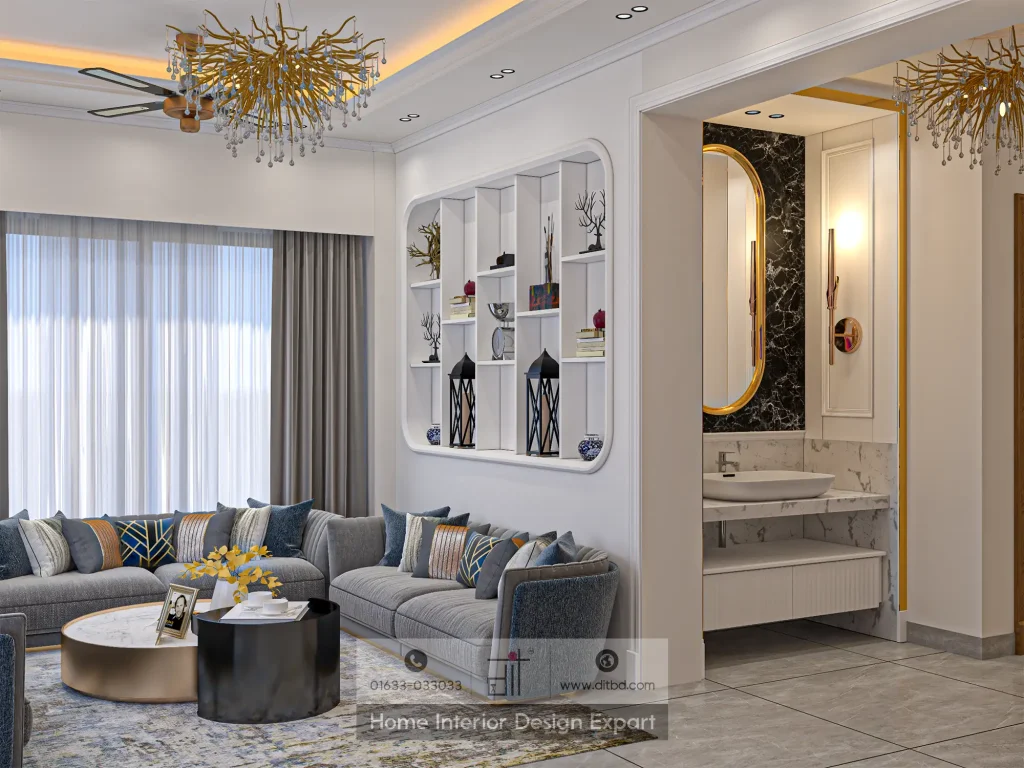
Strategies abound. Floor-to-ceiling shelving (built-in or custom) transforms blank walls into functional storage that feels intentional, not cluttered. Tall, narrow bookcases work better than wide, squat ones in small spaces-they use less floor space while providing more visual interest and personality. Wall-mounted storage and display eliminate floor clutter while maximizing vertical real estate.
Lighting can emphasize height dramatically. Rather than relying on floor lamps that take up square footage, hang pendant lights or fixtures from the ceiling. Wall sconces at eye level draw attention upward. Even small touches-hanging plants, vertical artwork, mounted shelving-continuously direct your eye skyward, creating perceived height.
Your TV placement becomes a height decision, not just a wall choice. Mounting it higher on the wall saves floor space and draws the eye up. A high-mounted TV combined with floating shelving below creates a vertical design story rather than a horizontal one that sprawls across your limited space.
A simple observation is, tall elements make spaces feel larger. This isn’t optical illusion-it’s how human perception works. A room where your eye travels upward feels more spacious than one where everything is horizontal and grounded. In Dhaka’s compact apartments, this becomes essential strategy.
DIT Studio’s custom built-ins take this approach seriously. We design shelving that maximizes every inch of wall space, combines storage and display, and creates visual interest while solving the practical problem of clutter. Shelving styled beautifully becomes both functional storage and design element-storage that looks intentional and elevated.
Consider climate too, vertical ventilation matters in Dhaka’s humid air. Open shelving allows air circulation better than closed cabinetry. This small detail impacts both comfort and air quality in your small space.
Idea 3-Master Visual Layering (Depth Without Square Footage)
Your challenge isn’t just making a small space function-it’s making it feel spacious and sophisticated. Visual layering creates perceived depth and luxurious feeling without requiring more square footage.
The problem we solve constantly: harsh, single-source overhead lighting that makes small spaces feel box-like and institutional. The solution: layered lighting that creates visual depth and distinct zones through light, not walls.
Layered lighting means three things, ambient lighting (overall brightness from ceiling fixtures or uplighting), task lighting (focused illumination for specific activities like reading), and accent lighting (highlighting textures, creating focal points, adding visual interest). Together, these layers transform how a space feels.
Warm, adjustable lighting makes small spaces feel intentional rather than cramped. Cool, harsh brightness amplifies the feeling of a small box. By controlling light temperature and intensity, you control how spacious the room feels. Dimmers give you flexibility to shift from bright morning energy to cozy evening ambiance.
Color layering adds sophistication without overwhelming. Light wall colors (soft whites, warm grays, pale beiges) expand perception and create an airy foundation. An accent wall or focal point in a deeper, richer color adds visual depth without overwhelming the space. Different fabric textures-combining smooth, matte, and glossy finishes-create interest. This principle is central to accent wall design but applies equally to small living rooms.
Material layering creates visual interest and prevents blandness. Mix finishes: matte wood with glossy ceramic, soft fabric with polished metal. Combine materials: wood, metal, fabric, glass. This variety keeps the eye engaged without visual chaos. The key is intentional mixing that feels curated, not random.
Strategic mirrors multiply light and create the illusion of expanded space. Positioned opposite windows or light sources, mirrors reflect light throughout the room. They also create visual depth by suggesting additional space beyond the surface. Use them thoughtfully-too many mirrors can feel disorienting-but the right mirror in the right location transforms how spacious a room feels.
Focal points become essential in small spaces. Rather than spreading visual interest across the room, create one thing the eye naturally rests on: perhaps a gallery wall of artwork, a statement chair, beautifully styled shelving. This focused attention makes the space feel designed rather than cluttered, and ironically, it makes the space feel larger.
Idea 4-Furniture Arrangement That Maximizes Flow
Poor furniture layout makes even spacious rooms feel cramped. In small spaces, it’s the difference between comfortable and claustrophobic, between enjoying your space and wanting to escape it.
The principle is floating furniture (not pushing everything to walls) paradoxically creates a sense of space. When you arrange your seating in the center of the room, creating natural pathways around furniture, the room feels larger. Walls feel farther away. Pushing everything to walls actually makes small spaces feel more cramped because it emphasizes the walls’ proximity and makes the room feel smaller overall.
Clear pathways between furniture pieces are essential. You should be able to move through the room without squeezing past side tables or navigating obstacles. This practical consideration directly impacts how comfortable you feel in the space and how naturally you move through it.
Never block your windows or natural light sources. A sofa positioned in front of a window, while sometimes necessary, sacrifices both light and the visual expansion that natural light provides. Whenever possible, let light flow freely through your space.
Traffic flow matters in Dhaka apartments where your living room connects to the kitchen, dining area, and bedroom zones. Map out how people naturally move through your flat, then arrange furniture to support that flow. A sofa positioned to allow clear passage from entry to kitchen feels less obstructive than one blocking the route.
Specific layouts for Dhaka apartment configurations often include making the TV secondary rather than dominant. Rather than building the entire room around the television, create a seating arrangement that works for conversation and comfort first, then accommodate the TV naturally within that layout. This fundamental shift changes how the space functions and how comfortable it feels.
At DIT Studio, we use 3D visualization to show exactly how furniture will work before you purchase anything. You’ll see the layout from above, from different angles, from where you’ll actually sit. You’ll understand traffic flow, sight lines, and how the room will feel. This eliminates guesswork and prevents expensive mistakes.
Flexibility becomes valuable in small spaces. Furniture that can be easily moved (lightweight pieces on casters, modular seating) allows you to reconfigure for different uses. Movie night might arrange differently than a small gathering of friends. Flexible furniture supports your changing needs without requiring a complete redesign.
Idea 5-Smart TV Unit Design (Not An Entertainment Center Monster)
The TV unit deserves its own focused discussion because it’s often the biggest mistake in small flat design. One wrong choice here dominates your entire space.
Standard TV units are oversized. They span entire walls, consuming precious square footage. They have deep cabinetry (18-24 inches extending into the room), shelving for decorative items, storage compartments for everything. They’re designed as entertainment centers, not as TV supports for small spaces.
In a compact living room, a standard TV unit blocks movement, steals light, and makes the space feel smaller. It’s often the single most space-consuming piece in the room, and its dominance affects your entire design.
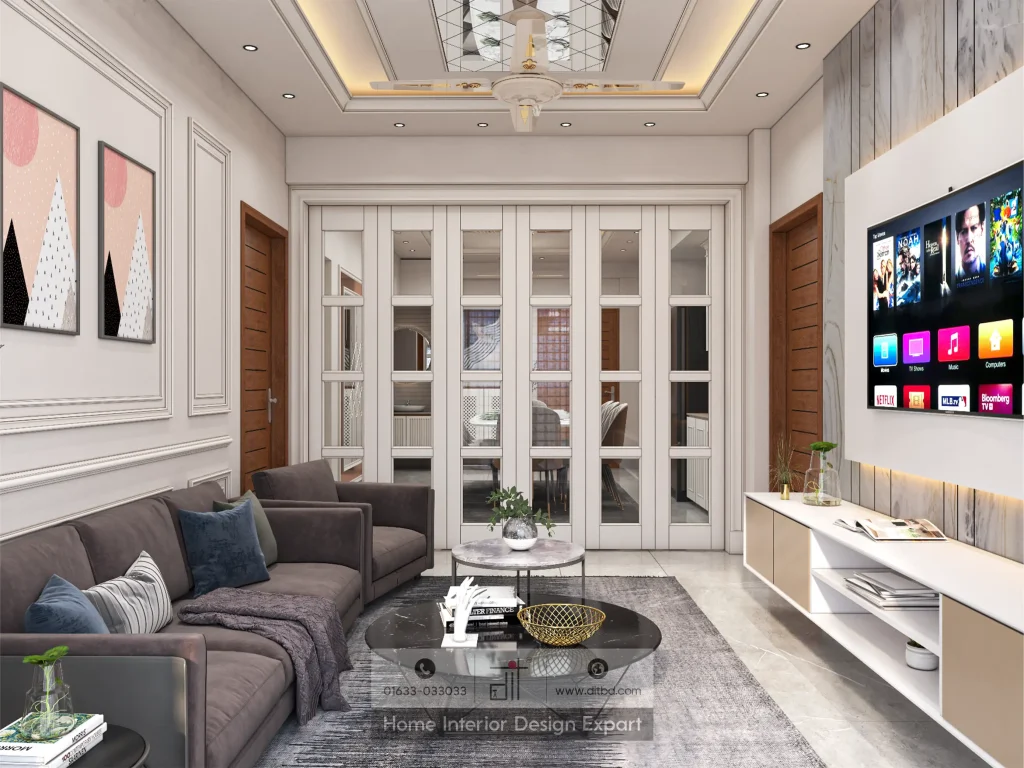
Smart alternatives exist. Wall-mounted TVs eliminate floor space entirely-nothing between your feet and the wall except, perhaps, a floating shelf or slim console below for components. This single decision reclaims your room and makes the space feel dramatically more open.
If wall mounting isn’t possible, a slim, minimal TV console works beautifully. Just enough surface for a soundbar and streaming device, with minimal cabinetry. The TV sits above a nearly-empty console rather than embedded in a massive entertainment center.
Another approach: integrate the TV into your shelving system. Rather than a dedicated entertainment unit, your TV becomes part of a larger wall of open shelving. The shelving serves multiple purposes-storage, display, organization-with the TV as one element within the composition. This dual-purpose design makes efficient use of wall space.
DIT Studio’s custom TV solutions are designed for small spaces specifically. Proportional to your room size, with integrated but hidden cable management, aesthetic even when the TV is off (because it looks like intentional design, not a media station). The positioning considers comfortable viewing angles without dominating the room.
Styling around the TV matters enormously. Rather than crowding shelves with decorative objects, leave breathing room. Perhaps some art, a plant or two, a few beautiful objects-but mostly open space. This makes the TV feel intentional rather than like the centerpiece of your life.
The height of your TV affects how the room feels. Mounting it higher than typical TV heights (which are often determined by sitting eye level with a distant couch) draws the eye upward, emphasizing vertical space. This small decision reinforces the sense of height in a compact room.
Idea 6-Color and Light Tricks (Expanding Perceived Space)
Color and light are your psychological tools for making small spaces feel larger and more intentional than they actually are.
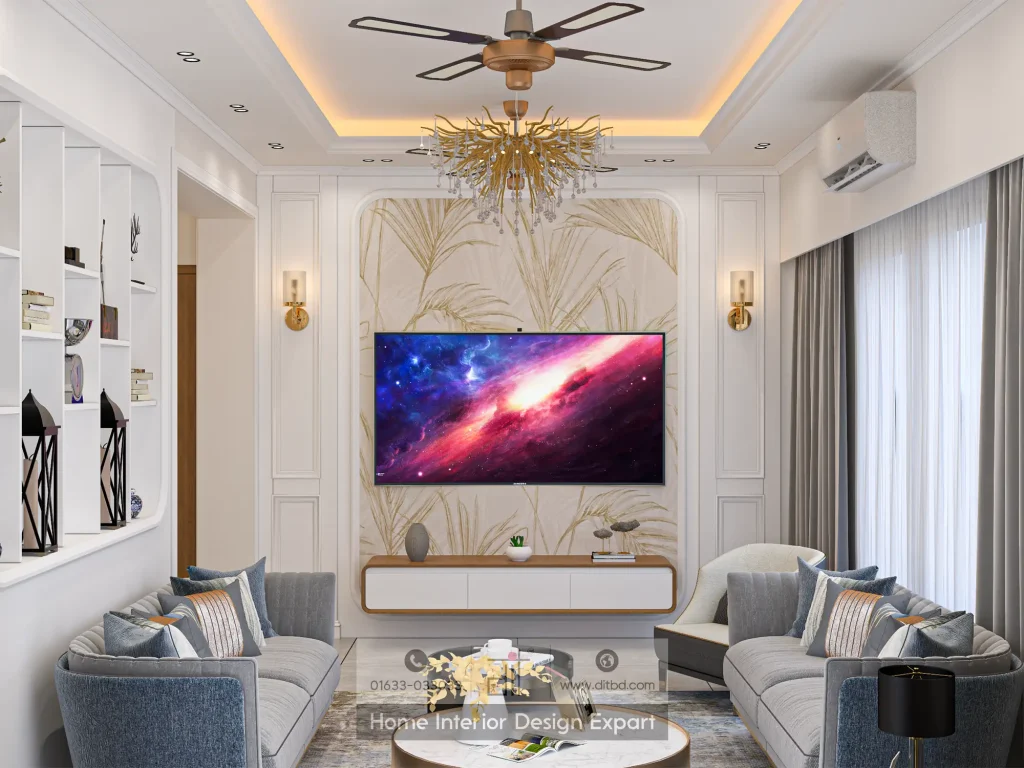
Light, neutral base colors expand perception dramatically. Whites, soft grays, warm beiges create an airy foundation. These colors are also practical in Dhaka’s dusty climate-they show dust less than darker colors, and they stay cooler in heat. But their primary advantage is psychological: light colors make space feel larger and more open.
Strategic dark colors or bold accents, used sparingly, add sophistication without overwhelming. A single accent wall in a deep jewel tone, or bold throw pillows, or a richly colored rug-these elements add personality and visual interest without negating the space-expanding benefits of light foundation colors. The key is restraint and intentionality.
Monochromatic schemes create visual coherence. When your walls, large furniture, and trim are similar neutral tones, the space feels unified rather than chaotic. This coherence actually makes small spaces feel intentional rather than cramped. Unity of color creates visual calm.
Light itself becomes a design tool. Natural light transforms small spaces-it makes them feel open, alive, and larger. Don’t block windows with heavy curtains. Instead, use light, breathable curtains that filter sun while maintaining airflow. Sheer or semi-transparent fabrics create privacy while preserving light and ventilation.
Artificial light must be bright enough to feel open, yet warm enough to feel cozy. Harsh, cool-toned light makes small spaces feel institutional. Warm white light in adequate quantity feels welcoming. Dimmers allow you to adjust from bright (functional) to warm (intimate) depending on time of day and mood.
Mirrors placed strategically become force multipliers. A large mirror opposite a window or light source reflects light throughout the room, expanding perceived space. Mirrors also create the illusion of additional space by suggesting openings beyond the surface. Use them thoughtfully-too many mirrors can feel disorienting-but the right mirror in the right location transforms how spacious a room feels.
Light-colored flooring expands perception significantly. Darker flooring grounds the space (literally), while lighter flooring feels expansive. In Dhaka’s heat, lighter flooring also reflects heat rather than absorbing it, making your space more comfortable to inhabit.
Avoiding small-space mistakes matters equally. Too many colors create visual chaos that makes space feel smaller. Dark or busy patterns visually shrink space. Heavy, thick curtains block light and make spaces feel cave-like. Dim lighting makes small spaces feel cramped and oppressive. Each of these choices compounds, either working with or against your space.
Idea 7-Smart Storage Solutions (Hidden Organization)
Small flats demand hidden storage because visible clutter in compact spaces makes everything feel smaller and more chaotic. This isn’t optional-it’s essential to making your space work.
Built-in storage solves this elegantly. Shelving built into walls uses vertical space without consuming floor area. Under-seat storage in ottomans or benches hides items while providing seating. Custom cabinetry designed into your space-perhaps under-window storage, or built-ins flanking your TV-becomes integrated rather than added as an afterthought.
Multi-functional furniture pulls double duty beautifully. An ottoman provides seating, storage (if designed with a hidden compartment), and a coffee table surface. Sofas with under-cushion storage hide blankets and pillows. Console tables near entryways combine display surface with drawer storage. Each piece earns its place through multiple functions.
Combining closed and open storage creates visual balance. Closed cabinetry or doors hide everyday items and reduce visual clutter. Open shelving displays chosen objects and prevents the space from feeling entirely hidden away. The mix creates interest while maintaining order and breathability.
Vertical storage utilizes wall space rather than floor space-the key principle in small apartments. Tall cabinets, wall-mounted shelving, floor-to-ceiling bookcases all make efficient use of your actual wall dimensions. This approach feels natural and intentional.
DIT Studio’s custom storage approach means solutions designed specifically for your flat. Your actual dimensions, your specific storage needs, your style preferences-all translate into storage that feels intentional, not retrofitted. Custom storage prevents that awkward, forced feeling of ill-fitting solutions.
Organization principles prevent clutter from overwhelming small spaces. Everything has a designated place-when items have homes, they don’t scatter across surfaces. Frequently used items stay accessible, while seasonal or occasional items live in hidden storage. Decorative objects are displayed thoughtfully among functional storage, creating the impression of intentional curation rather than cluttered living.
Styling hidden storage matters significantly. Closed cabinetry doors should feel designed, not utilitarian. Perhaps they’re painted in a color that coordinates with your room, or finished in wood that matches your other pieces. Baskets or boxes used for visible storage should be beautiful-woven natural materials, coordinating colors, clean lines. This way, even open storage feels intentional and elevated.
Hidden storage prevents your small space from looking like a storage facility. The goal: a living room that’s organized, functional, and comfortable-where the storage system is invisible and the space breathes.
Ready to Transform Your Small Living Room?
Your small flat doesn’t have to feel cramped. With custom furniture proportional to your actual space, thoughtful layout, strategic lighting, and smart storage, you can create a living room that feels spacious, beautiful, and genuinely livable.
The key isn’t accepting limitations-it’s designing strategically within them. DIT Studio’s in-house manufacturing and 3D visualization mean we show you exactly how your space will feel before any commitment. You’ll see furniture proportioned to your dimensions, lighting that works for your actual apartment, layout that flows naturally through your space.
Small doesn’t have to mean cramped. Let’s design a living room that’s proportional to your space and proportional to your life. Contact DIT Studio for a free consultation and 3D visualization of how your flat can feel bigger without actually moving. Because space that breathes is space you want to spend time in.
Curious about how to choose colors and materials that expand your small space further? Explore our guide on How to Choose the Right Accent Wall for Your Drawing Room in Bangladesh-the color psychology and visual layering principles apply equally to compact living rooms. Or return to foundational concepts in Living Room vs Drawing Room: Design Differences Every Dhaka Homeowner Should Know to understand how your living room functions best.
FAQ: Small Living Room Design in Dhaka
Q: What’s the biggest mistake people make when designing small living rooms?
Buying standard-size furniture for non-standard small spaces. A 96-inch sofa or 72-inch TV unit designed for spacious homes dominates compact apartments. Custom furniture proportional to your actual space transforms how the room feels. At DIT Studio, we build pieces specific to your dimensions, not generic templates.
Q: How can I make a 12-foot by 14-foot living room feel spacious?
Use light colors for walls and flooring, maximize natural light, arrange furniture to float (not against walls), incorporate vertical storage, layer your lighting strategically, use mirrors to reflect light, and choose slim-profile furniture. These combined strategies create perceived spaciousness that transforms how you experience the room.
Q: Should I have a TV in my small living room?
Yes, but design it strategically. Make it secondary rather than the focal point. Use wall-mounting to save floor space, keep the TV unit minimal, and ensure it doesn’t block windows or natural light. Many small living rooms work beautifully with TV as a secondary element rather than the room’s centerpiece.
Q: What storage solutions work best for small flats in Dhaka?
Built-in storage (shelving in walls, under-window storage), multi-functional furniture (ottomans with hidden compartments, sofas with under-cushion storage), and vertical storage (floor-to-ceiling shelving) all work beautifully. The key is hidden storage for daily items and open display for chosen objects. This combination creates organized spaces without visible clutter.
Q: How important is custom furniture versus buying what’s available?
Very important. Off-the-shelf furniture is designed for standard apartments with different dimensions and ceiling heights. Dhaka’s compact flats need custom-proportioned pieces. Even a 20-inch difference in sofa width significantly affects how the room feels. Custom furniture transforms small spaces from cramped to intentional.