
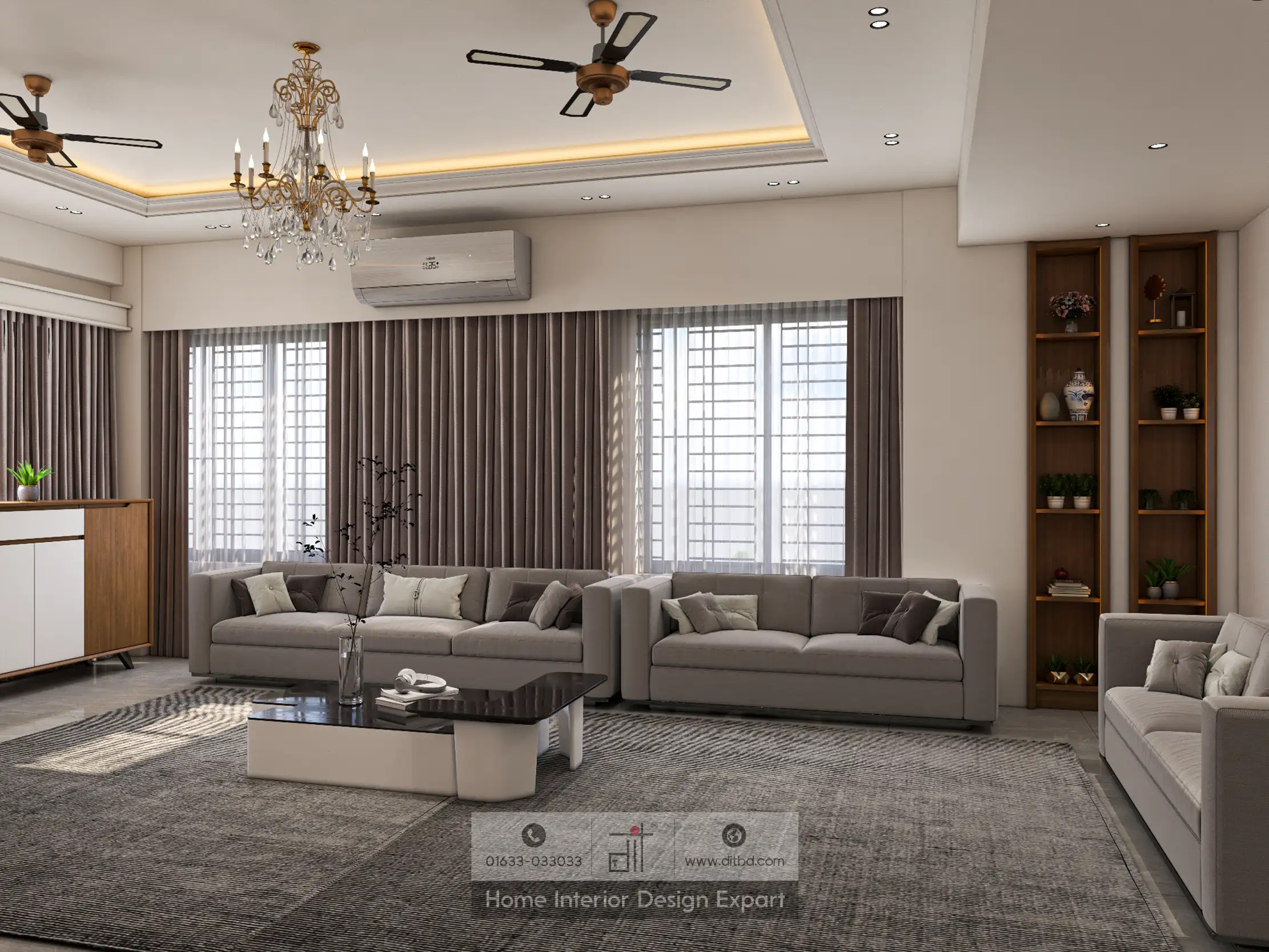
You have two distinct rooms to design, but you’re not quite sure what should go where. Should your sofa face the TV or face toward conversation? Does your drawing room really need to look like nobody lives there? These questions plague homeowners across Dhaka, and for good reason-the difference between a living room and a drawing room matters more than you might think.
In Bangladesh, having both a living room and drawing room is culturally ingrained. Traditionally, the drawing room was reserved for guests and special occasions, while the living room was where your family actually spent their time. But here’s the challenge, in Dhaka’s compact apartments, making both spaces work without duplicating effort or wasting square footage requires intentional design thinking.
The real issue isn’t that you’re confused about terminology-it’s that these rooms serve fundamentally different purposes. Your design approach must reflect that. At DIT Studio, we work with homeowners every week who try to make one design philosophy work for both spaces, and it never quite lands. A room designed to impress guests feels stiff for daily family life. A room designed for comfort and practicality looks casual for formal entertaining.
The good news? When you understand the design differences and apply them thoughtfully, both spaces elevate your home. And when space is limited-as it invariably is in Dhaka-clarity about purpose becomes your greatest design advantage. This guide shows you exactly how.
The Drawing Room-Your Home’s First Impression
Your drawing room is your home’s handshake with the world. It’s the first room guests see, and it sets the tone for how they perceive your entire home. This is your opportunity to showcase your style, your taste, and the sophistication of your space.
The drawing room demands intentional curation in a way your living room doesn’t. Every piece of furniture, every finish, every color choice should feel deliberate and elevated. This isn’t the place for comfort above all else-it’s where comfort meets elegance.
Start with statement furniture. Your sofa in the drawing room should be a showstopper: perhaps it’s upholstered in quality velvet, or it’s a sculptural piece that draws admiration. Pair it with elegant side tables in marble or brass, with each surface styled thoughtfully. Less is genuinely more here.
Lighting is where drawing rooms truly shine. While a living room needs brightness for reading and activity, your drawing room lighting should flatter both the space and your guests. This means layered lighting: perhaps a beautiful chandelier as your statement piece, complemented by wall sconces that create ambiance and accent lighting that highlights architectural features or artwork. Dimmers are essential-you want the flexibility to adjust mood from welcoming to intimate.
Color in a drawing room tells a sophisticated story. Deep jewel tones like emerald or sapphire create luxury and intimacy. Alternatively, warm neutrals-taupe, soft gray, warm beige-project timeless elegance. The cultural move in Dhaka is away from stark white walls toward curated color that reflects intentional design. A bold charcoal or forest green wall creates modern sophistication without overwhelming the space.
The physical layout of your drawing room should encourage conversation while showcasing your design choices. Arrange seating with ample space between pieces-you want people to stand and move, admiring your space as they circulate. Symmetrical arrangements often work beautifully in formal drawing rooms, creating balance and visual calm.
Flooring and finishes deserve premium materials here. Perhaps light marble or quality ceramic tile, finished with an elegant area rug that anchors the seating zone. Every surface should feel curated. Display shelving might feature carefully selected art, books, or objects, not everyday clutter.
A traditional drawing room often excludes the TV entirely, or hides it behind a panel or cabinet. If you must include a television, it should never dominate the space-perhaps mounted high and disguised when not in use. This small choice signals that this room is about entertainment and conversation, not screen time.
At DIT Studio, we use 3D visualization to show you exactly how your drawing room will feel before we build it. You’ll see the furniture arrangement, the color impact, the way light plays off finishes-all before any commitment. Because getting this right the first time matters when you’re working with premium materials and intentional design.
The Living Room-Where Your Family Actually Lives
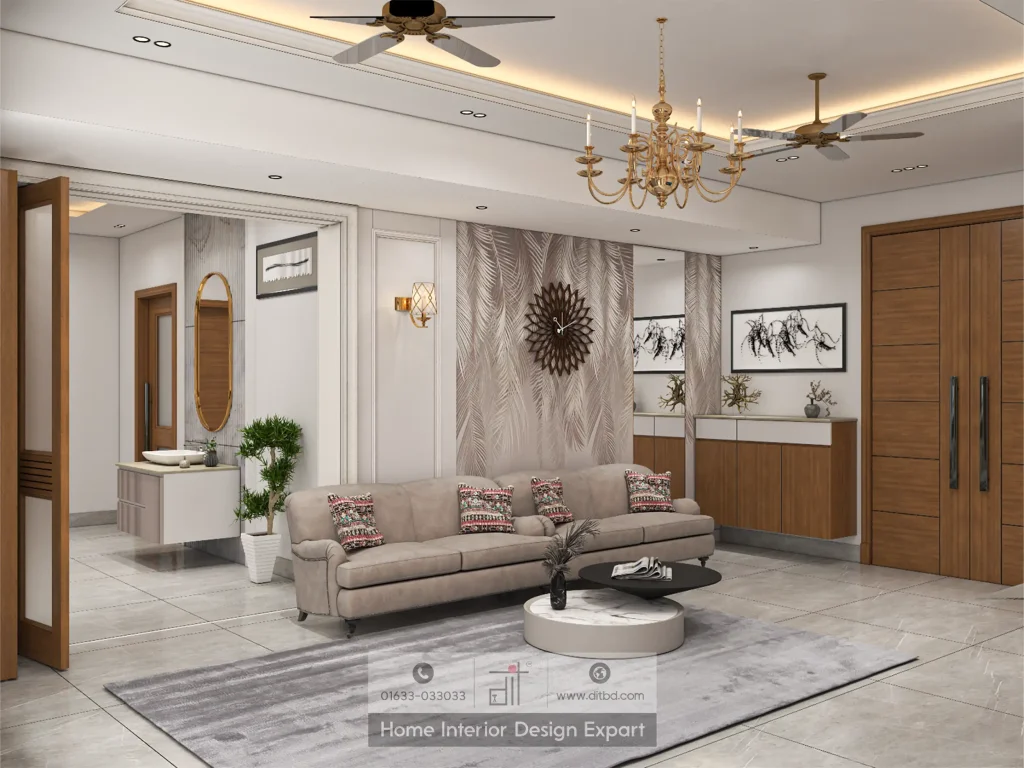
Your living room is honest in a way your drawing room isn’t. Here, comfort isn’t a luxury-it’s the foundation of good design. This is where your family gathers on weekend mornings, where kids do homework on the sofa, where you collapse after a long day.
This doesn’t mean your living room should be sloppy or poorly designed. Rather, it means your design decisions serve daily life first, aesthetics second-though the two aren’t mutually exclusive when done right.
Fabric selection makes or breaks a living room, especially in Dhaka’s humid, dusty climate. Your sofa needs to be washable or upholstered in performance fabrics that withstand spills, heat, and dust. Dhaka’s humidity and air quality mean that delicate velvet isn’t practical; instead, durable, easy-to-clean fabrics in neutral tones make sense. Think high-performance linen, quality cotton blends, or specialized fabrics designed for family living.
Your TV unit should be proportional to actual viewing needs, not an entertainment center that dominates the room. A slim console or wall-mounted TV with minimal surrounding cabinetry creates better flow and makes the space feel less rigid. The goal is functional, not showy.
Layout in a living room prioritizes movement and flexibility. Your furniture should float naturally in the space, creating clear pathways rather than blocking entryways or windows. Multiple seating zones-if space allows-accommodate different activities: perhaps a sofa for TV watching and a reading chair by the window. This adaptability matters when one room serves many purposes.
Natural light and air circulation are non-negotiable in Dhaka living rooms. Don’t cover windows with heavy drapes; instead, use light, breathable curtains that filter sun while maintaining airflow. The psychological impact of natural light is enormous-a room that breathes feels larger and more pleasant. This is especially important in our humid climate where moisture retention creates discomfort.
Storage solutions deserve special attention. Your living room collects things-remotes, books, toys, blankets, chargers. Smart, hidden storage keeps surfaces clear while letting you store what you actually need. Built-in shelving or ottomans with hidden compartments solve this elegantly.
Lighting should be warm and adjustable. You need brightness for daytime activities, but you also want the ability to dim lights and create mood for relaxation. A combination of overhead lighting, task lights for reading, and accent lights for visual interest keeps the space functional and inviting.
The lived-in aesthetic is actually the goal here. Your living room should feel like a family uses it because a family does. Good design simply makes that comfortable, coordinated, and clutter-free-without feeling untouched or intimidating.
Key Design Differences-Color, Texture, and Materials
Understanding material differences clarifies why these rooms require different approaches, making your design choices feel less arbitrary and more strategic.
In your drawing room, embrace curated color. A sophisticated jewel tone or bold statement color works here because the room’s limited use prevents color fatigue. Luxe textures-velvet on seating, marble on surfaces, brass or gold accents-signal quality and intention. Showcase-quality finishes matter because you’re showcasing the space.
Your living room calls for practical color choices. Neutrals and warm tones hide dust better (critical in Dhaka’s climate) and age gracefully as the inevitable wear of family life happens. Stain-resistant, durable fabrics and low-maintenance materials aren’t aesthetic compromises-they’re smart decisions. Matte finishes over glossy work better when you have high daily traffic.
Both rooms must contend with Dhaka’s humidity and heat, but differently. Your drawing room’s premium finishes need quality sealants to withstand climate fluctuations. Your living room’s durable materials must also be breathable and moisture-resistant-breathable so that humidity doesn’t accumulate and damage finishes, resistant so that performance fabrics withstand daily life.
At DIT Studio, we leverage our in-house manufacturing to control quality at every step. We select materials that look beautiful while performing reliably in Bangladesh’s climate. This expertise prevents costly mistakes.
Texture layering differs between spaces. In your drawing room, sophisticated textures create visual interest and signal luxury-a combination of smooth marble, soft velvet, and polished wood feels curated and intentional. In your living room, cozy textures create comfort-layered linens, natural wood, and soft furnishings feel warm and inviting without pretension.
Material selection ultimately hinges on traffic patterns and usage. Your drawing room sees limited daily wear, so you can invest in beautiful materials that require care. Your living room needs materials that withstand daily use gracefully. This isn’t a value judgment-it’s a practical framework that makes both rooms work beautifully.
Furniture Layout and Flow-The Functional Difference
How you arrange furniture reveals the different purposes of these spaces immediately and dramatically.
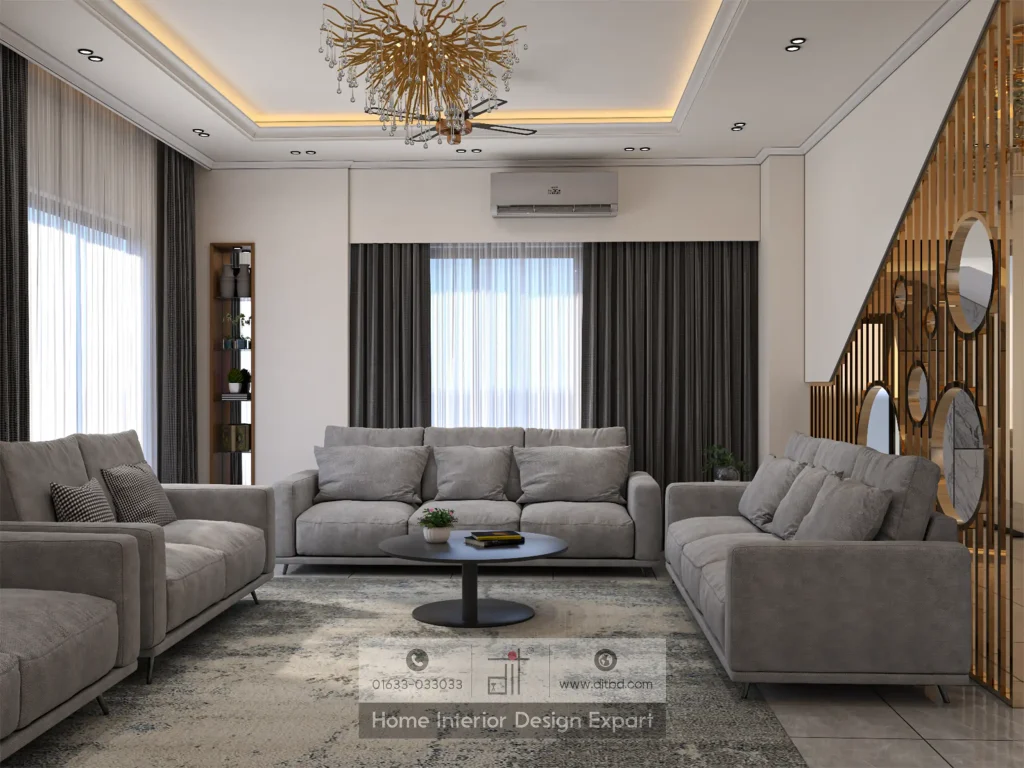
Your drawing room furniture layout focuses on conversation and admiration. Arrange seating to face each other, allowing guests to interact while naturally appreciating the space. Leave ample space between furniture pieces-nobody wants to squeeze past a side table to reach seating. Symmetrical arrangements often work beautifully, creating visual calm and formal elegance. The goal is a layout that feels intentional, with every piece placed for a reason.
One critical difference is that most drawing room layouts don’t have a TV as the focal point. When you walk into a properly designed drawing room, your eye should rest on a piece of artwork, an architectural feature, or perhaps the arrangement of beautiful seating-not a screen. This small choice changes the entire feel of the room from media-centered to people-centered.
Your living room layout works differently. The TV becomes either a central focus (if it’s important to your family routine) or a secondary element (if you prioritize conversation and comfort). Multiple seating zones might emerge if space allows: a sofa for TV watching, a reading chair, perhaps a workspace corner. The layout adapts to how your family actually uses the room.
Flow from your living room to adjacent spaces matters enormously in Dhaka apartments. Ensure clear pathways from the living room to the kitchen or dining area. Don’t place your sofa blocking the main traffic route through your flat. This simple consideration makes daily life smoother and the space feel less cramped.
The problems we solve regularly at DIT Studio, sofas that are too large for the space, swallowing precious square footage; TV units that block windows or natural light; rigid layouts that make movement awkward. Custom furniture proportional to your actual space-something in-house manufacturing makes possible-prevents these issues entirely.
When your furniture layout creates actual flow, when you can move freely through the room, when each piece serves its purpose without overwhelming the space, that’s when a room truly breathes. That’s the difference between a cluttered room and a composed one, between furniture occupying space and furniture enhancing it.
Lighting Strategy-Setting the Right Mood in Each Space
Lighting might be the most underestimated design element in both rooms, yet it shapes how you feel in the space more than almost anything else.
Your drawing room lighting should feel intentional and styled. A beautiful chandelier, for instance, becomes a design statement, not just a light source. Pair it with wall sconces that provide ambient light while adding architectural interest. Add accent lighting-perhaps a focused beam highlighting artwork or architectural details. The goal is layered lighting that serves different purposes and moods.
Dimmers are essential. You want the flexibility to create welcoming brightness for a gathering, then shift to intimate warmth for a smaller dinner. This adaptability prevents your drawing room from feeling like a showroom at all times. In Dhaka’s humid climate, ensure your lighting fixtures are rated for moisture to prevent corrosion.
The problem we solve frequently: harsh overhead lighting that kills elegance. A single bright ceiling fixture, common in many Dhaka homes, makes even a beautiful drawing room feel institutional. Thoughtful lighting design-multiple sources at different levels, warm color temperatures, dimmers-transforms the entire mood.
Your living room lighting must be functional first. You need enough light for reading, homework, daily activities. But it should also offer flexibility. Natural light maximization matters enormously for both climate and psychology-bright, naturally lit spaces feel larger and more pleasant. Consider where your windows are positioned and arrange your furniture to maximize natural light throughout the day.
In your living room, practical brightness layers matter: overhead fixtures for overall brightness, task lights for reading or detailed work, accent lighting for visual interest without pretension. Unlike the drawing room’s statement pieces, living room lighting should be understated but effective.
A clever tactic is how you position lighting affects how spacious a room feels. Upward-facing lights that illuminate the ceiling make spaces feel taller and more open. This matters in Dhaka flats where ceiling height is often limited. Layered lighting that plays at different heights creates perceived depth, making even a compact room feel sophisticated and spacious.
Test your lighting design at different times of day. How does the room feel in the cool morning light? What about evening light filtered through your curtains? How does air conditioning affect how warm or cool the light feels? Both your drawing room and living room should feel good in all light conditions, but the mood you’re creating will differ based on room purpose.
Storage and Organization-Hidden vs. On Display
Storage reveals how differently these rooms function and where design priorities truly lie.
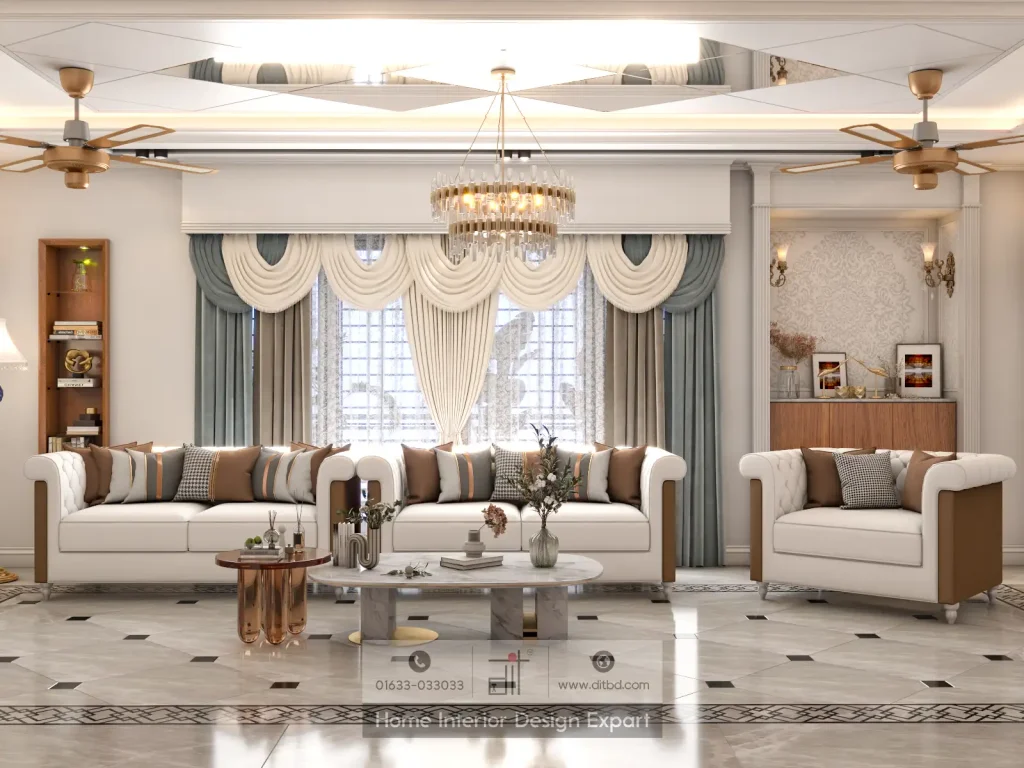
Your drawing room thrives on minimalism and curation. Visible storage is minimal-perhaps a beautiful bookcase with carefully styled volumes, or floating shelves displaying chosen objects. Built-in solutions that blend seamlessly with your design aesthetic work beautifully here. A beautiful piece doesn’t scream “storage”; instead, it feels intentional and designed.
DIT Studio’s in-house manufacturing advantage shines here. We custom-design storage that matches your aesthetic perfectly-perhaps built-in cabinetry that mirrors your color palette, or floating shelves proportioned to your wall dimensions. Everything serves double duty: functional storage that looks like intentional design.
The principle: in your drawing room, what’s on display matters. You’re not storing daily items here. Instead, you might display a small collection of art books, curated objects, or family photos in beautiful frames. Everything visible has been thoughtfully chosen.
Your living room demands practical storage. This room collects the stuff of daily life: remotes, books, toys, blankets, chargers, magazines. Your storage strategy must accommodate all this without creating visual chaos.
The solution: a combination of hidden and accessible storage. Perhaps your entertainment unit has closed cabinetry for electronics and remotes, but open shelving for styled baskets holding throw blankets or books. Built-in shelving might combine closed storage (for items you don’t want visible) with open shelving (for accessible daily items). Ottoman storage, under-sofa drawers, and wall-mounted cabinets all contribute to a system that feels organized rather than cluttered.
Organization principles matter here: everything has a designated place, frequently used items are accessible, seasonal items are hidden away, and decorative objects are displayed thoughtfully among functional storage. This creates a living room that feels calm even when it’s being lived in.
In Dhaka’s space-limited apartments, clever storage becomes genuinely important. Built-in solutions that use vertical space, that integrate into walls, that serve multiple purposes-these become essential to making a living room feel spacious rather than cramped.
One Space or Two? Making the Decision for Your Home
Not every Dhaka home needs both a drawing room and a living room. The right choice depends on your lifestyle, space, and how you actually live.
Ask yourself honest questions, “Do you entertain frequently and formally?”, “Would guests feel genuinely different in a formal space versus a comfortable family room?”, “How much usable square footage do you have? Can you realistically maintain two separate design schemes?”, “Would your family benefit more from one generous living space or two distinct rooms?”
If you entertain regularly, host family gatherings, or simply prefer formal spaces, having both rooms creates genuine value. Your drawing room becomes your showpiece, your living room becomes your sanctuary. Guests enjoy the formality of a dedicated entertaining space, and your family enjoys comfort without compromise.
If you rarely entertain, prefer informal gatherings, or live in a compact flat, combining these functions makes sense. Many modern Dhaka homes successfully blur these lines, creating one multi-functional space that works harder.
The middle path: creating distinct zones within a single large room. Perhaps an open-plan layout with one end styled as a formal entertaining zone (seating focused on conversation, more curated design) and the other as a living zone (TV-focused, family-comfortable). Subtle transitions-different lighting, a change in flooring, furniture arrangement-define zones without requiring walls.
Our philosophy at DIT Studio is designing for how you actually live, not for Pinterest. If you love entertaining and have the space, embrace both rooms fully. If you’re a family that values comfort and togetherness, create one beautiful living room that accommodates your lifestyle. If you’re somewhere in between, design zones that work together.
Whatever you choose, the decision should be intentional and aligned with your actual life. That’s when design truly works, and that’s what we help our clients achieve.
Ready to Design Your Spaces?
Your living room and drawing room should feel like different rooms, designed for different purposes, yet cohesive within your overall home. One might be formal and curated, the other comfortable and lived-in-and that’s exactly how it should be.
The challenge isn’t choosing between these rooms; it’s designing them thoughtfully based on their actual function. At DIT Studio, we create 3D visualizations that show exactly how both spaces will feel before you commit to anything. You’ll see the furniture layout, the color impact, the lighting mood-all before any execution.
Ready to design a living room and drawing room that actually work for your lifestyle? Let’s create a visualization of your space together. Contact DIT Studio for a free consultation-because your home should be as unique as you are, and space that actually breathes is space you want to spend time in.
For more ideas on optimizing your living room in Dhaka’s compact spaces, explore our guide to 7 Smart Living Room Design Ideas for Small Flats in Dhaka. And if you’re ready to commit to a statement-making drawing room, learn how to choose the perfect accent wall in How to Choose the Right Accent Wall for Your Drawing Room in Bangladesh.
FAQs: Living Room vs Drawing Room Design
Q: What’s the main difference between a living room and a drawing room in Bangladeshi homes?
The drawing room is a formal, guest-facing space designed to impress and showcase your home’s style. The living room is a comfort-first family space for daily living. Your design approach differs based on each room’s actual function: drawing rooms prioritize elegance and curation, living rooms prioritize comfort and functionality.
Q: Can I combine a living room and drawing room into one space?
Absolutely. If you don’t entertain frequently or have limited square footage, creating one multi-functional space works beautifully. You can also use zoning-different lighting, flooring, or furniture arrangement-to create distinct areas within one large room. The key is designing based on how you actually live, not what’s traditionally expected.
Q: What materials work best in Dhaka’s climate for both rooms?
Choose moisture-resistant, breathable materials that withstand humidity and dust. For drawing rooms, premium finishes need quality sealants. For living rooms, performance fabrics and stain-resistant materials are essential. Both should have proper ventilation to prevent moisture accumulation. At DIT Studio, our in-house manufacturing ensures all materials are selected specifically for Dhaka’s climate.
Q: How do I make a small drawing room feel formal without feeling claustrophobic?
Use light, sophisticated colors, minimal clutter, and layered lighting. Vertical elements (tall shelving, mirrors) create perceived height. Avoid dark, heavy colors in small spaces; instead, choose jewel tones or warm neutrals. Arrange furniture to maximize flow and avoid blocking natural light. Strategic 3D visualization helps you see exactly how choices will feel before committing.