
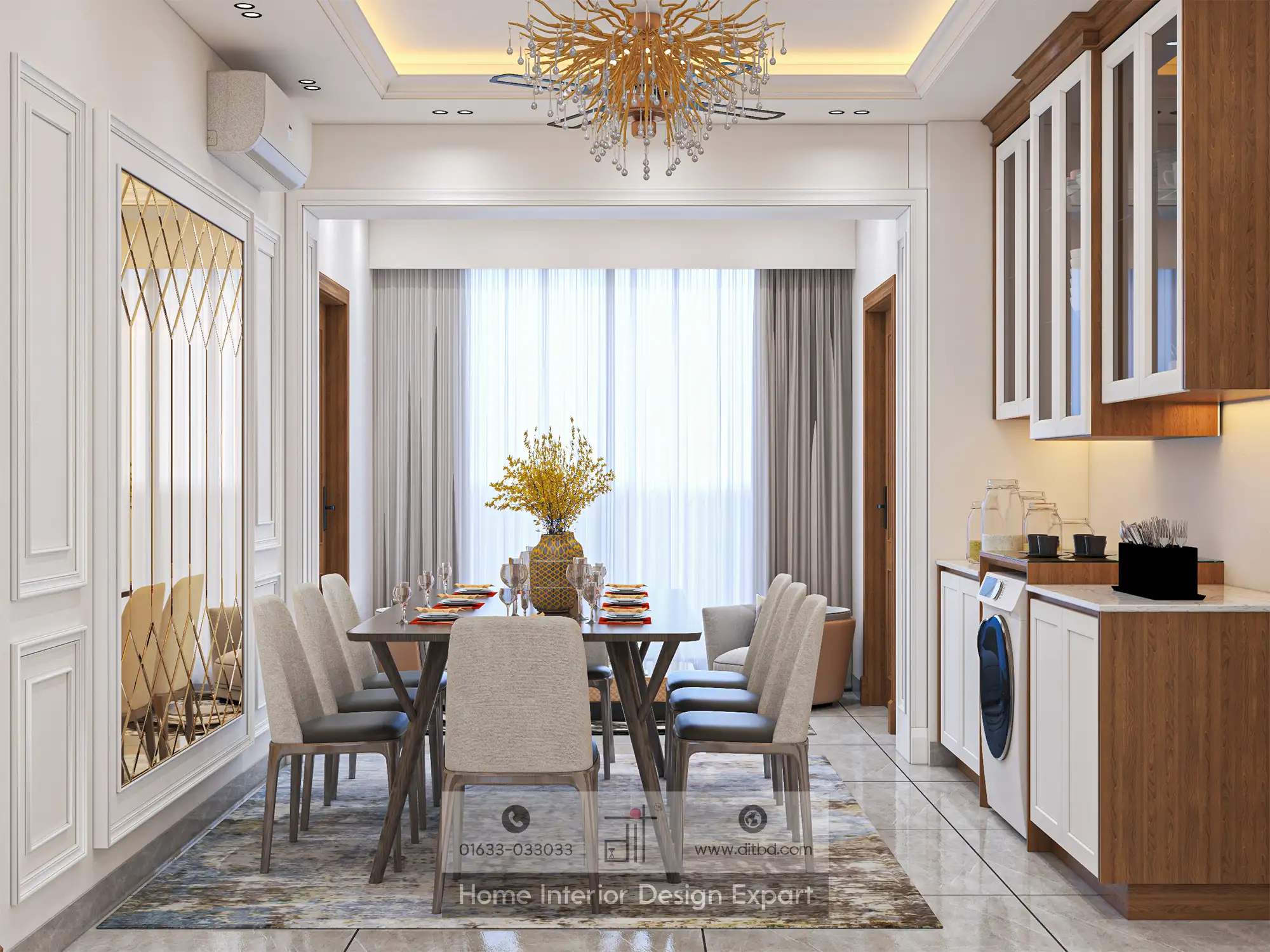
Small flats in Dhaka are the norm, not the exception. But small doesn’t mean cramped or uncomfortable. The difference between a small flat that feels spacious and one that feels suffocating comes down to smart design, not square footage. With thoughtful planning, a 1000-1200 sqft flat can feel more spacious and livable than a poorly planned 1500 sqft space.
Here’s an important truth: it’s not about hiding stuff-it’s about smart design that maximizes every inch while keeping your space beautiful and functional. Good design makes small spaces feel larger psychologically. Light, organization, and intentional furniture choices create the illusion and reality of more space.
The psychological impact of space is real. Clutter makes small spaces feel smaller. Darkness makes them feel cramped. Thoughtful design-with proper lighting, organization, and strategic furniture placement-makes small spaces feel open and inviting. Dhaka apartments specifically need smarter design because our climate (humidity, heat) and urban density make functional, beautiful small spaces especially valuable.
This guide covers 10 proven ideas you can implement today. Some require professional help; others you can tackle immediately. All of them work in Dhaka’s specific climate and building constraints.
Idea 1: Floor-to-Ceiling Wardrobes & Built-In Storage
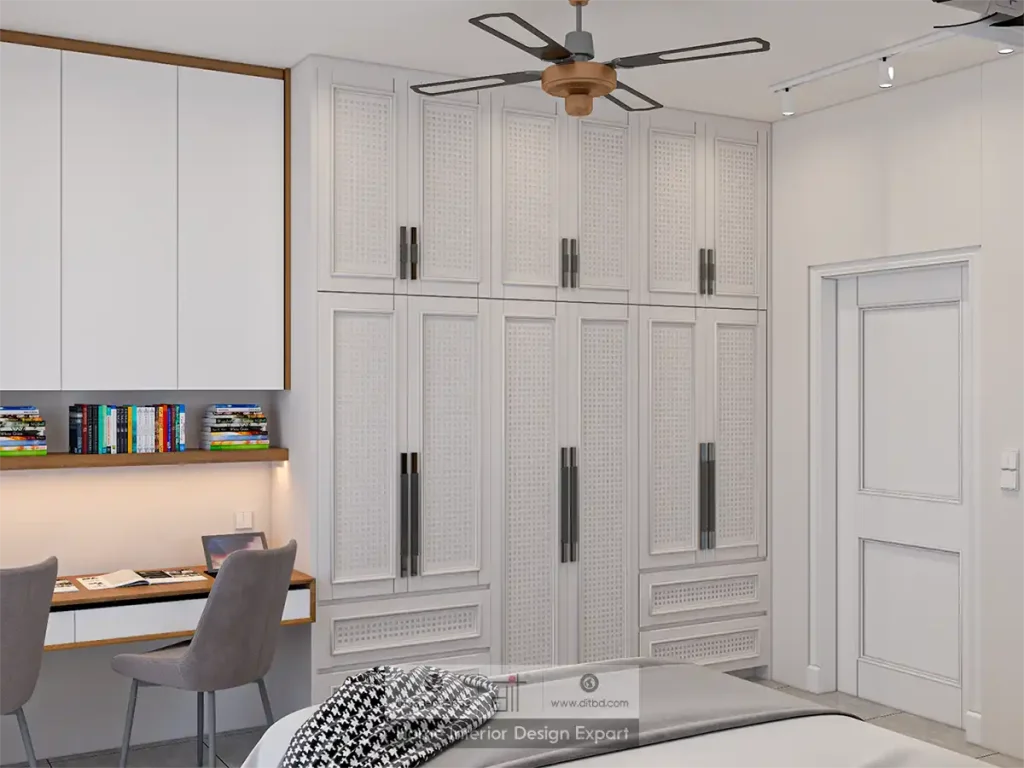
Every centimeter of wall space in a small flat is precious. Floor-to-ceiling wardrobes and built-in storage maximize vertical space that would otherwise be wasted. A bedroom with a floor-to-ceiling wardrobe gains approximately 40% more storage than one with standard 2000mm wardrobes because you’re using the wall space above and below effectively.
Why this works: Vertical space is underutilized in most small flats. Traditional wardrobes leave dead space above them. Built-in solutions use every inch from floor to ceiling.
Design considerations: Decide between open shelving vs. closed doors. Closed doors create a cleaner, more organized visual appearance-essential in small spaces where clutter shows. Internal organization systems (pull-out drawers, hanging rods, shelving dividers) make storage functional. Mirror panels on doors reflect light and add visual depth, making the room feel larger. Soft-close mechanisms ensure longevity-doors that stick or slam wear quickly.
Cost perspective: Initial investment ranges from ৳ 80,000-200,000 depending on complexity and materials. This investment pays off in functionality and longevity. Your wardrobe will serve you for 15+ years without degrading.
Real example: A 10×10 bedroom with floor-to-ceiling wardrobe gains 40% more storage and dramatically improved visual cleanliness compared to a standard wardrobe with floating shelves above it. The space feels larger and more organized.
Idea 2: Multi-Function Furniture (Beds with Storage, Ottomans)
In small spaces, every piece of furniture should earn its place by serving multiple purposes. Furniture that does only one thing is luxury you can’t afford in limited square footage.
Beds with under-storage: Platform beds with drawers hide seasonal clothing, extra linens, or shoes. Hydraulic lift-storage beds (popular in India, increasingly available in Dhaka) open to reveal storage chambers underneath. Hidden storage without reducing the visual footprint of the bed. A hydraulic bed costs ৳ 40,000-80,000 but effectively doubles your bedroom storage without adding another piece of furniture.
Ottoman storage benches: These double as seating and storage simultaneously. Place one at the foot of your bed or in your living room. Customize fabrics and colors to match your aesthetic. Opens to reveal storage for books, blankets, or seasonal items.
Sofa beds & sectionals: A sofa bed is a guest bedroom solution without dedicating an entire room. Storage units integrated into seating provide additional hidden storage. Small flats often can’t afford dedicated guest rooms; a sofa bed solves this elegantly.
Dining tables with storage: Shelves below the table for storing serving items. Drop-leaf tables for flexible sizing (expands for entertaining, contracts for daily use). Seats that double as storage are increasingly available. Every piece serves multiple functions.
Why it works: Every piece of furniture earns its place. Nothing is purely decorative. This discipline keeps small spaces from becoming cluttered while maximizing functionality.
Idea 3: Smart Kitchen Design for Compact Spaces
Kitchens in Dhaka’s small flats are often the most cramped spaces. Smart kitchen design makes compact kitchens highly functional and pleasant to cook in. A well-designed small kitchen beats a poorly organized large kitchen.
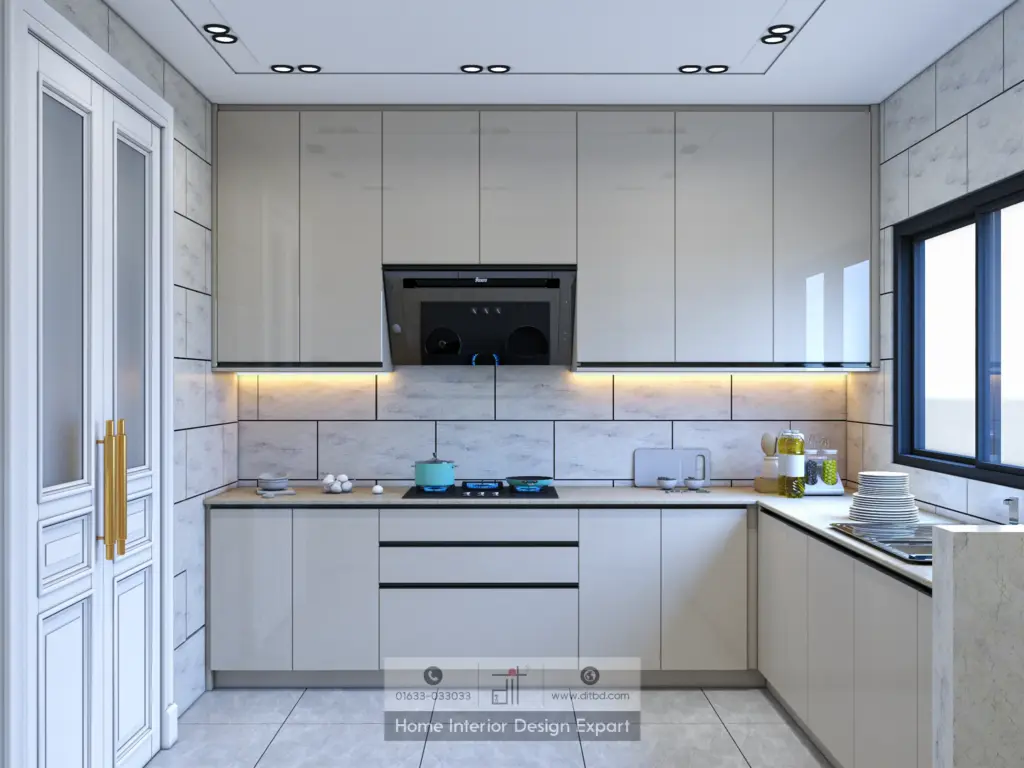
Vertical storage in kitchens: Floor-to-ceiling cabinets maximize every inch. Open shelving for frequently used items (plates, glasses) makes daily items accessible. Wall-mounted magnetic strips hold knives and metal tools. Overhead rails with hooks store pots and pans. Vertical thinking triples available storage.
Compact kitchen layouts: Galley kitchens (kitchen on two parallel walls) are incredibly efficient-everything is within arm’s reach. L-shaped kitchens work well in corner spaces. Avoid islands in small flats-they eat up the limited floor space you need for moving and cooking.
Appliance selection: Smaller, multi-function appliances save counter space. A combination microwave-oven is more space-efficient than two separate appliances. Built-in options (stove, oven, dishwasher) integrate seamlessly into cabinetry rather than sitting separately. Pull-out pantry units hide massive storage in narrow spaces.
Lighting matters: Under-cabinet lighting makes spaces feel larger and helps you work efficiently. Good lighting transforms a space psychologically-it feels brighter and more open.
Material choices: Light colors and reflective surfaces amplify space. White or light gray cabinets make kitchens feel larger than dark wood. Glossy finishes reflect light; matte finishes absorb it. Thoughtful material choices shape how spacious your kitchen feels.
Budget consideration: Modular kitchens offer better value for small spaces-their efficient design maximizes functionality. A modular kitchen at ৳ 3-4 lakhs provides better storage and workflow than a ৳ 2.5 lakh traditional kitchen in the same space. Learn more on modular and traditional kitchen.
Idea 4: Open Floor Plans & Strategic Room Dividers
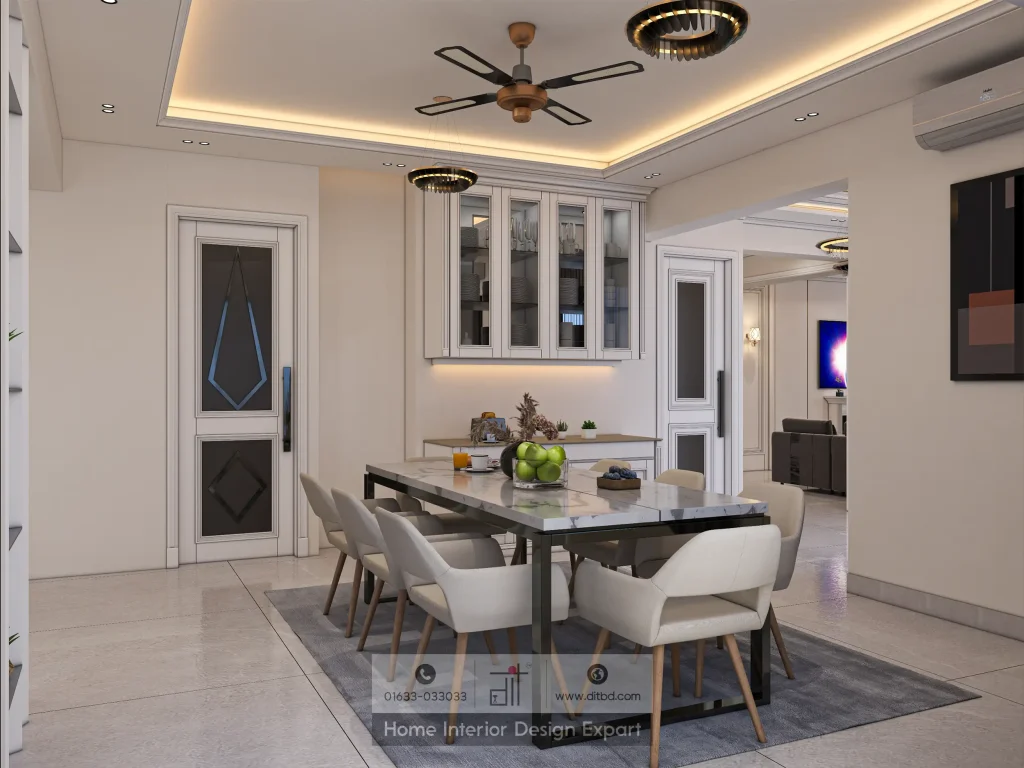
Open floor plans make small spaces feel larger by removing visual barriers. Light travels further. Movement feels unrestricted. The space feels psychologically bigger even if square footage hasn’t changed.
Benefits of open floor plans: Living, dining, and kitchen flow together as one cohesive space. Natural light travels further, reducing the need for artificial lighting. Feels larger psychologically-no enclosed rooms to feel cramped. More flexible for entertaining-you can watch guests while cooking.
When to avoid open plans: If you need privacy and quiet zones (working from home requires separation from living areas). If cooking smoke and odors need containment. If noise isolation matters (music, TV, kids playing shouldn’t disturb sleeping areas).
Strategic dividers (not walls): Sliding glass panels separate spaces while maintaining visual openness-you get privacy and light simultaneously. Shelving units function as storage and separation simultaneously. Curtains provide flexible boundaries-draw them when you need privacy, open when you want spaciousness. Low cabinets create visual boundaries without blocking light or sight lines.
Real example: Separating kitchen from living room with a low pass-through counter. The kitchen remains visually part of the living space (feels open) but a physical barrier prevents cooking smoke from reaching seating areas. Best of both worlds.
Dhaka-specific consideration: Open plans work beautifully in Dhaka’s warm climate. Natural ventilation flows through open spaces more effectively than enclosed rooms. Open plans help keep your flat comfortable without excessive air conditioning.
Idea 5: Mirrors, Lighting & Color to Amplify Space
Lighting and color are psychological tools that make spaces feel larger. They’re also the cheapest space-saving investment-mirrors, lighting fixtures, and paint cost far less than structural changes but deliver dramatic visual improvements.
Strategic mirror placement: Mirrors opposite windows bounce natural light around rooms. Full-height mirrors in narrow corridors make hallways feel wider. Mirrored wardrobe doors double the visual space of your bedroom. Avoid the “fun house” effect with subtle, strategic placement rather than mirrors everywhere.
Lighting design: Layered lighting (ambient, task, accent) creates depth and makes spaces feel more interesting. Recessed ceiling lights look cleaner than hanging fixtures-more space overhead. Wall sconces instead of floor lamps keep floor space clear. Minimizing shadow areas prevents dark corners that shrink space perception. Good lighting transforms how spacious a room feels, especially in Dhaka’s sometimes-dim apartments.
Color psychology: Light, neutral base colors (walls, large furniture) make spaces feel larger. Accent colors in small doses add personality without overwhelming. Light colors recede visually; dark colors advance. Use this principle wisely-light ceilings feel higher. Monochromatic schemes (different shades of the same color) feel cohesive and spacious.
Texture matters: Matte finishes absorb light; shiny finishes reflect it. In small spaces, shinier finishes (satin or semi-gloss paint, glossy tiles) help light bounce around, amplifying perceived space.
Dhaka context: Heat considerations with light colors. White walls are lighter and cooler but show dust in Dhaka’s humidity. Light grays achieve spaciousness while hiding dust better. This practical trade-off matters for maintenance.
Idea 6: Vertical Gardens & Plants (Green Without Floor Space)
Plants add life and psychological richness to small spaces without consuming precious floor space. Green spaces reduce stress and improve mental wellbeing-valuable in small, urban flats.
Why plants matter:
- Psychological impact: green spaces reduce stress and increase feelings of spaciousness.
- Natural air purification: plants improve air quality in sealed apartments (important in urban Dhaka). Zero floor footprint when wall-mounted-you get living greenery without using floor space.
Implementation ideas: Wall-mounted planters and trellises use vertical wall space. Hanging planters from ceilings bring greenery overhead without taking up furniture space. Vertical garden structures (like living walls) create impressive green focal points. Windowsill herb gardens serve double duty-beautify while growing cooking herbs you actually use.
Plant selection for Dhaka: Low-light options for inner rooms (Pothos, ZZ plants, snake plants thrive without direct sun). Heat and humidity-tolerant species (Monstera, Areca palms, philodendrons flourish in Dhaka). Easy-maintenance plants for busy professionals-you don’t want a plant that requires daily attention you can’t provide.
Styling consideration: Plants add visual interest without bulk. A living wall creates a focal point without consuming square footage. Grouped plants on shelves look intentional and designed rather than random.
Maintenance note: Choose hardy, forgiving plants. Finicky plants that die quickly create stress, not beauty. Hardy plants that forgive occasional neglect are better for busy modern Dhaka families.
Idea 7: Minimize & Curate: Decluttering as Design
In small spaces, every object is visible. Clutter immediately makes the space feel cramped. The most effective space-saving tool isn’t furniture-it’s ruthless decluttering.
Marie Kondo approach: Keep what brings joy. Honestly evaluate each possession. Does it serve a function or bring happiness? If not, it’s taking up valuable space in your flat.
Practical decluttering: One-year rule: if you haven’t used something in one year, you probably don’t need it. Seasonal rotation storage (store winter clothes in summer, vice versa) keeps your visible storage manageable. Donation vs. storage decisions: asking someone to store your items “temporarily” often means they sit for years. Be honest about what you’ll actually use.
Design principle: Empty space is luxury in small flats. A shelf that’s 70% full looks organized; 100% full looks cluttered. Curated items on shelves (books, decorative objects, plants) look intentional. Packed shelves look chaotic. Give items room to breathe.
Visual impact: Three carefully chosen cushions on a sofa look designed. Twelve cushions look like you’re hiding furniture shape. One piece of wall art looks intentional. Twelve pieces look like a collage. Curation matters in small spaces.
Psychological benefit: Less clutter = less stress, more mental clarity. Small flats are psychologically challenging because you’re always aware of your environment. Minimal, curated spaces feel calmer and more spacious mentally.
Storage solutions for stuff you keep: Uniform storage boxes (matching boxes, consistent colors) create cohesion even when full. Labels and systems prevent things from getting lost. Out-of-season storage in beds or high shelves keeps your daily space clutter-free.
Dhaka-specific: Summer/winter clothing rotation is essential. Store your sweaters and heavier fabrics during Dhaka’s hot months; store light summer clothes during cooler times. This rotation halves the closet space you need for seasonal items.
Idea 8: Corner Solutions & Dead Spaces
Awkward corners are common in Dhaka’s older buildings. Most people ignore them. Smart designers turn them into functional or decorative assets.
Awkward corners (common in Dhaka flats): Corner shelving units (triangular or L-shaped) use space that otherwise wastes. Corner sofas or seating use space efficiently, wrapping around the corner. Tall narrow cabinets fit perfectly in tight corners, providing storage without protruding. Reading nooks with cushioning turn dead corners into cozy personal spaces.
Under-stair storage: If applicable to your layout, stairs often hide unused storage underneath. Custom drawers or cabinets under stairs maximize this often-forgotten space.
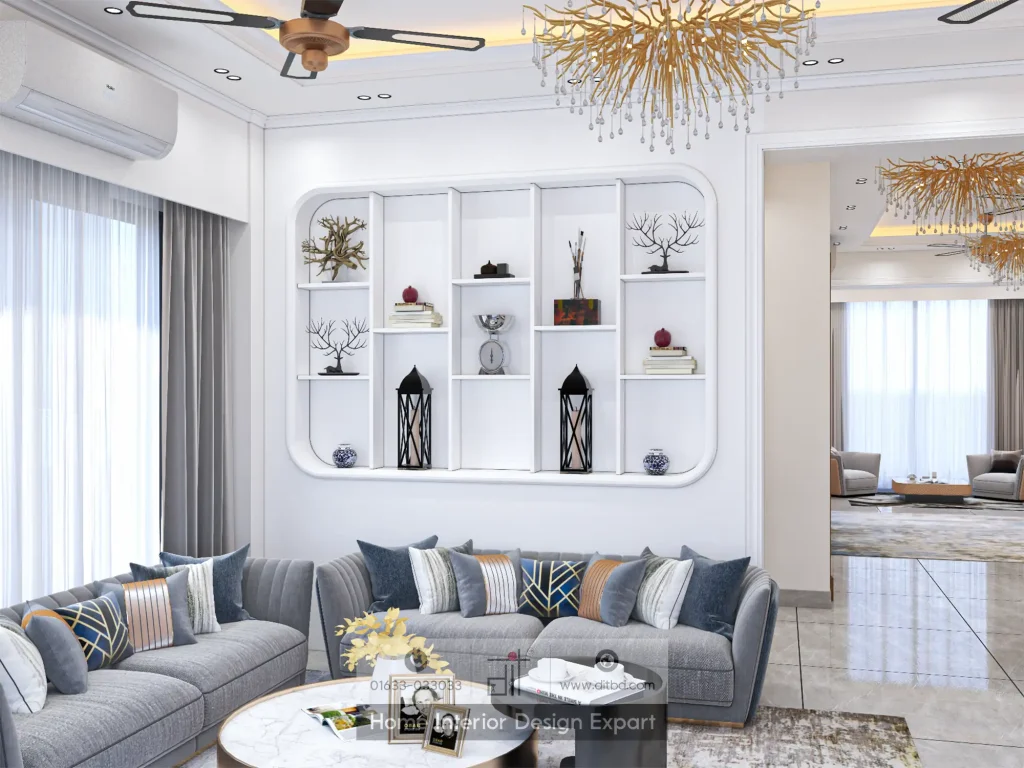
Recessed shelving: Built into wall depth (doesn’t jut out into the room). Custom cabinetry uses the wall itself as a frame. This approach saves visible floor space while providing storage.
Diagonal furniture placement: Can make rooms feel larger. A sofa at a 45-degree angle to the corner creates visual interest and can make a room feel less boxy.
Real example: Converting an awkward corner into a home office nook. A small desk, shelving above, and good lighting create a functional workspace without taking up floor space from your living area. Corners become assets instead of dead zones.
Idea 9: Fold-Away & Convertible Spaces
Flexibility is essential in small flats. Spaces that serve multiple purposes based on your needs are invaluable. Fold-away furniture and convertible solutions let your small space adapt to different uses.
Fold-away desks/tables: Wall-mounted drop-down tables create a desk when you need it, disappear when you don’t. Works perfectly for home offices in small spaces. Tuck away when not in use, reclaiming floor space for other activities.
Convertible guest solutions: Sofa bed instead of guest room-you get seating furniture and guest accommodations in one piece. Daybeds that serve dual purpose (seating during day, sleeping at night). Murphy beds (if budget allows) fold into wall cabinets, creating a full-sized bedroom that disappears during the day.
Flexible seating: Poufs and stools instead of chairs-easy to move or store. Multiple uses (seating, footrest, side table, step stool). A collection of poufs lets you accommodate guests while keeping floor space flexible.
Movable partitions: Sliding doors for closets maximize every centimeter. Flexible room divisions (rolling screens, sliding panels) let you separate spaces when needed, open them when you want a larger single space.
Storage that moves: Rolling carts, mobile shelving-storage you can relocate when your needs change. A wheeled storage cart can be kitchen storage during the day, bedroom storage at night. Flexibility beats permanent placement in small spaces.
Idea 10: Smart Technology & Cable Management
Visible cables and gadgets make spaces feel cramped and chaotic. One outlet with four chargers and cables hanging down makes a space look disorganized. Smart cable management and device storage create psychological spaciousness.
Why it matters: Visible cables and gadgets make spaces feel cramped even if they’re not. Every visible wire adds visual noise. In small spaces where you’re constantly aware of your environment, visual noise feels magnified.
Cable management solutions: Behind-wall conduits hide cables completely. Furniture with built-in cable paths (desks, shelving) integrate cables invisibly. Wireless charging stations (fewer cables) reduce visible clutter. Cable organizers in drawers keep charging cables grouped and hidden.
Smart storage for gadgets: Dedicated charging stations (a specific shelf or cabinet for phones, tablets, laptops) contain the clutter. Wall-mounted shelves for devices hide them behind appliances rather than sitting on counters. Specific homes for everything prevent cables and chargers from spreading across surfaces.
Space-saving tech: Wall-mounted TVs (no floor space) instead of TV stands. Compact entertainment systems instead of large shelving units. Fold-away tech when not in use (laptop closes, phone docks, reducing visible tech presence).
Future-proofing: Design spaces to accommodate tech evolution. Build charging outlets and cable runs into walls during initial design so future tech integrates smoothly.
Putting It All Together – Your Small Flat Design Plan
You’ve learned 10 space-saving ideas. Not all apply to your situation. The key is prioritizing strategically.
- Priority ranking: Which ideas matter most for your lifestyle? If you work from home, a home office nook (Idea 8) is essential. If you entertain frequently, an open floor plan (Idea 4) matters more than elaborate bedroom storage. Rank the ideas by importance to your life.
- Budget approach: Phased implementation is smart. Don’t try to implement all 10 ideas at once. Start with high-impact, lower-cost changes (mirrors, lighting, decluttering). Then move to investment pieces (built-in storage, multi-function furniture). This approach spreads costs and lets you see results incrementally.
- Professional design value: Layout planning requires expertise. Maximizing specific dimensions, coordinating all ideas cohesively-this is where professional design adds enormous value. A designer can tell you exactly how to adapt these ideas to your unique space.
- DIT Studio’s approach to small flats: We design every centimeter purposefully. Custom furniture designed for your exact space. No wasted square inches. Functionality and beauty balanced beautifully. No generic small-flat design-we create solutions specific to your layout and lifestyle.
- Timeline: Small flats can be completed faster than larger spaces. 6-8 weeks from design through move-in is typical. This quick timeline means you’re living in your improved space sooner.
Frequently Asked Questions
Q: Are mirrors in small spaces too risky? Can they look overwhelming?
Mirrors are tools to be used thoughtfully, not everywhere indiscriminately. Strategic placement opposite windows or in narrow hallways amplifies light without overwhelming. Full-wall mirrors can feel too much; one large mirror or a mirrored wardrobe door is sufficient. Used intelligently, mirrors are invaluable space-amplifiers.
Q: Which is more important for small spaces: good lighting or light colors?
Both matter enormously, but if forced to choose, good lighting wins. A well-lit space with darker walls feels larger than a dark space with white walls. Light travels through good-lit spaces, creating the illusion of depth. However, light colors amplify light, so together they’re powerful.
Q: Should I avoid bold colors in small flats?
Bold colors can work beautifully in small spaces if used strategically. An accent wall in deep blue or terracotta can look dramatic and intentional, not overwhelming. The key is balance: one bold accent, lots of neutral surfaces. Bold color on one wall creates focal interest; bold color everywhere feels cramped.
Q: What’s the most cost-effective space-saving change I can make?
Decluttering is free. Rearranging furniture costs nothing. Painting accent walls (৳ 20,000-50,000) is cheap and transforms spaces. Adding mirrors (৳ 15,000-40,000) amplifies light. These changes deliver enormous visual impact for minimal investment.