

Your kitchen is the heart of your home. You spend significant time there-preparing meals, storing food, gathering with family. Choosing between a modular kitchen and a traditional kitchen is bigger than you might think. This decision affects your budget, daily experience, maintenance burden, and resale value.
Here’s the important truth: there’s no universally “best” option. The right choice depends on your lifestyle, budget, priorities, and how long you plan to stay in your flat. Some Dhaka families will thrive with a modular kitchen; others will be happier with traditional. Your job is understanding the trade-offs so you can decide confidently, based on your actual needs and values.
This guide offers an honest comparison across eight key factors. Not a sales pitch for either option-just practical information to help you choose based on your situation. You’ll understand the real differences, realistic costs, and which type serves your lifestyle best. By the end, you’ll feel confident in whichever direction you choose.
Traditional Kitchen Definition
Traditional kitchens are built on-site using local materials. Your mason and carpenter source materials (brick, plaster, wood, tiles) and construct cabinetry directly in your kitchen. The design evolves during construction based on measurements and site conditions. It’s customized to your exact space and can include whatever materials you want.
Traditional kitchens are common in older Dhaka homes and remain popular because they’re typically cheaper initially and genuinely custom-fitted to irregular kitchen dimensions (common in older flats and buildings). Every traditional kitchen is unique-you’re not using a template.
The downside: quality depends entirely on your mason’s skill and material choices. There are no manufacturing standards, no quality control, no pre-planning consistency. You’re building something new, on-site, with every project being different and outcomes varying wildly based on craftsman quality.
Modular Kitchen Definition
Modular kitchens consist of prefabricated, standardized cabinet units manufactured in factories and assembled on-site. The design is professional and engineered by specialists. Materials are consistent because they come from the same manufacturer using standardized processes. Assembly happens quickly because components are pre-made and tested.
Modular kitchens are available from multiple manufacturers (both international brands like Godrej and Häfele, and local producers), offering various price points and style options. You’re choosing from existing designs and configurations rather than starting from scratch. This removes some customization possibility but ensures consistency and quality.
Hybrid Approaches
Many modern Dhaka homes use a blend. You might choose modular cabinetry with traditional marble or wood countertops. Or you might use modular base cabinets with custom modifications. These hybrid approaches often offer the best balance of cost, functionality, and personalization.
DIT Studio’s Perspective
We use both approaches depending on client needs. Some projects benefit from modular efficiency; others require traditional customization. Our recommendation depends on your specific situation-layout, budget, timeline, and how long you’re staying in your flat. We don’t push one direction; we fit the solution to your actual circumstances.
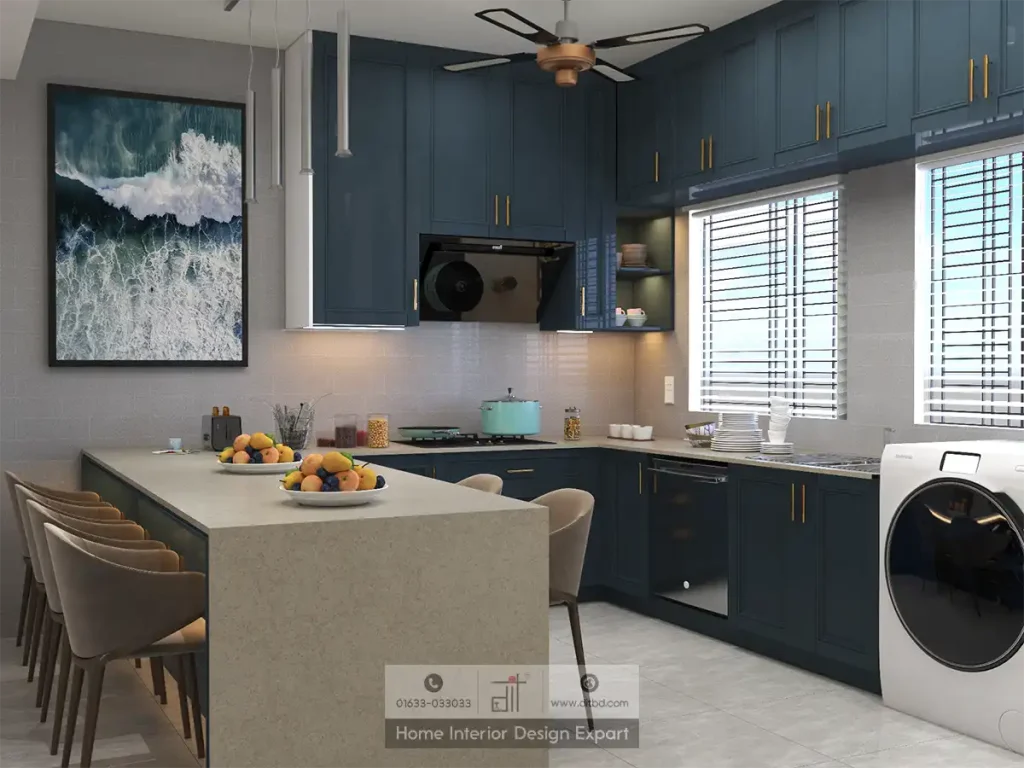
Cost Comparison – Initial Investment & Long-Term Value
Budget is often the deciding factor. Let’s talk honest numbers that help you compare fairly.
Upfront Cost for a 1000-1200 Sqft Flat
Modular kitchens:
- Budget modular: ৳ 2-3 lakhs
- Mid-range modular: ৳ 3-5 lakhs
- Premium modular: ৳ 5-8+ lakhs
Traditional kitchens:
- Budget traditional: ৳ 1.5-2.5 lakhs
- Mid-range traditional: ৳ 2.5-4 lakhs
- Premium traditional: ৳ 4-6 lakhs (usually cheaper than modular equivalent)
Modular is more expensive initially. Here’s why the cost difference exists:
- Manufacturing overhead: Modular manufacturers invest in facilities, machinery, and quality control. These infrastructure costs are built into pricing.
- Material quality: Modular kitchens typically use marine plywood and high-pressure laminates-more expensive than the wood varieties used in budget traditional kitchens. These premium materials justify the higher cost through durability.
- Labor costs: Skilled technicians assemble modular units with quality standards. Mason labor is cheaper in traditional kitchens because it’s less specialized (though quality varies dramatically).
- Design consultation and planning: Modular manufacturers typically include professional design services; traditional kitchens might be designed by the mason with minimal consultation.
Long-Term Cost Analysis (10-Year Perspective)
This is where the math gets interesting. A modular kitchen’s lower maintenance means fewer repair costs. A traditional kitchen often requires renovation or significant repairs within 8-10 years.
- Modular: Lower maintenance = fewer repair costs. A quality modular kitchen functions beautifully for 15+ years with minimal investment beyond occasional hardware replacement. After 10 years, you might spend ৳ 50,000-100,000 on minor updates.
- Traditional: Higher maintenance costs accumulate. Wood warps and rots. Hinges rust. Paint peels. Within 5-8 years, many traditional kitchens need repainting, cabinet repairs, or seal touch-ups. Within 10 years, a full renovation often costs ৳ 2-4 lakhs-sometimes approaching 50% of the original cost.
- Resale value impact: Modular kitchens add 2-5% to resale value. Buyers see them as modern and low-maintenance. Traditional kitchens are neutral at best (buyers don’t pay premium for traditional) or negative (buyers see them as needing updates). Over a 10-year ownership period, a modular kitchen’s resale advantage often exceeds ৳ 2-3 lakhs on a ৳ 50 lakh property.
Hidden Costs to Consider
- Modular: Customization beyond standard sizes costs extra. If your kitchen has irregular dimensions, you might need custom modifications (৳ 30,000-100,000 extra), adding cost.
- Traditional: Structural reinforcement (if walls aren’t strong enough for heavy traditional cabinets), redo-ability (mistakes are expensive to fix because everything is built on-site), and quality variation (cheap materials cost less initially but fail faster and require earlier replacement).
Value for Money
If you’re staying 10+ years, modular offers better value because lower maintenance costs offset the higher initial investment. Over 10 years, total cost of ownership (initial + maintenance + updates) often favors modular despite higher upfront cost.
If you’re staying 3-5 years, traditional’s lower upfront cost might be sufficient advantage-you won’t be there long enough to experience the maintenance issues. When you sell, the kitchen is the next owner’s concern.
If resale matters (most Dhaka families eventually move), modular wins because it increases property value and appeals to modern buyers. The ৳ 1-2 lakh premium you pay initially often returns as ৳ 2-3 lakh in resale value.
Durability & Lifespan – Which Lasts Longer?
Modular Kitchen Durability
Quality materials (marine plywood, high-pressure laminates, aluminum) are engineered for durability. Manufacturing standards ensure consistency across units. Hinges, handles, and hardware are engineered components, not afterthoughts sourced from local shops. Typical lifespan: 15-20 years with proper care.
Marine plywood is specifically designed to resist moisture. In Dhaka’s humid climate, this matters enormously. Sealed materials resist humidity better than traditional wood finishes that degrade over time.
Traditional Kitchen Durability
The brick and plaster base can last decades, but finishes deteriorate much faster. Wood quality varies dramatically; cheap wood warps and rots within years. Hardware is often lower quality and rusts easily in humidity. Typical lifespan: 8-12 years before major repairs are needed.
Dhaka’s humidity and heat challenge traditional kitchens particularly. Wood expands and contracts with moisture changes. Paint and finishes don’t hold up well without constant maintenance. Without regular sealing and repairs, traditional kitchens age visibly within 5-7 years.
Common Failure Points
- Modular: Hinges and drawer slides eventually need replacement (easily replaceable components; not permanent failure of the system).
- Traditional: Rotting wood (when sealing fails), expanding/contracting cabinets (that used to close smoothly now stick), rusting hardware (common in Dhaka’s moisture), peeling paint, swollen drawers that no longer function smoothly.
Repair and Replacement Considerations
Modular kitchens are truly modular. If one unit fails, you replace that unit. The entire kitchen doesn’t suffer. Replacement units from the same manufacturer match perfectly. Parts are standardized and readily available.
With traditional kitchens, matching replacements is sometimes impossible. The carpenter who built your kitchen might not be available years later. Even if he is, colors and finishes might not match exactly. You might end up replacing larger sections to achieve visual consistency.
Dhaka Climate Reality
The difference between modular and traditional durability is magnified by Dhaka’s climate. Traditional kitchens need regular maintenance (annual sealing, frequent repainting, hardware replacement) in Dhaka’s moisture. You’re essentially fighting climate continuously.
Modular kitchens require minimal maintenance because sealed materials resist humidity naturally. You’re not fighting the climate; the kitchen is designed for it. This is a significant quality-of-life difference.
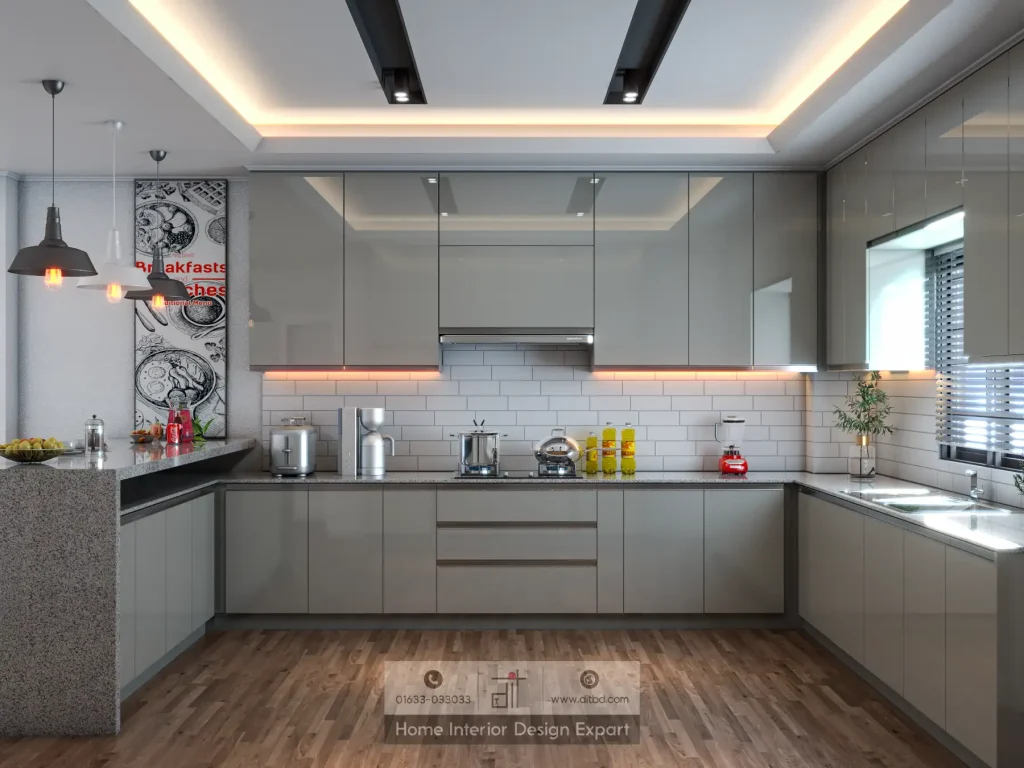
Customization & Design Flexibility
Modular Kitchen Flexibility
Standardized sizes can limit creativity initially-you’re choosing from available dimensions and configurations. However, many manufacturers now offer custom modules, expanding possibilities considerably. Finish options include various colors, wood-look laminates, and textures. Layout flexibility works within modular constraints but is more flexible than many people assume.
Easier to redesign or expand later. If you want to change your kitchen in 5 years, you can replace specific units without reconstructing everything. This flexibility is valuable if your needs change (adding an island, expanding storage, updating finishes).
Modular kitchens tend toward similar aesthetics. Sleek, modern, clean-which is beautiful but sometimes feels impersonal or “catalog-like” to those who prefer warmth and uniqueness.
Traditional Kitchen Flexibility
Truly custom to your exact space. Any size, shape, or style is possible. You can work with irregular walls or awkward shapes (common in Dhaka’s older buildings). Custom design elements are possible-a unique carved detail, special wood selection, cultural touches. A traditional kitchen reflects your individual taste and personality.
More forgiving of non-standard dimensions. Dhaka’s older flats sometimes have quirky kitchen layouts. Traditional kitchens adapt easily to these irregular spaces; modular units might require structural modification to fit properly.
Can feel homey and character-filled, or cluttered and chaotic, depending on execution quality. A well-designed traditional kitchen feels warm and personal. A poorly designed traditional kitchen looks disorganized.
Dhaka-Specific Considerations
Older flats often have irregular kitchens. Traditional design handles unusual dimensions better than modular. Modular might require expensive custom modifications or leave unused space. If your kitchen doesn’t fit standard modular dimensions, traditional or semi-custom modular becomes necessary.
Real Example
A 9′ x 12′ irregular kitchen with a jog in one wall: Traditional design custom-fits this space, utilizing every inch efficiently. Modular units would either leave gaps or require expensive custom modules. This scenario is common in Dhaka’s older residential buildings. In such situations, traditional design or hybrid semi-custom modular is often the only practical solution.
Design Trend Impact
Modular kitchens tend toward similar contemporary aesthetics across homes. Many modular kitchens look similar-different colors and finishes, but similar structure. Traditional kitchens allow for cultural touches, eclectic design, or unique personal style. If you want your kitchen to feel uniquely yours, traditional offers more personality.
Professional Design Value
- Modular: Pre-designed layouts from manufacturers. You choose from available options rather than starting from scratch. Less design consultation needed; more standardized process.
- Traditional: Requires a skilled designer or architect to plan custom layouts. Professional design is essential; mediocre traditional kitchens feel disorganized. The designer’s skill directly affects outcome quality.
Maintenance & Cleaning – Practical Daily Living
Beyond durability, maintenance affects daily quality of life. A high-maintenance kitchen becomes a burden over years of daily use.
Modular Kitchen Maintenance
Easier to clean. Smooth, sealed surfaces resist stains and don’t harbor dirt. Laminate is inherently stain-resistant and durable. Fewer crevices mean dirt and pests have nowhere to hide. Hardware is standardized, so if a hinge breaks, you replace it easily with an identical part-no hunting for matching hardware.
Paint and finishes don’t chip easily because they’re applied in controlled factory conditions. Paint/finish durability is significantly better than on-site painting. Lower long-term cleaning effort. Sealed surfaces naturally resist humidity and moisture damage-no special sealing or treatment needed beyond occasional resealing (every 5-10 years optional).
Traditional Kitchen Maintenance
More crevices and uneven surfaces catch dust and grime. Grout and gaps between tiles and cabinets are dust magnets, especially in Dhaka’s environment. Paint and wood require regular repainting and sealing to maintain appearance and prevent deterioration. Rust on hardware is common in Dhaka’s humidity-stainless steel hardware is essential but adds cost.
More vulnerable to pest entry points. Small gaps can become pest highways-a problem in Dhaka’s urban environment. Higher cleaning effort to keep pristine. Regular maintenance (annual sealing, periodic repainting) is necessary to prevent deterioration. You’re essentially managing climate battle continuously.
Dhaka-Specific Maintenance
Monsoon humidity challenges both kitchens. Modular’s sealed surfaces handle it naturally without special effort. Traditional needs regular sealing and repairs to combat moisture damage. If you’re not willing to maintain actively (or pay for professional maintenance), modular is significantly easier. This is worth considering in your lifestyle assessment.
Time and Cost of Maintenance
Monthly: Similar effort for both (regular cleaning and wiping).
Annually: Modular requires minimal maintenance (maybe a hardware check). Traditional requires moderate-to-high maintenance (sealing, checking for wood rot, inspecting hardware for rust, touch-up painting).
Five-yearly: Modular requires none beyond optional resealing. Traditional often requires significant work (repainting, recaulking, potential cabinet repairs, hardware replacement)-sometimes ৳ 1-2 lakhs worth of work.
Cleaning Products Compatibility
- Modular: Any standard kitchen cleaner is safe. Simplicity is a benefit-no special considerations needed.
- Traditional: Some materials require specific care (certain woods need specific cleaners; marble requires pH-neutral solutions). This complexity is manageable but requires knowledge and care.
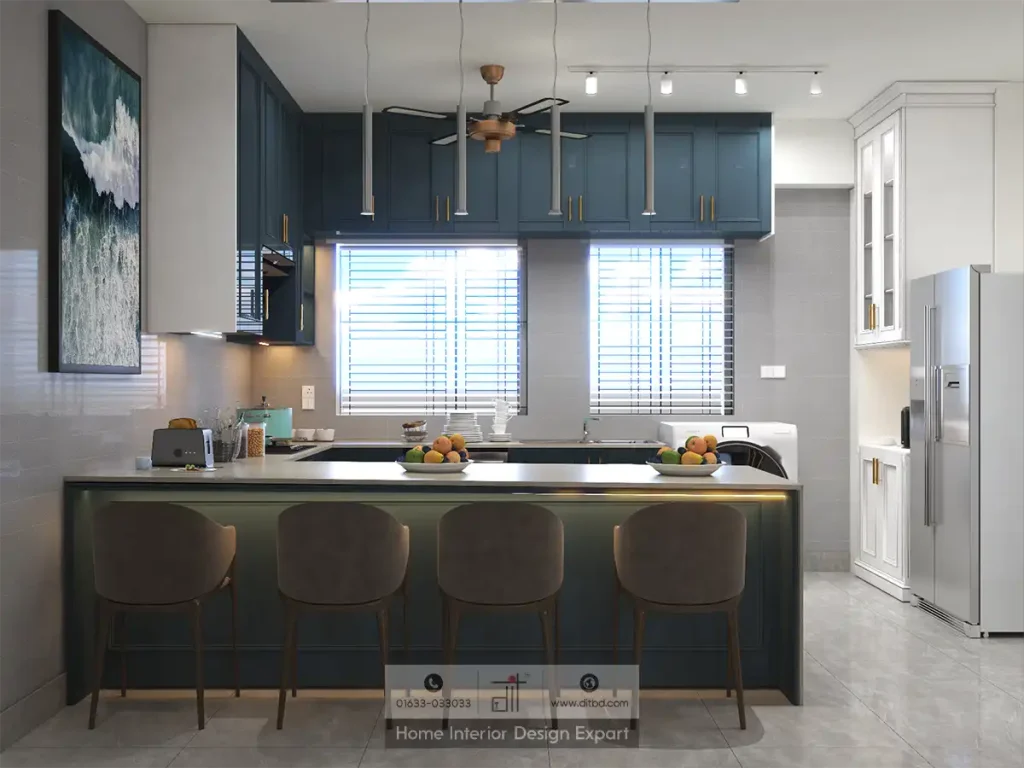
Storage & Organization – Functionality in Daily Use
How well a kitchen functions depends on storage organization. A beautiful kitchen that doesn’t store things efficiently frustrates daily.
Modular Kitchen Storage
Designed with storage efficiency in mind from the start. Every cabinet unit is planned for optimal organization. Standardized drawer and cabinet depths make sense ergonomically. Pull-out drawers and organizers are engineered in-corners are accessible, items in back aren’t lost. Every inch is planned for functionality.
Customizable organization inserts (spice racks, pull-out shelves, dividers) adapt your storage to your specific needs. Easy to add or modify storage later if your needs change (add another pull-out for new appliances, change shelf heights). Better use of vertical space through design planning. Everything has a designated place-you know where to find things and where things belong.
Traditional Kitchen Storage
Depends entirely on the carpenter’s design skill. Often wastes space with inefficient layouts. Open shelving is common (visually chaotic; dust settles on exposed items in Dhaka). Harder to organize internal space-doors don’t have organizers, shelves are often too deep. Can be modified, but changes are disruptive and expensive.
Deeper shelves are harder to access-items in the back get forgotten and lost. Often doesn’t accommodate modern appliances well-you’re retrofitting contemporary appliances into traditionally-designed spaces. Storage feels scattered; items hide in odd corners where you forget about them.
Storage Accessibility
- Modular: Everything is designed for reach and regular use. Frequently used items are at eye level; occasional items are above or below. Blind corners have pull-out solutions so nothing is inaccessible.
- Traditional: Often reaches are difficult. The top shelf is too high. The back of lower cabinets is hard to access. Storage is lost because items are unreachable-you have space but can’t use it effectively.
Appliance Integration
- Modular: Built-in appliances fit seamlessly into the design. Oven, microwave, and refrigerator are integrated thoughtfully with supporting cabinetry. Modern appliances integrate perfectly.
- Traditional: Appliances are often retrofitted awkwardly. A refrigerator sitting next to cabinets looks disconnected. Built-in appliances don’t fit standard traditional cabinet dimensions. You’re often compromising on appliance choice to fit existing cabinetry.
Real Scenario: Storing Spices, Pots, and Small Appliances
- Modular: Designated spice racks (pull-out rack with labeled containers), pull-out pantry units for small appliances, dedicated shelf for pots with dividers. Everything has a place. You can find what you need in seconds.
- Traditional: Spices scattered across multiple shelves and cabinets. Some pots hanging on the wall, others stacked in cabinets out of reach. Small appliances sitting on counters consuming precious workspace. Nothing feels organized. You constantly remember items stored somewhere and forget where.
Growing Family Needs
- Modular: More scalable as needs change. Need more storage? Add another pull-out unit or additional shelving. Needs are flexible within the modular framework.
- Traditional: Harder to expand functionality. You’re stuck with what was built. Changes require significant reconstruction-you’re essentially rebuilding parts of your kitchen.
Resale Value & Future-Proofing
Most Dhaka families eventually move. Your kitchen choice affects resale value significantly. This is worth factoring into your decision.
Impact on Flat Resale Value
Modular kitchens add 2-5% to resale value. Buyers see them as modern, low-maintenance, and move-in ready. A ৳ 50 lakh flat with a good modular kitchen might sell for ৳ 51-52.5 lakhs. A similar flat with a dated traditional kitchen might sell for ৳ 48-49 lakhs. That’s a ৳ 2-3 lakh premium for a modular kitchen.
Traditional kitchens are neutral to slightly negative. Buyers often see traditional kitchens as needing updates or renovation. They factor in kitchen renovation costs when making offers. Even if the traditional kitchen is well-built, buyer perception is that it needs updating.
Buyer Psychology
Modular = move-in ready, modern, low-maintenance. These qualities appeal to buyers, especially younger professionals and urban families who don’t want immediate renovation projects.
Traditional = personalized but potentially outdated, requiring buyer customization. Buyers imagine renovation costs and renovation hassle even if the kitchen is well-built and functional.
Rental Market Implications
Modular: More attractive to high-income renters who value modern, low-maintenance spaces. Easier to rent and potentially at premium prices. A flat with a modern modular kitchen rents faster.
Traditional: May limit rental pool. Some renters are fine with traditional; others prefer modern. Narrower market and potentially lower rental rates.
Time on Market
Flats with modular kitchens sell and rent faster. Buyer perception matters enormously. Data suggests 10-15% faster sales/rentals when kitchens are modern and well-maintained. Faster time on market sometimes justifies the initial premium through reduced carrying costs.
Upgrade Potential
- Modular: Easier to upgrade specific components. Want new hardware? Replace it. Want a different color scheme? Update cabinet doors. Small upgrades refresh the space without full renovation.
- Traditional: Upgrades usually require full redo. You can’t easily update one element because everything is interconnected. Full renovation is the only practical option-and that’s expensive.
Long-Term Market Trend
Dhaka’s real estate market is clearly moving toward modular. Younger buyers prefer modular. Builder preference is shifting to modular (lower warranty issues, buyer satisfaction higher). Resale preference is shifting toward modular. Five years from now, traditional kitchens will face even more negative buyer perception. This trend is relevant if you plan to sell within 7-10 years.
Investment Perspective
From a real estate investment standpoint, modular protects your investment better. It maintains and potentially increases resale value. Traditional requires additional investment to stay competitive when you eventually sell. If selling is in your future, modular is the smarter financial choice.
Aesthetic & Style – Creating Your Ideal Kitchen
Beauty matters. You spend time in your kitchen daily. It should feel good and reflect your taste.
Modular Kitchen Aesthetics
Modern, sleek, minimalist design. Clean lines. Organized, polished appearance. Contemporary color palettes (whites, grays, blacks, warm naturals). International design standards create professional appearance. Consistency and polish throughout-everything matches and looks coordinated.
Some people love this modern aesthetic. Others find it impersonal or “catalog-like.” If you’re drawn to minimalism and contemporary design, modular speaks your language. Many young professionals and modern-oriented families find modular kitchens beautiful and personally appealing.
Traditional Kitchen Aesthetics
Warm, personal, character-filled spaces. Can reflect cultural style or family heritage. More forgiving of eclectic design. Can feel homey and lived-in, or cluttered and disorganized depending on execution quality. Unique, one-of-a-kind look. Personality and story in every detail.
If you value warmth, personality, and cultural expression in your kitchen, traditional offers more possibilities. A well-designed traditional kitchen with quality materials feels luxurious and personal.
Popular Styles in Dhaka
- Modern minimalist: Clean modular kitchens with minimal color and maximum simplicity. Very popular among young professionals working in corporate Dhaka.
- Contemporary with traditional touches: Modular base with traditional stone countertops, or modular cabinetry with custom shelving. Hybrid approach balancing modern functionality with classic warmth.
- Classic Bengali: Traditional kitchens with wood cabinetry, warm colors, and cultural touches. Less common in new flats; more common in family homes built by previous generations.
- Luxury modern: High-end modular kitchens with premium finishes, designer hardware, and sophisticated details. The top tier of modular options-beautiful and expensive.
Personal Preference Matters
Neither aesthetic is objectively better. It depends on what makes you happy and feels right for your home. Spend time in both types of kitchens before deciding. Virtual tours are helpful; actually cooking in different kitchens gives you true perspective on what works for your lifestyle.
Design Consultation Value
Professional designers can help you visualize either style in your actual space. They can create stunning kitchens with both approaches. Quality design matters more than the type you choose. A beautifully designed traditional kitchen beats a poorly designed modular one; a well-planned modular kitchen beats a haphazardly built traditional one.
Trend Consideration
What you love today might feel dated in 5 years. Balance trendy elements with timeless design. Use trending colors or styles in removable elements (hardware, cabinet colors). Build timeless basics (layout, functionality, core materials) that don’t date. You can update trends without structural changes.
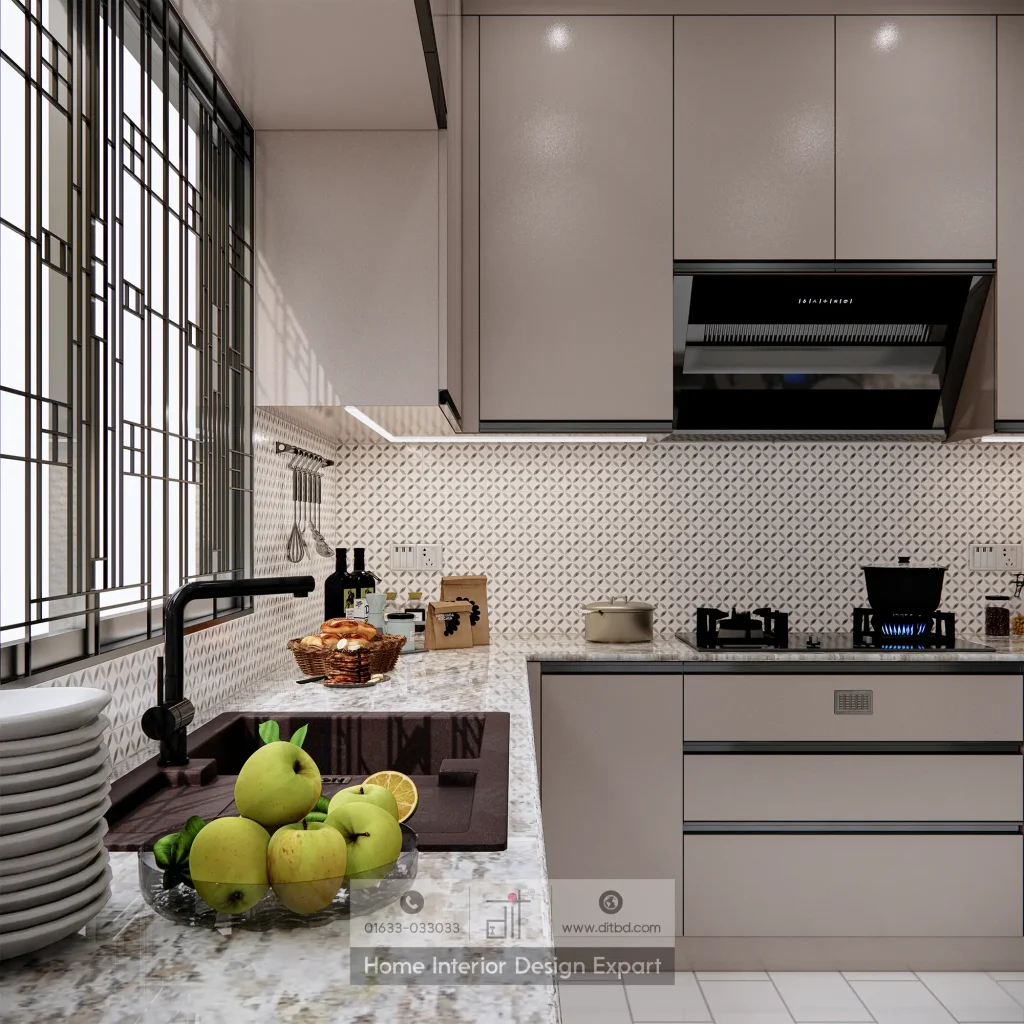
Making Your Decision – A Framework
You’re probably leaning one direction by now. Let’s make this decision crystal clear with a practical framework.
Ask Yourself These Eight Questions
1. How long do you plan to stay in this flat?
Staying 10+ years? Modular’s lower maintenance costs and resale premium make it worth the initial investment. You’ll benefit from the durability. Staying 3-5 years? Traditional’s lower upfront cost might make more sense-you won’t be there long enough to experience maintenance issues.
2. What’s your lifestyle?
Busy professional with minimal cooking? Modular’s low-maintenance nature is a blessing-you’re not fighting climate constantly. Do you enjoy cooking and entertaining? Both work; choose based on aesthetic preference and design flexibility needed. Home chef? Traditional can offer more customized workflows.
3. What’s your budget?
Tight budget? Traditional offers lower entry cost. Flexible budget? Modular’s long-term value often justifies the initial investment through lower maintenance and resale premium.
4. Is your kitchen layout standard or irregular?
Standard-sized kitchen in a newer building? Modular works perfectly. Irregular dimensions in an older flat? Traditional adapts better, unless you’re willing to pay for custom modular modifications (which narrows the cost advantage).
5. How much maintenance are you willing to do?
Hate maintenance? Modular’s minimal upkeep is a major advantage. You’re not sealing, repainting, and replacing hardware constantly. Don’t mind regular maintenance? Traditional is manageable if you’re committed to the routine.
6. Is resale value important to you?
Planning to sell in 7-10 years? Modular’s resale premium and appeal to modern buyers matter significantly. Kitchen is personal and you’re not selling? Either works; choose for your own satisfaction.
7. Do you want a unique or standard look?
Want something completely unique and personalized? Traditional offers more possibilities for custom design. Want modern, sleek, and timeless? Modular delivers this consistently.
8. What’s your aesthetic preference?
Contemporary and clean? Modular is your answer. Warm and personal? Traditional allows more personality.
Scoring System
Create a simple ranking: For each question, note whether it favors modular, traditional, or is neutral. Count your responses. More modular answers suggest modular is right. More traditional answers suggest traditional is right. Mostly neutral? Both could work; choose based on budget and personal preference. This simple exercise often clarifies direction.
Real Examples: Three Homeowner Stories
Story 1: Rahul, 28, Young Professional
Single, works long hours in IT, travels frequently. Budget conscious but values his time. Kitchen circumstances: Standard 150 sqft kitchen in a new building. Decision: Modular works perfectly. Low maintenance (he’s not home to enjoy cooking), modern aesthetic fits his lifestyle, and minimal cost means he can allocate budget elsewhere. Timeline is fast; he moves in within 2 months of starting design.
Story 2: Fatima, 42, Homemaker
Loves cooking, entertains guests frequently, plans to stay 15+ years. Kitchen circumstances: Irregular kitchen in a 30-year-old flat with unusual layout. Decision: Traditional works better here. She needs customized design for her unusual space. Her love of cooking means she appreciates thoughtful kitchen design and workflow. She’s willing to maintain it because she’s home regularly and values the warm, personal feel. Long tenure makes initial cost less critical than long-term satisfaction.
Story 3: Kamal & Ayesha, Young Family
Two kids, both work, plan to move in 7-10 years. Kitchen circumstances: Standard apartment complex kitchen. Decision: Modular hybrid approach. They choose modular cabinetry (modern, easy to maintain, supports resale value) with premium stone countertops (adds warmth and personality). Balanced solution giving them modern functionality with personal touches. Timeline supports moving within 2 months. Resale-friendly choice when they eventually move.
Hybrid Approach – The Best of Both Worlds?
Many Dhaka homeowners (and our design team) find the hybrid approach offers the best balance for our specific situation.
What a Hybrid Kitchen Looks Like
Modular cabinetry (standardized, efficient, low-maintenance) paired with traditional countertops (marble, granite, or quality wood providing warmth and luxury). Custom elements within a modular framework. Modern layout with traditional finishes. Mix of styles for personality and functionality. You get modular’s efficiency and reliability without sacrificing personalization.
Why Some Dhaka Homeowners Choose Hybrid
Best cost/benefit ratio. You get modular’s efficiency and reliability without full traditional build complexity. Personal touches without full custom build costs. Modern functionality with cultural warmth appreciated by many Dhaka families. Flexible for budget constraints (you can allocate more to finishes and less to cabinetry, or vice versa based on priorities). Resale-friendly appearance with personal warmth.
Examples of Hybrid Solutions
Modular lower cabinets with custom open shelving above (mixing storage efficiency with personality and decorative display space). Manufactured modular units with custom stone countertops (modular reliability with luxury finish and personal warmth). Standard modular layout with unique hardware, custom wood shelving, and personalized finishes (personality without starting from scratch).
Customization Options Within Modular
Many manufacturers offer semi-custom options. Paint colors, finishes, hardware choices, door styles, and materials vary. You’re not locked into limited options. You can customize within the modular framework more than you might assume. Mixing styles (modular base, traditional top shelves) is increasingly common and beautiful.
DIT Studio’s Hybrid Approach
We’ve found the hybrid works beautifully for Dhaka families. It combines durability and low-maintenance with personalization. Budget-friendly without compromising quality. We often recommend this balanced approach when neither full modular nor full traditional is ideal. Hybrid lets you have both modern efficiency and personal warmth.
Conclusion – There’s No Wrong Choice, Only What’s Right for You
Let’s recap the key differences simply:
- Modular: Designed by engineers, manufactured in factories, consistent quality, low-maintenance, modern aesthetic, higher initial cost, better resale value, faster timeline, functions perfectly for 15+ years with minimal upkeep.
- Traditional: Custom-built on-site, depends on craftsman skill, warm and personal, higher maintenance, uniquely yours, lower initial cost, neutral resale value, flexible for irregular spaces, requires ongoing maintenance investment.
- Hybrid: Combines strengths of both. Best value and balance for many families. Modern efficiency with personal warmth. Increasingly popular choice.
Final Decision Advice
Trust your gut on what feels right. Spend time in both types of kitchens before deciding. Invest in what aligns with your lifestyle and budget. Professional design helps either way-quality design makes any kitchen beautiful and functional. Quality matters more than the type you choose.
A beautifully designed traditional kitchen beats a poorly designed modular one. A well-planned modular kitchen beats a haphazardly built traditional one. The designer’s skill and care matter more than the approach. Commit to regular maintenance for traditional; count on low-maintenance living for modular. Either way, you’ll be happy with thoughtful choices.
Your Next Steps
Visit modular and traditional kitchens (friends’ homes, showrooms). See how they look and function in real Dhaka conditions. Consult with a designer who has experience with both. Request samples and see materials in person (colors look different in your actual lighting). Plan your specific space and clearly define what your kitchen needs to do (work style, storage needs, entertaining patterns). Decide based on informed understanding, not sales pressure or assumptions.
Long-Term Perspective
You’ll spend significant time in this kitchen daily for years. Choose what makes you happy and serves your actual lifestyle. Spend time cooking in kitchens you love and you’ll understand what matters to you-modern efficiency, traditional warmth, or a hybrid of both. Quality and maintenance commitments matter most to long-term satisfaction and happiness in your kitchen.
Ready to Decide?
You now understand the honest trade-offs between modular and traditional kitchens. You have a framework for deciding. You know what to ask, what to look for, and what matters most for your situation.
Not sure which kitchen is right for you? Schedule a free kitchen design consultation with DIT Studio. We’ll discuss your lifestyle, budget, and preferences-and recommend the perfect solution. We have experience with both modular and traditional kitchens and can show you examples of each approach in actual Dhaka homes.
Frequently Asked Questions
Q: Can I modify a modular kitchen if my needs change after installation?
Yes, that’s one of modular’s advantages. Need to add shelving? Add a unit. Want to change cabinet colors? Door panels are replaceable. Modular systems are designed for future modification. Traditional kitchens are much harder to modify effectively because everything is integrated.
Q: What’s the warranty like for modular vs. traditional kitchens?
Modular kitchens from manufacturers typically come with 5-10 year warranties on materials and structure, sometimes with extended warranties on specific components. Traditional kitchens rely on the carpenter’s warranty, which varies-often verbal, sometimes limited. Modular warranty is standardized and enforceable; traditional warranty is informal.
Q: Is it possible to mix and match modular and traditional elements?
Absolutely-this is the hybrid approach. Modular cabinetry with traditional countertops is very common. Modular lower cabinets with custom open shelving above combines both. This flexibility lets you get benefits from both approaches.
Q: How long does installation take for modular vs. traditional?
Modular installation is typically 2-5 weeks (components are pre-made, assembly is straightforward). Traditional builds take 4-8 weeks or longer (everything is built on-site). Faster timeline for modular is an advantage if you’re eager to move in.