
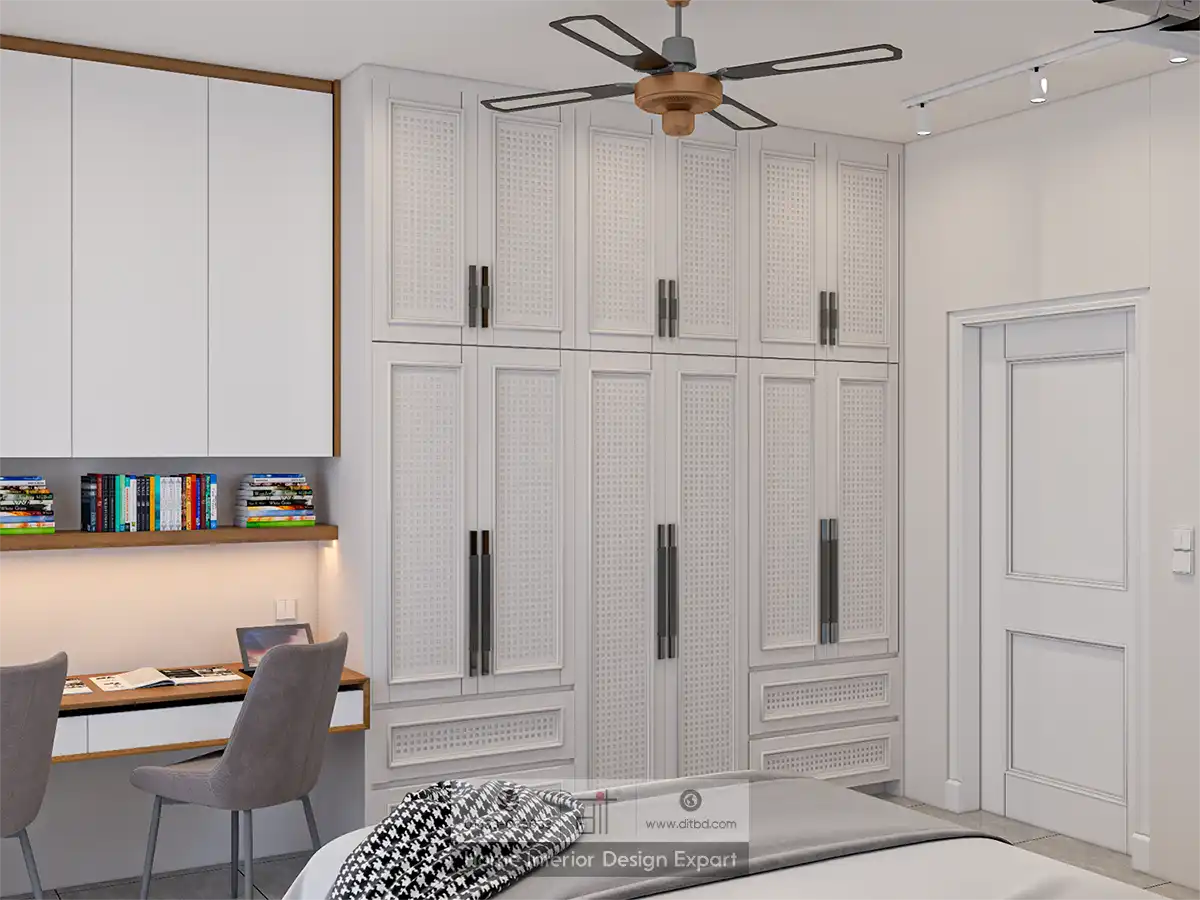
A compact kitchen doesn’t have to mean a chaotic one. Yet for many Dhaka families, the kitchen is the most frustrating room in the flat. A typical Bangladeshi kitchen stores more than most people realize: large pressure cookers, a kadai or two, multiple dal pots, a tawa, a full spice collection, dried lentils, oils, and enough seasonal cookware to host a full family gathering. All of this in a room that might be 60 to 90 square feet.
Storage is the defining challenge of the traditional enclosed kitchen in Dhaka. According to the NKBA’s 2024 Kitchen Trends Report, more than 50% of homeowners now prioritize built-in, maximized pantry storage as their top kitchen upgrade, while 37% specifically want cabinets with customizable drawer dividers. The demand for smarter storage isn’t just a trend. It’s a real need.
Here are five solutions we design at DIT Studio that transform small traditional kitchens into genuinely organized, efficient spaces. For more ideas on making compact spaces work harder, our guide on space-saving interior design for small flats in Dhaka covers the full-flat picture.
Key Takeaways
- Over 50% of homeowners rank improved pantry storage as their top kitchen renovation priority (NKBA Kitchen Trends Report, 2024)
- 37% of homeowners specifically want cabinets with customizable drawer dividers and partitions (NKBA, 2024)
- Pull-out organizers utilize the full cabinet depth, typically recovering 30-40% of previously wasted dead space in base cabinets
1. Pull-Out Pantry Units: Reclaiming Dead Cabinet Space
Walk to your base cabinets right now and open one. Chances are there’s a pressure cooker blocking everything behind it. The items you reach for most are at the front. Everything else is inaccessible, buried, and forgotten.
Pull-out pantry units solve this problem at its root. Instead of a fixed shelf where items stack behind each other, a pull-out unit brings the entire cabinet depth to you. Full-extension drawer slides allow the shelf or basket to come completely out, giving you a clear view of and access to every item stored inside.
Why it works for Bangladeshi kitchens specifically: We store heavy items. A large pressure cooker can weigh 5-7 kg. A full kadai with a glass lid adds more. Fixed shelves cause you to reach awkwardly over these items constantly. Pull-out trays handle heavy loads easily and eliminate the wrist strain of rummaging through deep base cabinets.
A common storage problem we see in Dhaka kitchens is the spice rack. Most clients have 20-40 spice containers and no efficient system for them. In a Mirpur kitchen project, we installed a custom pull-out spice rack in the 150mm space between the refrigerator and the wall. That narrow gap would otherwise be dead space. Sizing this correctly matters: 150mm depth works for spice jars and small packets; 300mm handles tins and oil bottles; 450mm and above is needed for large containers and pressure cooker bodies.
Dimensions and options for Dhaka flats:
- Single pull-out tray (for one base cabinet): fits standard 450mm or 600mm cabinet widths
- Tall pull-out pantry column (floor to ceiling): 150mm to 200mm wide, ideal for slim gaps beside the fridge or end of a counter run; specify 150mm depth for spices, 300mm for tins and bottles, 450mm for large containers
- Pull-out pot and lid organizer: includes vertical lid slots so you’re not stacking lids on top of pots
- Drawer heights to specify: 150mm for cutlery trays, 200-250mm for utensils and ladles, 350mm and above for pots and pressure cooker bases
Estimated cost in Dhaka: BDT 8,000 to 25,000 per unit depending on material (MDF with soft-close slides vs. stainless steel construction). We incorporate these in all our custom traditional kitchen designs, including our completed projects in Dhanmondi and Aftabnagar.
Installation tip: Soft-close drawer slides make a meaningful difference in a kitchen used multiple times daily. They reduce noise, prevent cabinet damage, and hold up far better over years of heavy use than standard ball-bearing slides.
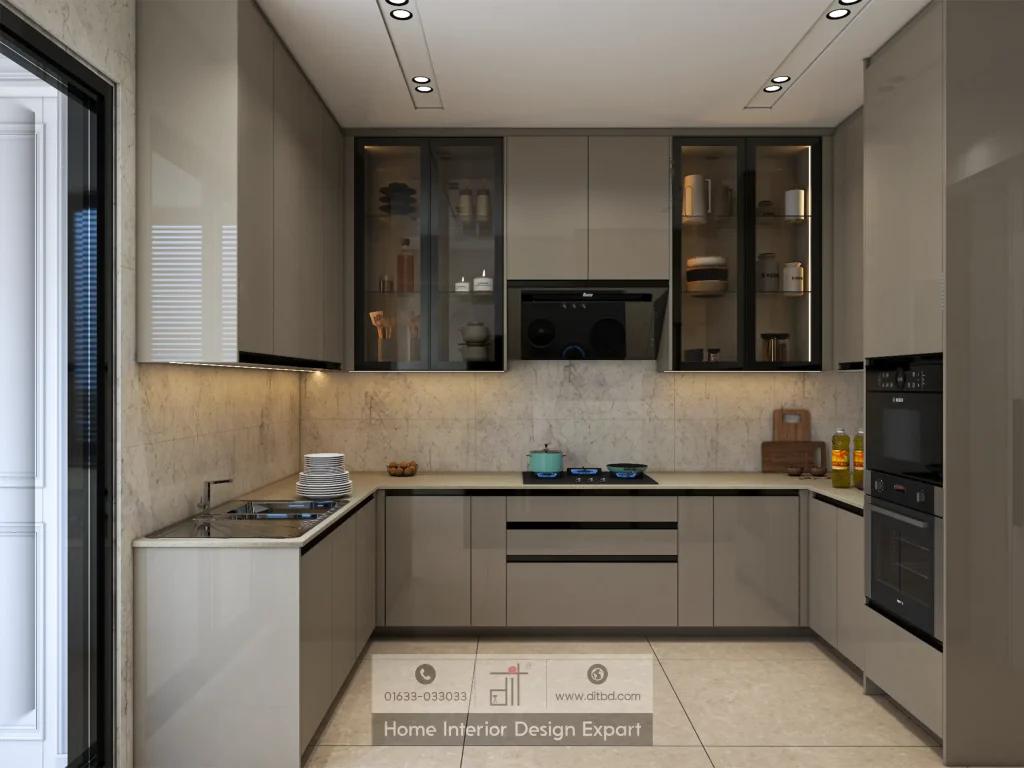
2. Vertical Spice and Condiment Racks: The Wall Is Your Inventory System
A standard Bangladeshi kitchen uses 20 to 40 individual spices. Cumin, coriander, turmeric, red chilli, garam masala, mustard seeds, fenugreek, cardamom, cinnamon, cloves, star anise, bay leaves, and that’s before we count the liquid condiments. Most kitchens store these loose on a shelf or in a drawer where they tumble together, expire unnoticed, and take up valuable flat surface area.
Vertical spice racks mounted on walls or on the inside of cabinet doors convert that chaos into a functional, visible inventory system. When your spices are at eye level, in labelled containers of consistent size, you cook faster and waste less.
What to install:
Wall-mounted tiered spice rack: A 3-tier rack mounted at eye level near the hob, holding 24-36 jars. Available in stainless steel (highly recommended for humidity and oil resistance) or powder-coated metal. Standard widths: 600mm or 900mm.
Cabinet door rack: Mounted inside an upper cabinet door, adding a full extra tier of storage without consuming any shelf space. Ideal for lids, spice sachets, or frequently used small packets.
Pull-out internal spice tower: A vertical pull-out column 100-150mm wide installed beside the hob, holding 20+ spice jars in stacked rows. This is the premium option and one of the most popular add-ons in our kitchen renovation projects. Specify at least 150mm depth to accommodate standard spice jar diameters comfortably.
Estimated cost in Dhaka: Wall-mounted racks start from BDT 2,000 to 5,000 for good-quality stainless or powder-coated options. Built-in pull-out spice towers range from BDT 8,000 to 18,000 depending on depth and mechanism.
What’s the biggest time-waster in a kitchen? Most people say searching for the right spice. A well-organized vertical rack eliminates that problem entirely.
3. Overhead Cabinet Maximizers: Using the Top 30 cm You’re Ignoring
In most Dhaka kitchen cabinets, the top shelf holds rarely used items and collects dust. That final 250-300mm of vertical space between your top shelf and the cabinet ceiling is dead space. Over a full run of upper cabinets, that translates to a significant volume of unusable storage.
There are two ways to recover this space.
Option A: Lift-up door mechanisms for upper cabinets
Standard upper cabinets open outward, which limits how high you can place the top shelf while still being able to reach it. Lift-up Aventos-style cabinet doors (offered by brands like Blum and Hafele) pivot the entire door panel upward, giving you full access from the very top of the cabinet to the very bottom. This allows you to add an extra shelf and use the full interior height.
Option B: Stacked open shelving above standard cabinets
If your ceiling height allows, consider running an open shelf at soffit level, above your standard upper cabinets. Store only infrequently used items here: spare pots, festive cookware, backup oil tins. Accessible by step stool, this top zone adds meaningful capacity without any cabinet hardware cost.
What to store up high: Pressure cooker lids, the large biryani pot used occasionally, extra storage containers, cake tins, spare appliances.
Estimated cost: Lift-up door mechanism hardware (Blum or equivalent): BDT 3,500 to 8,000 per door. Open shelf above cabinets: BDT 4,000 to 10,000 depending on material and bracket type.
Our custom furniture design team can design upper cabinetry that uses every centimeter from counter height to ceiling, including the space most kitchens waste entirely.
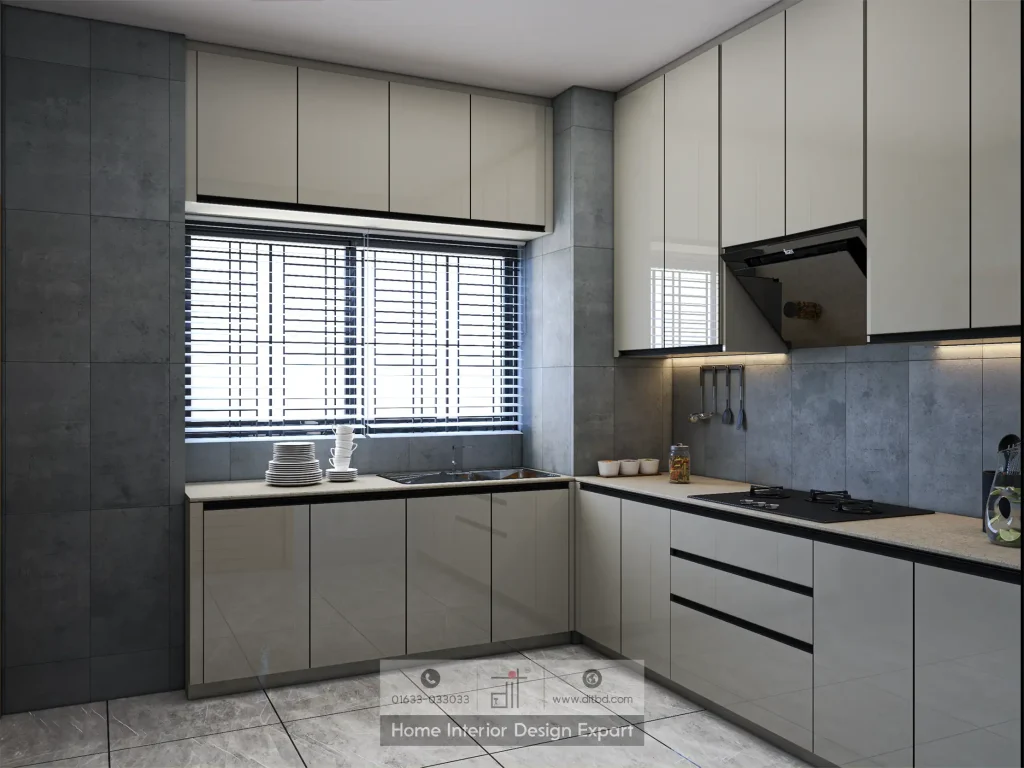
4. Under-Sink Pull-Out Organizers: Turning the Worst Cabinet Into a Good One
The under-sink cabinet is almost universally the most disorganized space in any kitchen. Pipes take up the center, which creates awkward dead zones on either side. Most people simply shove cleaning supplies in and accept the chaos.
A well-designed under-sink organizer transforms this cabinet into genuinely useful storage using pull-out trays that route around the plumbing.
Two-tier pull-out with pipe cutouts: The pull-out tray has a cutout at the back to fit around the sink drain pipe, and a second shorter tray above it for items that fit under the pipe height. Total capacity typically doubles compared to loose stacking.
Slide-out cleaning supply caddy: A narrow pull-out caddy beside the pipe column holds dish soap, scrubbers, cleaning agents, and a small rubbish bin in dedicated slots. Everything has a place and comes to you when you pull the handle.
Door-mounted racks: Mounted on the inside face of the under-sink cabinet door, these hold dish cloths, small spray bottles, and waste bin liners in a way that doesn’t compete with the main cabinet space.
Why this matters for Bangladeshi kitchens: Bangladeshi households typically use a larger variety of cleaning agents than Western kitchens: separate dish soap, steel wool, lime remover, dishcloth, scrubber pads, and drain care products. Without dedicated storage, they pile up randomly and create a maintenance headache.
Estimated cost in Dhaka: Under-sink organizer pull-out systems: BDT 6,000 to 15,000 for a full setup with soft-close slides and pipe cutout customization.
We design these details into every kitchen renovation we complete, from our work in Moghbazar to our Mirpur projects.
5. Corner Cabinet Solutions: Rescuing the Dead Corner
If you have an L-shaped kitchen, you have a corner cabinet. And if you have a corner cabinet with standard shelving, you’re losing a substantial portion of its capacity. Items pushed to the back corners are invisible and inaccessible. Many homeowners simply stop using the deep interior of their corner cabinets entirely.
Three solutions exist, each suited to different budgets and kitchen sizes.
Le Mans swing-out unit: Two large crescent-shaped shelves mounted on a pivot mechanism swing out together when you open the cabinet door. The shelves come to you. Heavy items like pressure cookers and large pots fit comfortably. This is our most recommended corner solution for its accessibility and load capacity. It handles the heavy cookware that Bangladesh kitchens demand.
Lazy Susan rotating shelf: A classic solution. Two circular rotating trays let you spin the shelf to bring back-corner items to the front. Less ideal for very heavy or tall items, but excellent for medium-sized pots, canned goods, and cooking oils.
Corner drawer stack: A modern alternative that converts the corner into a series of angled drawers that open with a diagonal pull. This gives full visibility and access but requires precise carpentry to fit properly. Best suited to kitchens with a generous corner cabinet width.
What to store in the corner: Large pressure cookers, spare dal pots, infrequently used festive cookware, cooking oil backstock.
Estimated cost in Dhaka:
- Lazy Susan: BDT 4,000 to 9,000
- Le Mans swing-out unit: BDT 12,000 to 22,000
- Corner drawer stack: BDT 18,000 to 35,000 (including custom carpentry)
These solutions are standard in our modular kitchen designs and can be retrofitted into existing kitchens. The Dhanmondi 10A project is a strong example of corner space rescued through a well-specified Le Mans unit.
FAQ
Which storage solution gives the best value for a small Dhaka kitchen?
Pull-out base cabinet trays offer the highest return on investment. They’re relatively affordable (BDT 8,000 to 15,000 per unit), dramatically improve daily usability, and work in any existing kitchen without structural changes. For most Dhaka flats, starting with 2-3 pull-out units transforms the cooking experience immediately.
Can these solutions be added to an existing kitchen without full renovation?
Most can. Pull-out trays, under-sink organizers, door-mounted racks, and Lazy Susan units can all be retrofitted into existing cabinets with standard hardware. Corner Le Mans units and lift-up door mechanisms may require cabinet modifications. Our team at DIT Studio can assess your current kitchen and recommend what’s retrofittable vs. what requires a full redesign.
What materials hold up best in Dhaka’s humidity for kitchen organizers?
Stainless steel is ideal for anything near the sink or hob. For pull-out trays and drawer systems, powder-coated steel or marine-grade plywood with a melamine finish handles humidity well. Avoid raw MDF without a moisture-resistant coating, particularly in lower cabinets. Our custom furniture design team specifies materials based on each kitchen’s specific humidity exposure.
How much should I budget for a full traditional kitchen storage upgrade in Dhaka?
A comprehensive storage upgrade covering pull-out trays, corner solution, under-sink organizer, and vertical spice racks typically costs between BDT 50,000 and 1,20,000 depending on unit count, materials, and whether you need structural changes. A full kitchen renovation with all new cabinets and storage systems starts from BDT 3,00,000.
What standard kitchen counter height should I specify in Dhaka?
The standard kitchen counter height for Bangladesh is 850-860mm. If the primary cook is taller than average, 910-930mm reduces back strain significantly for daily cooking sessions. We always confirm the cook’s height before finalizing kitchen elevations.
Conclusion
A small kitchen doesn’t have to compromise how well you cook or how organized you feel. With the right storage solutions designed specifically for Bangladeshi cooking needs, a compact traditional kitchen can hold everything you need and keep it genuinely accessible.
The five solutions above aren’t just nice ideas. They’re the systems we install regularly in Dhaka homes, solving real daily frustrations for families who cook seriously. DIT Studio is a leading interior design company in Bangladesh with 500+ completed residential projects across Dhaka, and storage optimization is one of the most common improvements we help homeowners make. More than 50% of homeowners upgrading kitchens today cite storage as their primary motivation, and for good reason: better storage makes cooking faster, easier, and more enjoyable.
For a broader look at how these storage principles extend beyond the kitchen, our guide on smart space solutions for small flats is worth reading alongside this one.
Ready to transform your traditional kitchen’s storage? Talk to our team at DIT Studio for a consultation tailored to your kitchen’s exact dimensions and your family’s specific needs. We’ve done this across 500+ homes in Dhaka, and we’d love to help you next.
Written by the DIT Studio design team — Bangladesh’s specialist home interior firm since 2011. Traditional enclosed kitchens are the most common kitchen type we design across Dhaka, and we’ve refined our approach across hundreds of projects spanning compact flats to premium full-floor renovations.