
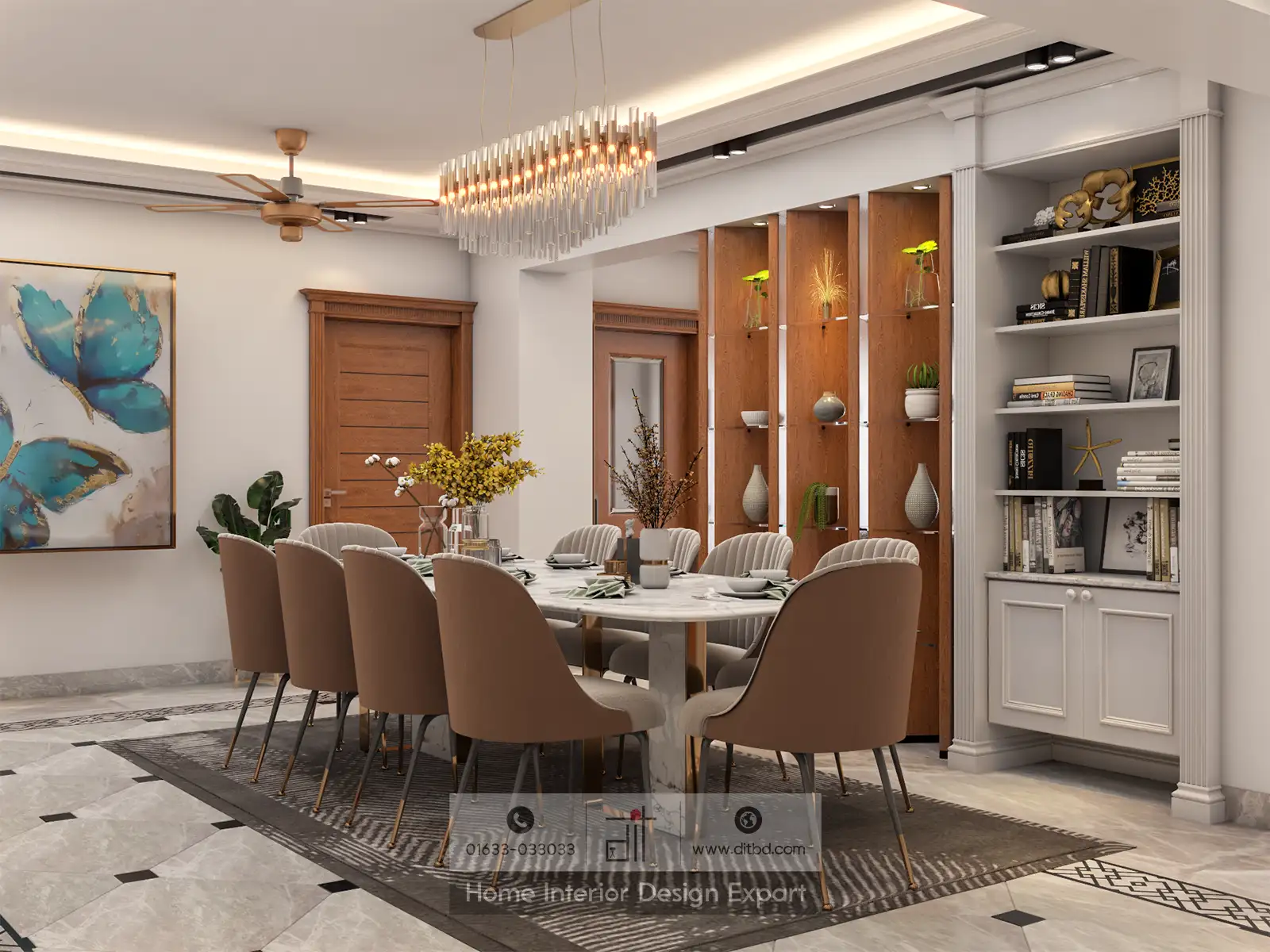
The right questions can protect your budget, timeline, and peace of mind before you hire an interior design company in Bangladesh. A beautiful portfolio is helpful, but it does not tell you how the company communicates, prices the work, handles revisions, manages the site, or controls quality.
Before hiring an interior design company, ask about similar projects, design process, 3D renderings, material selection, quotation structure, payment schedule, timeline, site supervision, custom furniture, warranty, communication, and handover. A trusted interior design company should answer clearly, without pressure or vague promises.
DIT Studio’s brand promise is built around clarity: consultation, concept, feedback, detailed planning, comprehensive cost breakdown, execution oversight, furniture and decor curation, and final handover. Use the questions below to compare DIT with any other company you are considering.
Questions About Fit and Experience
1. Have you completed projects similar to my home?
This is the first question because experience must match your situation. A company may be excellent at showrooms but weak at family apartments. Another may be strong in bedrooms but inexperienced with full-home execution.
Ask for similar apartment sizes, neighborhoods, room types, and style examples. If you live in Dhaka, ask to see compact flat solutions, storage-heavy layouts, or luxury apartment interiors that match your lifestyle. DIT’s portfolio includes many home spaces, including living rooms, bedrooms, kitchens, closets, dining areas, kids rooms, and full apartment interiors.
2. What type of clients do you serve best?
Every company has a natural strength. Some focus on budget makeovers. Some focus on luxury homes. Some do only design consultancy, while others provide turnkey execution.
DIT Studio is best positioned for homeowners who want a premium home interior specialist, not a random contractor. The brand works well for clients who value visual clarity, organized process, quality materials, bespoke furniture, and transparent communication.
3. What makes your process different?
Do not accept vague answers like “we make beautiful designs.” Ask them to describe the journey from first meeting to handover.
A strong answer should include discovery, mood boards, layout planning, 3D visualization, revisions, material selection, detailed quotation, execution, inspection, and handover. If the company cannot explain the process clearly, the project may also feel unclear later.
Questions About Design and Planning
4. Will you visit the site before finalizing the design?
Site measurement is essential. Without it, furniture proportions, electrical points, ceiling height, window placement, column positions, and door swing can be wrong.
Ask how measurements are taken and who verifies them before production starts. For custom furniture and modular kitchens, measurement accuracy directly affects finishing quality.
5. Do you provide mood boards and visual references?
Mood boards help align taste before detailed design begins. They show color palettes, material directions, furniture tone, lighting mood, and overall aesthetic. This is useful because “modern luxury” can mean many different things to different people.
DIT’s process uses mood boards and visual references to capture the essence of the client’s vision before moving into detailed planning.
6. Do you provide 3D renderings?
For most homeowners, this is non-negotiable. 3D renderings help you see the home before execution begins. They reduce misunderstandings about color, wall panels, furniture dimensions, ceiling design, lighting, and overall mood.
Ask how many views are included, whether revisions are allowed, and whether the final work is expected to match the approved renderings.
7. What drawings and technical details will I receive?
3D images are only one part of the design package. Ask whether you will receive floor plans, elevations, furniture dimensions, electrical plans, lighting plans, ceiling details, material specifications, and hardware choices.
For premium home interiors, technical detail protects the design. Without it, the site team may interpret the design differently.
8. How many revisions are included?
Revisions are normal. What matters is whether the rules are clear. Ask how many revision rounds are included, what counts as a major change, and what happens if you change your mind after approval.
A transparent company will not make you feel afraid to ask questions. It will set a fair structure so both sides know what is included.
Questions About Budget and Quotation
9. How do you prepare the quotation?
Ask whether the company provides an itemized quotation or only a lump-sum price. A lump sum may look simple, but it hides material grades, quantities, hardware quality, labor scope, and exclusions.
A proper quotation should explain what is included in each room and major furniture item. For larger projects, ask for a BOQ-style breakdown.
10. What is included and excluded?
This question prevents disputes. Ask about design fees, custom furniture, hardware, lighting, civil work, electrical work, wall treatments, false ceiling, transport, installation, decor, appliances, and VAT or taxes where applicable.
If an item is excluded, it should be written clearly. A trusted interior design company will not hide exclusions to make the quote look smaller.
11. Can you explain material grades and alternatives?
Interior materials affect cost and durability. Ask what boards, laminates, veneers, paint, hardware, channels, hinges, lighting, glass, fabric, and countertop materials are proposed.
You do not need to become a material expert. But you should understand why one option costs more, how long it should last, and where it is worth investing.
12. How do you handle additional costs?
Every project should have a variation approval process. Ask whether extra work requires written approval before it is done. Ask how site surprises, material changes, or client-requested upgrades are priced.
This one question can save a homeowner from many uncomfortable conversations.
Questions About Timeline and Execution
13. What is the expected timeline?
Ask for a realistic timeline, not the shortest possible promise. Interior projects can involve design, approval, production, procurement, civil work, electrical coordination, furniture production, installation, and finishing.
The timeline should also explain what depends on the client, such as design approval, material selection, payment, and access to the site.
14. Who will supervise the site?
The person who sells the project is not always the person who manages it. Ask who your project coordinator or site supervisor will be. Ask how often they will visit and how updates will be shared.
For a luxury interior project, supervision is not a minor detail. It is the difference between a polished handover and a stressful experience.
15. Do you manage custom furniture production?
Custom furniture is central to many Bangladeshi homes because storage, wardrobes, beds, TV units, kitchen cabinets, and study units must fit the exact space.
Ask whether furniture is made in-house, outsourced, or built on site. DIT Studio’s own factory capability is a major strength because it supports bespoke furniture, measured production, finishing consistency, and installation control.
16. How do you check quality before handover?
Ask whether the company has a checklist for finishing, alignment, hardware, lighting, paint, furniture edges, drawer movement, door swing, and cleaning before handover.
Quality is not only about expensive materials. It is about meticulous inspection.
Questions About Communication and Trust
17. How will we communicate during the project?
Ask whether updates come through WhatsApp, phone, email, meetings, project sheets, or site visits. Also ask how quickly the team responds to questions.
Poor communication can make even a good design feel stressful.
18. What do you need from me to keep the project moving?
The client has responsibilities too. You may need to approve designs, choose materials, confirm payments, provide site access, and decide on changes quickly.
A professional company will explain this clearly.
19. Can I see client reviews or testimonials?
Reviews help you understand reliability, communication, finishing quality, and after-service behavior. Ask for testimonials, project references, or public reviews where available.
20. What happens after handover?
Ask whether there is any after-service support, defect correction period, warranty for hardware or furniture, or support for small adjustments after installation.
Luxury is not only the first reveal. It is how the company behaves after the excitement is over.
21. Why should I choose your company?
This final question shows how the company positions itself. A strong answer should be specific, not generic.
DIT Studio’s answer is clear: it is a Home Interior Specialist with 15+ years of experience, 500+ happy clients, a premium design process, 3D visualization, transparent cost breakdowns, custom furniture support, and end-to-end execution for homeowners who want a beautiful and functional home.
How to Use These Questions
Do not ask all 21 questions like an interrogation. Use them as a calm checklist. Start with experience, process, and quotation. If the company answers confidently and transparently, continue into timeline, execution, and handover.
If a company avoids questions, gives only emotional sales language, or pushes you to sign before explaining scope, pause. A trustworthy interior design company in Bangladesh should make you feel informed, not rushed.
FAQ
Should I ask for the price first?
Ask about process and scope first. Price only makes sense after the company understands your rooms, style, materials, execution needs, and timeline.
How many questions should I ask in the first consultation?
Ask the most important 7 to 10 questions first: similar projects, process, 3D design, quotation, timeline, site supervision, materials, payment, and handover.
What is a good sign during the first meeting?
A good interior design company listens carefully, asks about your lifestyle, explains its process, and gives realistic guidance instead of pushing you toward a fast decision.