
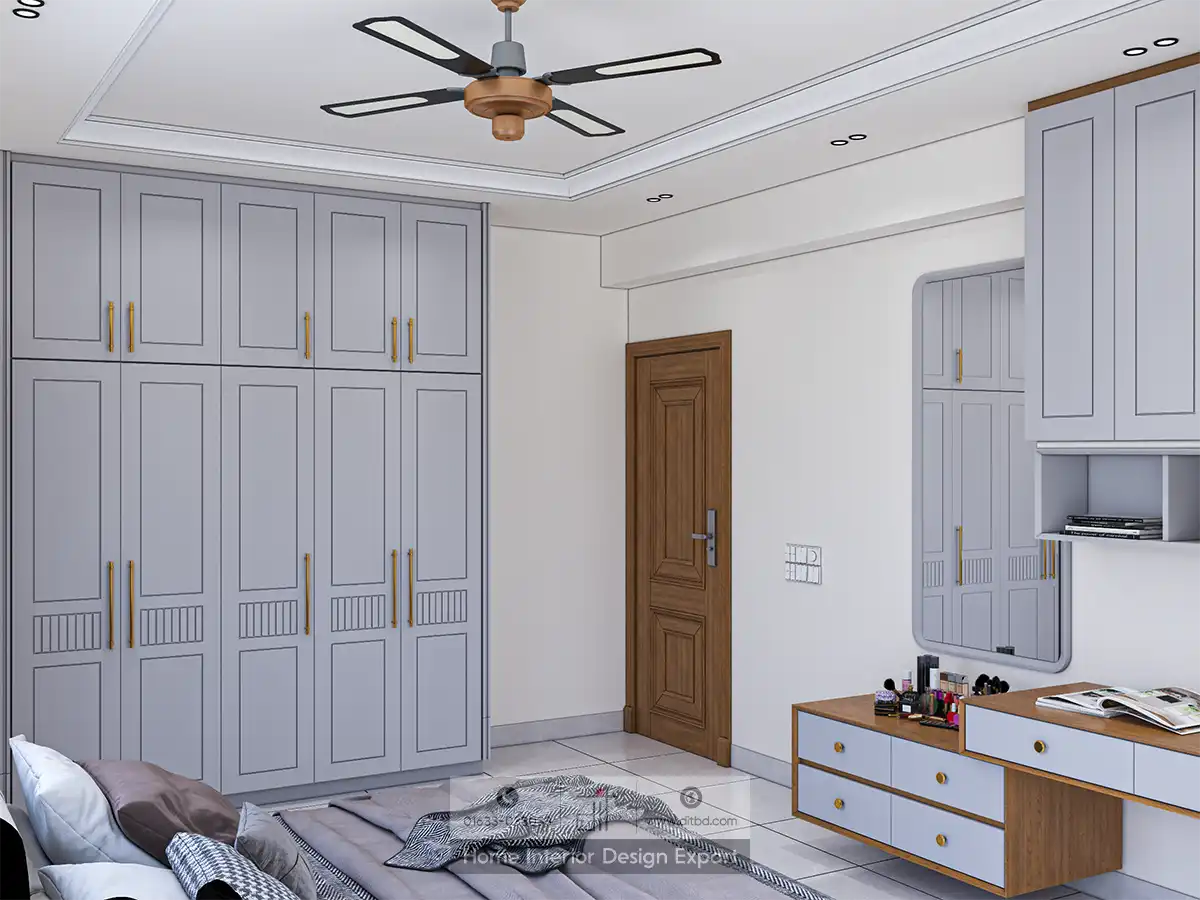
A custom furniture factory in Dhaka can improve consistency when approved drawings, named materials, samples, measured tolerances, inspection gates, and site information control the work. Factory production alone does not prove that furniture is well designed, correctly specified, safely fixed, or neatly installed.
Quality comes from the design-to-production chain. The team must verify the room, issue shop drawings and specifications, control changes, inspect production, protect finished pieces, and check installation against approved documents.
Ask, “What controls this item from measurement to handover?” instead of accepting “factory-made” as a quality claim. Start with the interior design guide for Bangladesh, then examine production here.
The Quality Chain at a Glance
| Stage | Control needed | Evidence a homeowner can request |
|---|---|---|
| Site survey | Verified dimensions, levels, services, access | Dated measurement sheet or marked plan |
| Shop drawings | Plans, elevations, sections, details, hardware, interfaces | Approved drawing revision |
| Material release | Named substrates, finishes, edges, hardware, fittings | Material schedule and labelled samples |
| Production | Correct files, machinery setup, sequencing, protected parts | Work order or item identification |
| In-process inspection | Checks before assembly hides joints or fixings | Inspection record or dated photographs |
| Pre-dispatch inspection | Dimensions, alignment, operation, finish, completeness | Signed checklist against item codes |
| Packing and delivery | Edge, face, hardware, and moisture protection | Packing list and delivery sequence |
| Installation | Site readiness, alignment, fixing, adjustment | Installation check and issue list |
| Handover | Corrections, care information, keys, spare parts if included | Signed handover record |
What Factory Production Can and Cannot Improve
A controlled workshop can organise repeated cutting, machining, finishing, and assembly away from an occupied flat. It can also centralise tools, storage, samples, and inspections.
Those advantages are conditional. Poor measurements can produce furniture that does not fit. A wrong code can be repeated across every panel. Weak packing can damage a good finish.
ISO describes quality management as a process approach: plan the work, perform it, check the outcome, and act on findings. This article uses that logic as a homeowner framework. It does not imply that any named company or workshop is ISO certified.
1. Verify the Site Before Detailing
Custom furniture begins with the room, not the cutting machine. Survey the width, height, depth, wall condition, floor level, ceiling level, corners, beams, skirting, windows, doors, switches, sockets, plumbing, air-conditioning, and other fixed services that touch the furniture.
Record lift dimensions, stair turns, corridor width, access times, loading space, and protection needs. These constraints can determine whether an item arrives assembled or in sections.
Measurements need an owner, date, and status. Production dimensions should reflect verified site conditions. Recheck affected furniture after civil work or flooring changes.
2. Convert the Design Into Shop Drawings
A 3D view communicates appearance. A shop drawing communicates production and coordination through plans, elevations, sections, dimensions, internal layouts, edges, joints, hardware, service cut-outs, pattern direction, fixings, and adjacent elements.
The Architectural Woodwork Institute states that shop drawings, material data, and samples help turn design intent into reality and provide control over project quality. Its submittal guidance also calls for materials, hardware, finish information, and identified changes to be documented before fabrication.
Residential projects can use that principle without formally adopting AWI standards. Approve one drawing revision, mark later changes, and withdraw outdated files.
Use the planned guide to 3D home interior design in Bangladesh to understand the difference between visual approval and production information.
3. Release a Complete Material Schedule
The work order should identify the substrate, thickness, back, surface, edge, colour or pattern code, grain direction, hardware, accessories, glass, metal, upholstery, and fixing method where relevant.
Read the interior materials guide for Bangladesh before approving broad labels such as “premium plywood” or “best hardware.” Plywood, MDF, particleboard, laminates, veneer, solid wood, coatings, and fittings have different variants and performance conditions.
At receiving, compare deliveries with the approved schedule, isolate damaged or questionable stock, and follow storage instructions. Send substitutions back for approval instead of changing them silently.
4. Use Samples and Mock-Ups for Decisions That Matter
A labelled finish sample can settle colour, sheen, texture, grain, edge appearance, and expected natural variation before full production. Hardware samples can clarify feel, finish, projection, and operation. A mock-up can test a difficult joint, routed profile, handle detail, lighting recess, or interface between two materials.
Samples should represent the actual substrate and process. Record the item, date, code, and status, then protect the control sample.
A sample cannot make natural wood perfectly uniform or prove that cabinet structure, fixings, and installation will perform correctly. It establishes an accepted visual direction and range.
5. Define Tolerances Before Inspecting
“Perfect finish” is not measurable. A quality plan defines the check, location, reference drawing or sample, acceptable deviation, and correction authority.
Relevant checks may include overall size, squareness, level, plumb, gaps, flushness, alignment between adjacent shutters, shelf position, drawer clearance, edge continuity, visible chips, surface marks, and hardware operation. The appropriate tolerance depends on the product, material, construction, site condition, and adopted specification.
Do not copy random tolerances from the internet. Name the governing standard or project criterion. AWI publishes fit tolerances, but they apply only when its scope and conditions are properly understood and adopted.
6. Inspect During Production, Not Only at the End
Some defects become harder to see or repair after assembly and finishing. Inspect around irreversible work.
Before cutting
- Confirm the current drawing revision and material codes.
- Check item quantities and critical dimensions.
- Review grain or directional pattern requirements.
- Identify service cut-outs and handed components.
Before closing the assembly
- Check internal partitions, joints, connectors, back panels, and reinforcement.
- Confirm hidden hardware and fixing provisions.
- Verify that cables, ventilation, plumbing, or lighting routes remain usable.
Before finishing or laminating
- Inspect substrate preparation and visible edge conditions.
- Compare colour, grain, texture, and sheen with the control sample.
- Confirm which faces and edges receive the finish.
Before dispatch
- Measure the critical overall dimensions.
- Check alignment, gaps, smooth operation, and accessory count.
- Inspect visible faces under suitable light.
- Record issues, corrections, and approval to pack.
ISO distinguishes preventive process control from final-output inspection. Both matter because late correction is slower and more disruptive.
7. Control Moisture and Wood Movement
Bangladesh Meteorological Department publishes humidity normals that show why moisture conditions deserve planning. Inside a Dhaka home, local risks can also come from plumbing leaks, damp walls, wet floors, steam, or storage beside an exterior wall.
The USDA explains that wood moisture moves toward equilibrium with surrounding humidity. Proper drying, storage, fabrication, and installation limit dimensional problems, while coatings slow moisture exchange but do not eliminate it.
For solid wood and real veneer work, ask how material condition, grain direction, joint design, and expected variation are managed. For panel products, protect edges and cut-outs according to the actual exposure. No factory process makes a wood-based item immune to a continuing leak or unsuitable site condition.
8. Pack for the Route and Install for the Room
Packing should protect corners, faces, projecting hardware, glass, and loose components. Each package should connect to an item code, room, and packing list.
Plan delivery around access and installation sequence. Large pieces may need sectional construction. Agree protection for finished areas with building management.
At installation, check site readiness before unpacking everything. Installers need the approved drawings, fixing information, correct tools, and a method for raising site discrepancies. Forcing a cabinet into an unverified opening can transfer a measurement problem into visible damage.
9. Inspect the Installed Result and Close Issues
Walk through each item with the approved drawing, schedule, and sample. Open every door and drawer. Check alignment, stability, locks, handles, accessories, adjustable parts, service access, cable routes, and visible finish. Record defects with an item number, location, photograph, responsible party, and target action.
A structured close-out process can record minor corrections and verify them afterward. Use the interior design handover checklist for Bangladesh to connect furniture checks with the wider home.
Keep care instructions, keys, approved hardware information, and spare pieces only where the contract includes them. Confirm what after-sales support is offered in writing rather than assuming it from the word “factory.”
The Limits of a Factory-Quality Claim
| Claim | What it does not prove | Better evidence |
|---|---|---|
| “Made in our factory” | Correct design, material, or dimensions | Approved drawings and material records |
| “Machine made” | Suitable joints, careful assembly, or neat installation | Process checks and inspected sample |
| “Premium finish” | Named coating system or consistent sheen | Labelled control sample and specification |
| “Imported hardware” | Authenticity, load suitability, or replacement access | Model, supplier evidence, and functional check |
| “Quality checked” | What was checked, by whom, or against which criteria | Dated checklist with item codes and outcomes |
| “Moisture resistant” | Waterproof construction or freedom from leak damage | Product evidence, detailing, and moisture-source control |
A credible custom furniture factory in Dhaka should welcome specific questions. Still, the factory is one participant in a larger chain that includes the homeowner, designer, surveyor, supplier, transport team, installer, and site manager.
Questions to Ask Before You Approve Production
- Who verifies final site dimensions, and when?
- Which shop drawing revision controls production?
- Are internal layouts, edges, backs, hardware, and fixings shown?
- How are materials identified when they arrive?
- Which samples will remain as approval references?
- What tolerances or inspection criteria apply?
- Which checks happen before assembly, finishing, and dispatch?
- How are rejected parts isolated and corrected?
- How will pieces be packed for our lift, stairs, and corridors?
- Who records installation issues and confirms closure?
Connect these answers to the quantities and payment stages in the interior design BOQ guide for Bangladesh. A release payment should relate to evidence defined in the agreement, not to an unexplained claim that production is complete.
Discuss Custom Furniture With DIT Studio
DIT Studio is a residential-first Home Interior Specialist established in 2011, with 15+ years of experience and 500+ completed projects. When comparing the best interior design company in Bangladesh, ask how each team connects design approval, production information, inspection, delivery, installation, and handover.
Explore DIT Studio’s custom furniture design service or book a consultation. Bring your floor plan, storage list, reference images, building-access details, and the quality questions above so the discussion can focus on verifiable controls.