
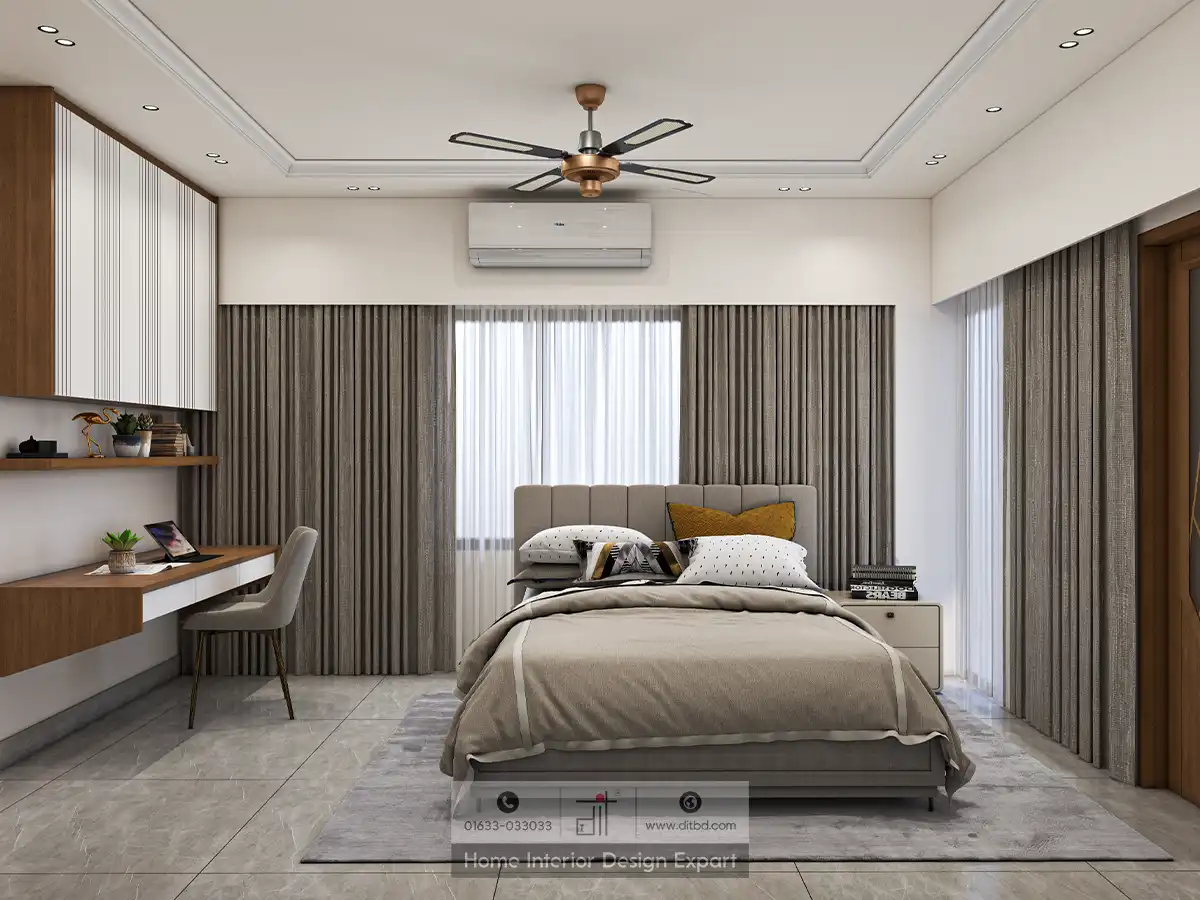
Bedroom interior design in Dhaka demands a level of considered thinking that goes beyond surface-level aesthetics. The city’s climate, its compact apartment footprints, and the social rhythms of Bangladeshi family life each impose real constraints that a beautifully curated room must answer. When every design decision carries practical weight, the difference between a bedroom that merely looks good and one that genuinely restores you becomes the work of meticulous planning.
Why Dhaka Bedrooms Require a Different Approach
Dhaka is not a forgiving city when it comes to interiors. Temperatures climb well above 35°C through April, May, and June. Humidity during the monsoon season drives moisture into wall finishes, textiles, and furniture joints. Fine dust from construction and traffic settles on every horizontal surface within days of a deep clean. These are not incidental inconveniences; they are defining conditions that shape every material choice, every furniture specification, and every spatial decision a designer must make.
Most Dhaka apartments, particularly in mid-rise buildings across Bashundhara, Mirpur, Mohammadpur, Uttara, and Dhanmondi, allocate between 130 and 220 square feet to a master bedroom. Secondary bedrooms can be considerably smaller, sometimes under 100 square feet in older buildings. Working within those dimensions while accommodating wardrobes, beds, study areas, and all the cultural expectations of a Bangladeshi household calls for the kind of disciplined spatial thinking that separates experienced designers from decorators.
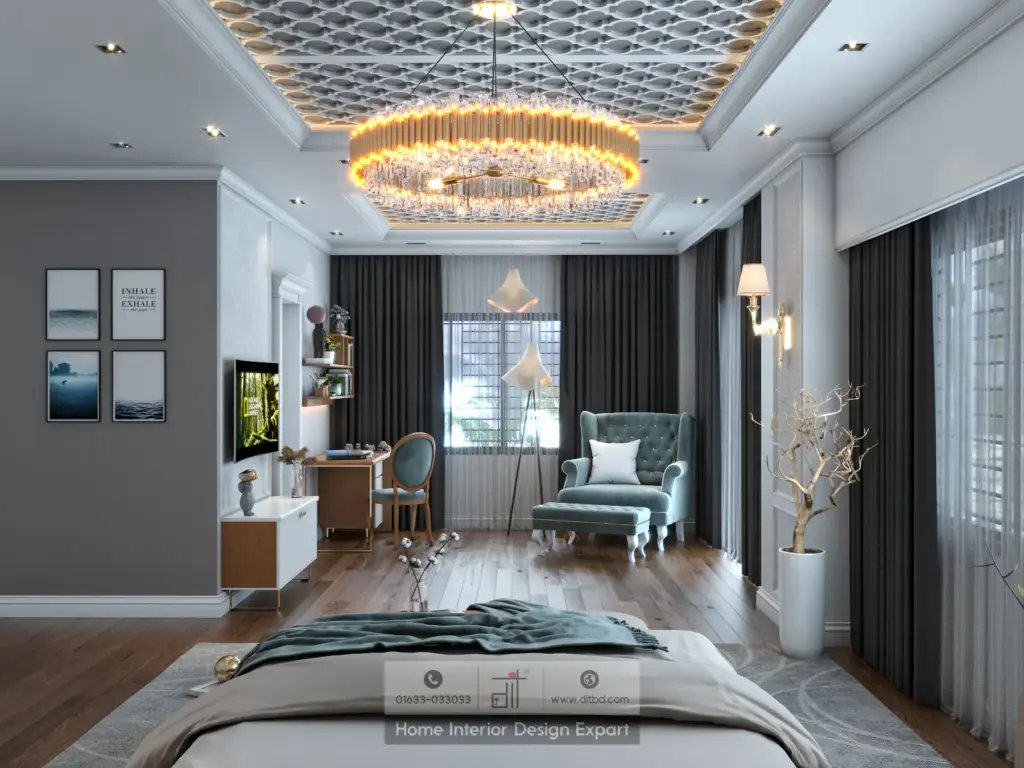
Managing Heat, Humidity, and Dust Through Smart Material Selection
The foundational layer of bedroom interior design in Dhaka is material selection, and it begins with understanding what the climate will do to any surface over a five-year span. Moisture-resistant engineered wood outperforms solid timber for wardrobe carcasses and panel walls because it does not warp or crack during the humidity swings between February and September. Marine-grade or moisture-treated MDF with PU-lacquer finishes holds its surface integrity far better than standard board in Dhaka’s damp conditions.
Fabrics deserve the same scrutiny. Heavy velvets and untreated natural linens trap dust and absorb moisture, creating conditions that accelerate deterioration and, in poorly ventilated rooms, mild mildew. Performance fabrics with tighter weaves, or treated cottons in lighter weights, maintain their appearance through washing cycles and resist the particular combination of heat and damp that defines Dhaka’s monsoon months. On the floor, large-format vitrified tiles are a practical choice for most rooms: cool underfoot through the summer, easy to clean, and wholly indifferent to humidity. Area rugs can introduce warmth and acoustic softness without the maintenance burden of wall-to-wall carpet, which in a Dhaka apartment becomes a dust repository within weeks.
AC Placement and Ventilation as Design Variables
Air conditioning is not an accessory in Dhaka; it is infrastructure. The placement of a split AC unit affects furniture layout, ceiling design, airflow patterns, and ultimately the quality of sleep every night. A unit positioned directly above the bed creates a cold draft that disrupts rest and can cause respiratory irritation over time. Ideally, the indoor unit should be placed on a wall adjacent to or opposite the bed, angled to circulate air across the room rather than downward onto sleeping occupants.
The condenser pipe and electrical chase are best concealed during the fit-out phase rather than surfaced and plastered over as afterthoughts. Planning for AC at the schematic stage means cable runs can be routed inside wall cavities or dropped ceiling coffers, keeping the room visually clean. Where false ceilings are used, the AC slot and return air space should be accounted for in the ceiling height calculation. Dhaka apartments with floor-to-ceiling heights of 9 feet or less lose meaningful volume to a full false ceiling, so the design should be precise rather than generous.
Natural cross-ventilation, where windows exist on more than one wall, should be preserved and designed around rather than blocked by large wardrobes or headboard panels. Even in air-conditioned rooms, the ability to open windows during October and November, when Dhaka’s weather is genuinely pleasant, is a quality-of-life detail worth protecting in the layout.
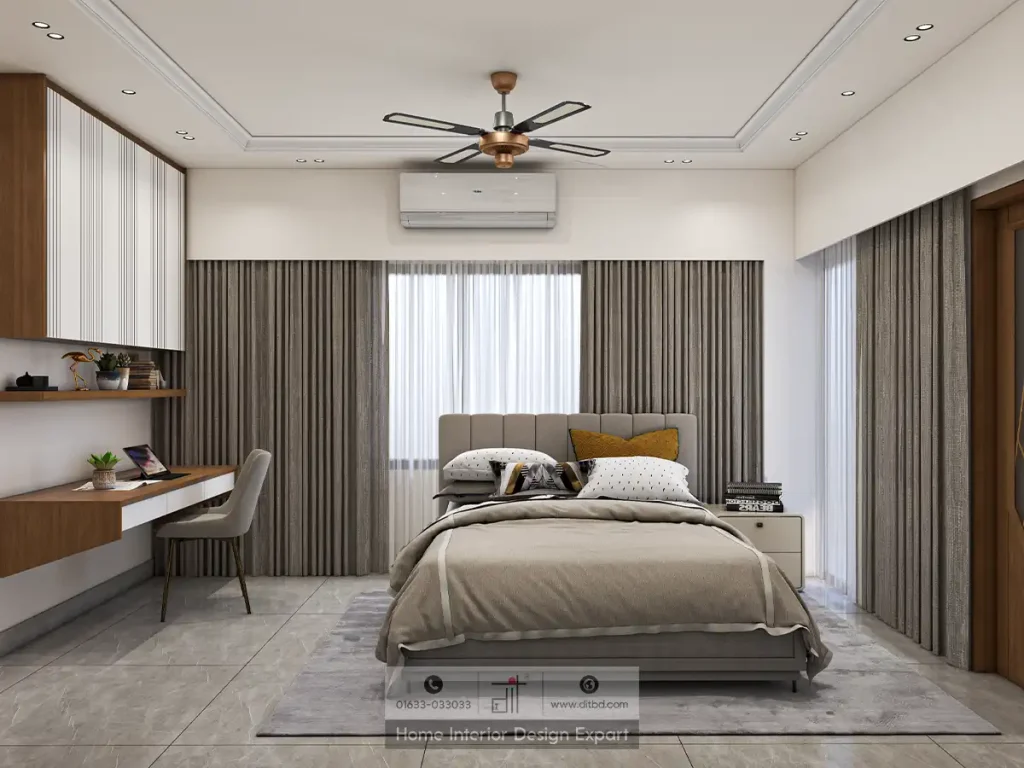
Wardrobe Planning and Storage in Compact Apartments
Storage is the defining challenge of bedroom interior design in Dhaka apartments. A family of four sharing a three-bedroom flat accumulates seasonal clothing, bedding, prayer items, luggage, and the domestic overflow that flows naturally from a household with strong guest-hosting traditions. Each bedroom must absorb its share of that load without sacrificing the sense of calm a sleeping space requires.
Floor-to-ceiling wardrobes are the most efficient answer to Dhaka’s storage problem. They maximise vertical space that would otherwise collect dust above standard-height cabinets, and a continuous run of wardrobe panels along one wall can create a sense of ordered simplicity rather than clutter. The interior configuration matters as much as the external volume: hanging sections should be sized to the actual garment types used, with full-length rails for shalwar kameez and sarees, shorter double-hang sections for shirts and trousers, and deep shelving for folded items, prayer accessories, and smaller goods.
Under-bed storage is the second major reservoir of space in a compact Dhaka bedroom. Hydraulic lift beds allow the entire mattress platform to rise, revealing a clean storage cavity below. This suits flat-packed seasonal items, extra bedding, and the occasional piece of luggage that has no other home. Drawer-base beds provide faster daily access for items used more frequently. In rooms where every square foot is accountable, integrating both a lift-storage bed and full-height wardrobes can effectively double the usable storage without visually overwhelming the space.
Bedroom Size, Furniture Configuration, and Layout Logic
The relationship between room dimensions and furniture scale is one of the most common points where Dhaka bedroom renovations go wrong. A king-size bed placed in a 140-square-foot room leaves so little circulation space that the room becomes difficult to move through and visually oppressive. Below is a reference guide that we at DIT Studio use as a starting framework before site measurements are confirmed.
| Room Size (sq ft) | Recommended Bed Size | Wardrobe Approach | Additional Furniture |
|---|---|---|---|
| Under 100 | Single or small double (4×6) | One 2-door wardrobe or sliding panel | Study chair or compact side tables only |
| 100-140 | Double (5×6.5) or queen | 3-door wardrobe or full-wall sliding | One bedside table each side, small dresser |
| 140-180 | Queen or king | Full-wall fitted wardrobe | Two bedside tables, dresser or vanity unit |
| 180-220 | King | Full-wall fitted wardrobe with walk-in zone | Dresser, seating bench, two bedside tables |
| 220+ | King with room to spare | Walk-in wardrobe or dressing room partition | Seating area, vanity, full dresser suite |
These are starting points, not prescriptions. Ceiling height, window placement, and door swing all influence the final configuration. A room that reads as 160 square feet on a plan but has windows on two walls and a door on the third may only support furniture on one full wall, which changes the calculation entirely.
Lighting for Rest and Function
Bedroom lighting in Dhaka apartments is frequently an afterthought, reduced to a single ceiling fixture that serves every purpose poorly. A considered lighting scheme separates task demands from rest-oriented illumination and gives occupants control over the room’s atmosphere at different times of day. In a city where load-shedding, though less frequent than a decade ago, still occasionally interrupts power, a layered lighting plan that includes rechargeable bedside lamps alongside the main circuit provides quiet resilience.
Warm white LEDs in the 2700K to 3000K colour temperature range support the body’s transition toward sleep by avoiding the alerting effect of cooler blue-spectrum light. Recessed ceiling lights on a dimmer circuit can shift the room from task-functional brightness in the evening to a softer ambient level before sleep. Reading lights should be directional and positioned to illuminate the page without spilling onto a sleeping partner. Wardrobe interiors benefit from LED strip lighting on a sensor or switch, making early-morning dressing practical without flooding the room with light.
Natural light in many Dhaka apartments is compromised by the proximity of neighbouring buildings and the orientation of the plot. Where direct sunlight is limited, lighter wall tones, reflective surfaces on wardrobe fronts, and strategically placed mirrors can distribute available daylight further into the room. The goal is a space that feels open during the day and genuinely restful at night – two qualities that require different but compatible design moves.
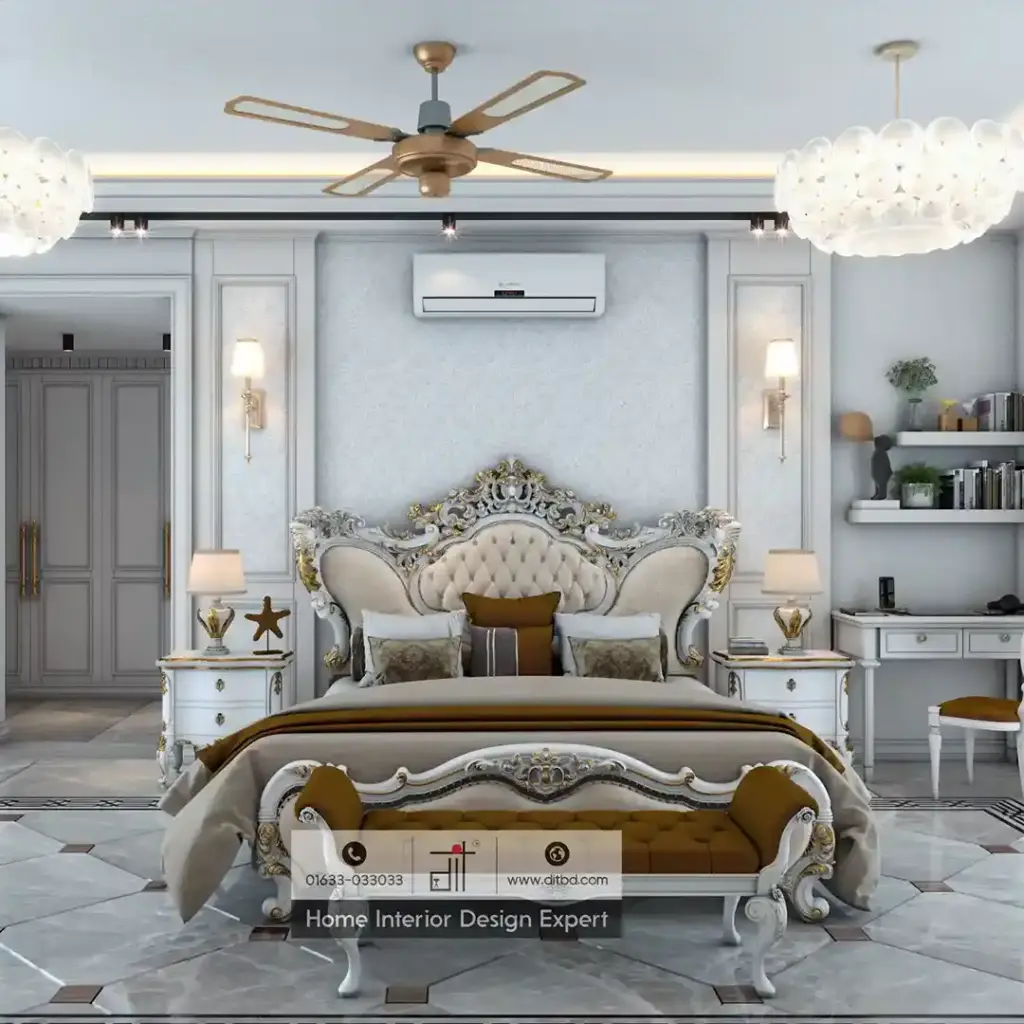
Master Bedroom, Children’s Rooms, and Grandparents’ Suites
Multigenerational households remain the norm across much of Dhaka, and the bedroom interior design of each room in such a home carries distinct requirements that a unified approach cannot satisfy. The master bedroom belongs to the primary couple and typically serves as the one space in the home where privacy and calm are non-negotiable. Its design should prioritise acoustic separation from the living areas, a generous and well-organised wardrobe, and lighting that supports winding down after the dense social activity that Bangladeshi households sustain.
Children’s bedrooms need to earn their keep across many years. A room designed for a six-year-old should accommodate the same child through adolescence without a full renovation. Bunk bed configurations with integrated study surfaces are practical in smaller rooms, and modular shelving that can be reconfigured as the child’s needs evolve offers long-term flexibility. Finishes should be robust: semi-gloss paints that can be wiped down, laminated surfaces rather than painted MDF near desk areas, and flooring that tolerates heavy use.
The grandparents’ room in a multigenerational Bangladeshi home requires specific ergonomic attention that is often overlooked in the design brief. Bed height matters considerably for older adults: a sleeping surface between 20 and 23 inches from the floor is generally the safest range for ease of getting in and out without strain. Grab points near the bed, unobstructed floor paths to the bathroom, rocker switches rather than toggle switches at accessible heights, and a wardrobe with pull-down rails for those with limited reach are details that make the difference between a room that works and one that creates daily friction.
How DIT Studio Approaches Bedroom Design in Dhaka
Over 15+ years and 500+ residential and commercial projects across Dhaka, we have developed a process that begins not with finishes but with questions. How many people will use this room? What are the sleep schedules? Is there a need for a dedicated prayer corner? Does a grandparent or young child share the space? What is the existing AC specification and can it be relocated? These questions shape the brief before a single material is specified.
The outcome of that process is a bedroom that harmonises practical function with the particular character of the household. We curate material palettes that perform well in Dhaka’s climate, craft storage solutions that account for how Bangladeshi families actually live, and elevate spatial decisions to deliver rooms that genuinely restore the people who sleep in them. For homeowners considering a bedroom renovation or new apartment fit-out, exploring the full range of DIT Studio services provides a clear picture of what a considered, bespoke process looks like.
Find DIT Studio in Dhaka
DIT Studio works with homeowners across Dhaka – from Gulshan and Banani to Mohammadpur, Bashundhara, and Uttara – and welcomes consultations for bedroom projects of any scale, whether a single room refresh or a complete apartment fit-out. Homeowners can reach the studio directly to discuss their brief, review the portfolio, and schedule an initial site assessment with the design team.