
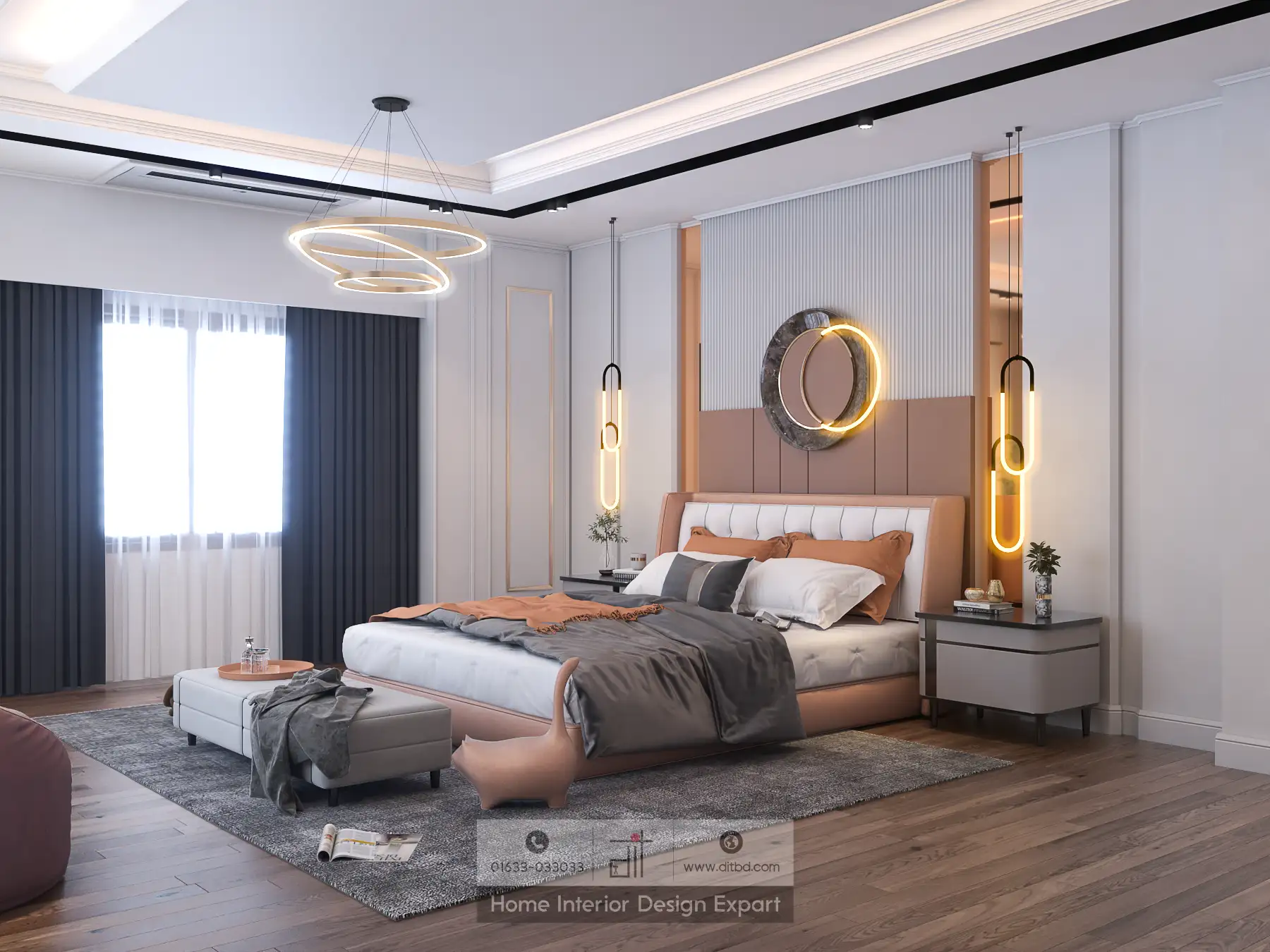
An interior design portfolio should help you answer one question: can this company design and execute a home like mine? Beautiful photos matter, but they are only the beginning. A smart portfolio review looks at real project relevance, space planning, storage, finishing quality, material choices, lighting, consistency, and whether the company can explain the decisions behind the design.
Before hiring an interior design company in Bangladesh, review its portfolio for similar project type, real completed work, room functionality, technical detail, craftsmanship, and lifestyle fit. A trusted company should show projects that feel beautiful and livable, not just staged for photos.
DIT Studio’s project archive is a major trust asset because it shows a wide range of home interiors: bedrooms, master bedrooms, living rooms, kitchens, dining spaces, closets, kids rooms, guest rooms, common spaces, and full apartment interiors across Dhaka and nearby areas. Use that proof to judge whether DIT is the right fit for your home.
Do Not Judge Only by the First Photo
The best photo in a portfolio is often designed to impress. It may show a perfectly lit living room, a luxury bedroom, or a dramatic kitchen angle. That first impression is useful, but it does not reveal enough.
Look deeper. Check the full room, not only one corner. Ask whether the project is a completed installation or only a 3D render. Check if the design solves a problem. Notice whether storage is hidden intelligently, whether movement through the room feels comfortable, and whether the lighting supports real daily use.
A portfolio should show both taste and thinking. The question is not “Do I like this image?” The better question is “Would this room work well for the people who live there?”
Match the Portfolio to Your Project Type
If you own a compact apartment, a villa portfolio may not prove enough. If you need a modular kitchen, a bedroom gallery alone is not enough. If you want a luxury apartment, check whether the company has experience with premium materials, layered lighting, custom furniture, and cohesive room-to-room design.
For a home interior project in Bangladesh, compare projects by:
- Apartment size.
- Room type.
- Family lifestyle.
- Storage needs.
- Style preference.
- Budget level.
- Location and building type.
- Execution complexity.
DIT Studio’s portfolio helps because the work is organized across many project categories. A homeowner can review bedroom projects, kitchen projects, closets, living rooms, dining spaces, and area-specific projects before booking a consultation.
Look for Real Completed Work
3D renderings are important, but completed photos prove execution. The ideal portfolio includes both: visual concepts that show design direction and finished project photos that show delivery.
If a company only shows renders, ask whether those designs were actually built. If a company only shows close-up decor shots, ask for wider views and before-after context. If every image looks like a stock photo, be cautious.
Real work usually has small signs of life and site context: window placement, ceiling height, existing walls, apartment proportions, and furniture that fits the exact room. A trusted interior design company should be comfortable explaining where the project was, what the client needed, and what design decisions were made.
Check Space Planning First
Space planning is the foundation of interior design. A room can have expensive materials and still feel uncomfortable if the layout is wrong.
When reviewing a portfolio, ask:
- Is there enough walking space?
- Is furniture proportionate to the room?
- Is the TV distance comfortable?
- Can wardrobes and drawers open properly?
- Is the dining space easy to use?
- Does the kitchen layout support cooking flow?
- Are beds placed logically with side tables and switches?
- Does the room feel balanced, not overcrowded?
Good design is not decoration added on top of a poor layout. It starts with how people move, sit, cook, dress, study, sleep, and gather.
Review Storage Like a Homeowner
Storage is one of the biggest interior design needs in Bangladeshi homes. Families need wardrobes, kitchen cabinets, shoe storage, linen storage, study storage, display areas, and hidden space for daily clutter.
A portfolio that only shows open shelves and empty surfaces may look stylish but fail in real life. Look for storage that feels integrated with the design. The best storage is useful without making the home feel heavy.
DIT’s custom furniture and factory-supported production are useful trust signals here. Bespoke wardrobes, kitchen cabinets, TV units, beds, and storage systems can be designed to fit the exact apartment rather than forcing standard furniture into awkward spaces.
Study Lighting and Ceiling Design
Lighting can make or break a premium interior. A portfolio should show more than one bright ceiling light. Look for layered lighting: ambient light for general brightness, task light for cooking or study, accent light for mood, and decorative light for atmosphere.
Ceiling design should support the room, not dominate it. False ceilings, cove lighting, spotlights, pendant lights, and wall lights should be placed with purpose. Too much lighting can feel busy. Too little can make a luxury room feel flat.
When reviewing DIT or any interior design company, ask whether the lighting shown in the portfolio is practical for everyday use and whether switch placement is considered.
Notice Material Choices
A portfolio should show that the company understands materials, not only colors. In Bangladesh, material selection must account for humidity, dust, heat, family use, cleaning habits, and budget.
Look for signs of thoughtful material use:
- Durable cabinet finishes in kitchens.
- Hardware that looks sturdy and well-aligned.
- Wardrobe surfaces that are easy to maintain.
- Wall panels used with restraint.
- Countertops chosen for function and style.
- Fabrics suitable for daily use.
- Flooring and rugs that match the family’s lifestyle.
If a room looks beautiful but appears impossible to maintain, ask questions. Luxury should feel livable.
Look for Consistency Across Rooms
A strong interior design portfolio should feel consistent without becoming repetitive. A home needs flow. The living room, dining room, bedroom, kitchen, and common areas should feel related, even if each space has its own mood.
Watch for:
- Consistent material language.
- Similar metal finishes where appropriate.
- Coordinated lighting warmth.
- Balanced color palette.
- Furniture proportions that match room sizes.
- Details that repeat subtly across the home.
DIT’s brand language uses the idea of harmony and curation. That is exactly what you should look for in portfolio work: every material, furniture piece, lighting choice, and decorative detail should feel intentional.
Ask for the Story Behind the Project
A serious interior design company should be able to explain the design, not only display it.
Ask:
- What was the client’s original problem?
- What was the budget range?
- What changed from the first concept to final design?
- What material decisions were important?
- What execution challenges came up?
- How long did the project take?
- What makes this project relevant to my home?
The answers show whether the company truly worked on the project or only has attractive images.
Check Portfolio Freshness
Interior trends, materials, hardware, and client expectations change. A portfolio should include recent work. If all projects are old, ask whether the company still has the same team, suppliers, and execution capacity.
DIT’s current project archive gives the brand an advantage because it supports buyer trust with real proof. These project pages also show that DIT is not only writing about interior design, but actually doing the work.
Red Flags in a Portfolio
Be careful if you see:
- Only stock-looking images.
- No completed project photos.
- No similar room or apartment examples.
- No explanation of scope.
- Overuse of one style for every client.
- Beautiful images but poor proportions.
- No detail shots of finishing.
- No client reviews or project context.
- No connection between portfolio and service offering.
A portfolio should make you more confident, not more confused.
Final Portfolio Review Scorecard
Give each company a simple score from 1 to 5:
| Category | What to Check |
|---|---|
| Similarity | Projects similar to your home |
| Function | Layout, storage, movement, comfort |
| Finish | Furniture, edges, alignment, materials |
| Lighting | Practical and mood lighting layers |
| Trust | Real projects, explanations, reviews |
| Process | Clear design and execution method |
The company with the best score is not always the flashiest. It is the one most likely to deliver the home you actually want.
Why DIT Studio’s Portfolio Matters
DIT Studio uses its project work as proof. The portfolio shows real residential interiors and supports the brand’s promise: transform the client’s vision into a beautiful and functional space through a collaborative, transparent, detail-oriented process.
If you are comparing interior design projects in Bangladesh, use DIT’s portfolio as a practical filter. Look for your room type, your preferred style, and your level of execution detail. Then book a consultation with specific references so the design team can understand what you like.
FAQ
Should I trust 3D renderings in a portfolio?
3D renderings are useful, but ask whether the project was completed. The strongest proof is a combination of approved renderings, technical planning, and finished project photos.
What is the biggest portfolio red flag?
The biggest red flag is a portfolio that looks beautiful but has no real project context, no similar work, and no explanation of how the company executed the design.
How many portfolio projects should I review?
Review at least five relevant projects before deciding. Focus on similar room types, apartment sizes, storage needs, and finishing quality.