

For most Dhaka flats, the best flooring is porcelain tile in the living areas, kitchen and bathrooms, with vinyl (SPC) or properly installed engineered wood kept for bedrooms if you want a warmer look. Porcelain handles daily wet mopping and monsoon humidity better than anything else on the list. Marble is beautiful but needs ongoing care. Laminate and solid wood are the riskiest choices in a city where the air stays damp for months.
Key Takeaways
- Under the TCNA/ASTM definition, porcelain has a water absorption of 0.5% or less, which is why it copes with wet mopping and humidity better than standard ceramic.
- Marble stains and etches; it suits a feature area more than a whole flat that is mopped daily.
- Real wood and wood-based floors (engineered wood, laminate) work in dry, closed bedrooms, but only if the slab is dry and the product is made for moisture.
- SPC vinyl can often go over sound existing tiles, which saves demolition, but the old floor needs preparation first.
- Choose by room, not by flat. Different floors in different rooms are normal and sensible.
This guide covers indoor floors. If you’re deciding what to lay on a rooftop or terrace, read our separate guide to outdoor flooring for rooftops and terraces in Bangladesh. The rules there (UV, rain, drainage) are different from what an indoor floor has to survive. The wood-look photo at the top of this page shows a look, not a recommendation; read the humidity and wood sections before choosing it.
What Your Floor Has to Survive in a Dhaka Flat
Four conditions shape the choice more than any showroom sample does.
Humidity. Dhaka’s air is damp for much of the year. Banglapedia reports that relative humidity is over 80% everywhere in Bangladesh from June through September, and the Financial Express reported a humidity reading of 91% in Dhaka in August 2020, and a Met Office official said humidity normally peaks in August. Mineral floors don’t care. Wood and wood-based boards do.
Mopping. Many households wet-mop daily, and some flush water across the floor. A floor that can’t tolerate standing water at the edges and joints is a poor fit for that habit, however good it looks.
Heat underfoot. Dense stone and tile feel cool, which most people welcome through the hot months. Wood and vinyl feel warmer. Neither is wrong; it depends on whether your family walks barefoot indoors.
Slip risk. Wet feet, soapy water, children and older relatives make a glossy floor a real hazard. Slip resistance is a purchase criterion, not a footnote. Our guide to accessible interior design for Bangladeshi homes covers this in more depth.
Ceramic vs Porcelain Tile
Both are fired clay tiles, and both are everywhere in Dhaka. The difference that matters is how much water the tile body absorbs.
The Tile Council of North America (TCNA) states that standards define porcelain tile as an impervious tile with a water absorption of 0.5% or less, measured by the ASTM C373 test. Tiles above that line are classed as non-porcelain. That is a North American standard; ISO-based datasheets use their own test method, so ask the dealer which standard a quoted figure comes from and request the technical sheet rather than relying on the label “porcelain” or “vitrified”.
In Bangladeshi showrooms you will meet several terms:
- Ceramic (glazed): Softer body, printed and glazed surface. The most affordable option. Standard glazed ceramic suits walls and dry rooms; for wet floors, choose only a floor-rated, textured ceramic with a stated slip rating.
- Porcelain / vitrified: Denser body, lower water absorption, better wear. Showrooms in Dhaka sell it under several names, so check the sheet rather than the label.
- Full-body (through-body) porcelain: The pattern runs through the thickness, so chips are less obvious. Higher cost.
- GVT / PGVT: Glazed or polished-glazed vitrified tiles, which give stone and marble looks at a lower price than real stone.
Choosing well: Check the tile’s slip rating and finish. Polished porcelain looks sharp but is slippery when wet; matte or lightly textured finishes are safer for entrances, kitchens and bathrooms. For rectified large-format tiles, ask the installer about grout joint width and subfloor flatness, because large tiles show every dip.
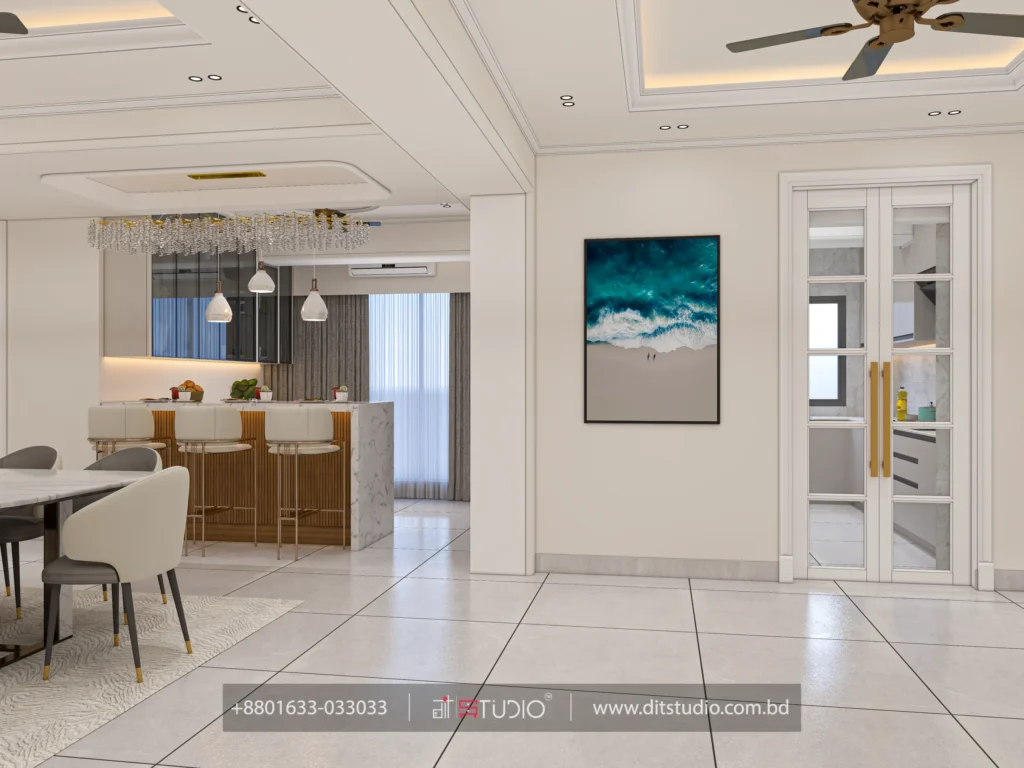
Marble and Granite
Real stone gives a floor depth that printed tiles imitate but don’t match. It also asks more of you.
Marble is a calcium carbonate stone, so acids in household products (vinegar-based cleaners, citrus, some bathroom cleaners) can dull the surface. Sealing reduces staining but doesn’t stop etching. Polished marble is also slippery when wet; the UK Health and Safety Executive notes that getting enough roughness for wet slip resistance on smooth stone usually means destroying the gloss, and warns that the etchants used often contain hazardous hydrofluoric acid. In practice that means choosing a honed or textured finish from the start rather than treating a polished floor later.
Granite is harder and less porous than marble, so it tolerates spills better, though it is still hard underfoot and heavy slabs add load. Both stones suit foyers, feature walls, stair treads and a formal living area. For a whole flat that gets wet-mopped daily, porcelain with a stone look is usually the saner choice.
Engineered Wood, Laminate and Solid Wood
Wood moves with moisture. Boards swell and shrink as the surrounding humidity rises and falls, and Dhaka’s monsoon-to-winter swing is a big one.
For wood floors laid over a concrete slab, installers’ trade guidance points to the same conditions: Hardwood Floors magazine, citing National Wood Flooring Association guidelines, says indoor relative humidity should be held between 30% and 50% before, during and after installation, and that concrete should be moisture-tested and a vapour retarder placed under the wood subfloor. A Dhaka flat in August will not sit at 30-50% without air conditioning running. That doesn’t rule wood out, but it does mean:
- Use engineered wood with a plywood core from a reputable maker, not solid planks, and follow the maker’s installation sheet exactly.
- Avoid laminate with an HDF core in any room that might get wet. Edge swelling after a spill or a leaking AC drain is the common failure.
- Keep wood out of kitchens, bathrooms, balconies and entrances.
- Do not wet-mop. Check the maker’s care sheet: wood-based floors are normally cleaned with a barely damp mop, which clashes with daily mopping habits. Be honest with yourself about whether the household will change.
Wood is best in a master bedroom with an AC that actually runs, where the look and warmth justify the extra care.
SPC and LVT Vinyl
Vinyl has become the practical middle option. Two types matter:
- LVT (luxury vinyl tile/plank): Flexible, glue-down or click, thinner. Good under controlled conditions.
- SPC (stone plastic composite): A rigid core made with limestone powder and PVC, which resists dents and spreads out minor subfloor flaws better than flexible vinyl. Because the core contains no wood fibre, it is generally marketed as more water-tolerant than wood-based cores. Treat that as something to confirm on the product’s own datasheet, including its water-exposure limits and warranty terms for wet areas.
Vinyl is warmer and quieter underfoot than tile, and lighter than stone. Its weak points are sharp furniture feet, direct sun fading, and cheap products with thin wear layers. Standing water that gets under the planks from a bathroom door can still cause problems, so seal the perimeter and avoid vinyl inside wet bathrooms.
Laying Over Existing Tiles
Many flat owners ask whether they can avoid breaking the old tiles. Often yes, with conditions. The steps below follow installer advice such as This Old House’s guide to installing vinyl over ceramic tile:
- Tap every tile and mark any that sound hollow or rattle. Loose tiles must be re-fixed or replaced first.
- Deep or wide grout lines can show through the new floor, so fill them flush with a levelling compound.
- Degrease and clean thoroughly so adhesive or underlay bonds properly, and level any uneven spots, since planks can lift or shift over them.
- Thicker vinyl hides minor flaws better; that guide notes at least 5 mm helps mask small imperfections.
Older Dhaka flats often have mosaic or terrazzo floors. These are usually hard and durable, so they can sometimes be overlaid once cleaned, levelled and checked for hollow patches. If the surface is cracked, uneven or loose, replacing it is the safer route. Have an installer inspect it before choosing.
Overlaying raises the floor height, so check door clearances, the wardrobe and kitchen cabinet plinth heights, and the threshold into the bathroom. Don’t overlay a floor that has moisture or tenting problems; remove it and find the cause. If you’re renovating before furnishing, our guide to what to do before the interior design begins and the interior materials guide cover sequencing.
Slip Resistance: What the Numbers Mean
The ANSI A326.3 standard, according to TCNA, describes the test method for measuring dynamic coefficient of friction (DCOF) for hard surface flooring and includes product use classifications. Few Dhaka showrooms quote it, but it’s reasonable to ask whether a tile has a DCOF test report, particularly for entrances, kitchens and bathrooms. Anything glossy deserves caution. A lab figure isn’t a guarantee either, since soapy water, oil and wet socks all change the result.
Side-by-Side Comparison
| Floor | Humidity and monsoon | Wet mopping | Feel underfoot | Slip risk when wet | Relative cost |
|---|---|---|---|---|---|
| Ceramic (glazed) | Good | Good | Cool | Moderate; varies with finish | Low |
| Porcelain / GVT | Very good | Very good | Cool | Moderate; choose matte | Mid |
| Full-body porcelain | Very good | Very good | Cool | Moderate; choose matte | Mid to high |
| Marble | Good, but stains | Poor to fair; avoid acids | Very cool | High if polished | High |
| Granite | Very good | Good | Very cool | Moderate; high if polished | Mid to high |
| Engineered wood | Fair; needs dry slab and AC | Poor; damp mop only | Warm | Low | High |
| Laminate (HDF) | Poor to fair | Poor | Warm | Low | Low to mid |
| SPC vinyl | Good | Fair to good; avoid pooled water | Warm, soft | Low to moderate | Low to mid |
Ratings are a general guide based on the standards and guidance cited above plus common installation practice, not lab results for specific products. Costs here are relative only. Real prices vary by brand, size, thickness, origin and installer, so get a written quote with the product code and area per box.
Room-by-Room Recommendations
| Room | Best choice | Alternative | Avoid |
|---|---|---|---|
| Living and dining | Large-format porcelain / GVT | Honed granite, SPC | Polished marble in daily-mop homes |
| Kitchen | Matte porcelain | Floor-rated textured ceramic with a stated slip rating | Wood, laminate, vinyl near sink |
| Bedrooms | Engineered wood or SPC | Porcelain wood-look tile | HDF laminate with weak AC |
| Bathrooms | Matte or textured porcelain | Floor-rated textured ceramic with a stated slip rating | Wood, polished tile, marble |
| Foyer / entrance | Textured porcelain, honed granite | Stone border with tile | Polished tiles |
| Balcony | See our outdoor flooring guide | Textured, outdoor-rated tile | Indoor-rated wood or vinyl |
Mixing floors across rooms is fine. Keep the transitions flush, use a threshold strip where levels differ, and keep the colour tone related so the flat reads as one home. Wet rooms also need proper waterproofing beneath the tile, regardless of which tile you choose; see bathroom waterproofing in Dhaka.
Before You Buy
- Ask for the technical sheet and the batch. Check the water absorption, slip rating and thickness.
- Allow a small wastage allowance for cuts (ask your installer how much), and keep a few spare boxes from the same batch.
- Have the floor level checked before laying; large tiles and rigid vinyl both expose bumps.
- Decide how the household cleans. If a daily flush-mop is non-negotiable, that decides it for you.
- Plan care from day one: our notes on caring for an interior-designed home include floor care habits. Floors also affect heat; stone and tile stay cooler, which is worth weighing alongside natural cooling tips for Bangladeshi homes.
Frequently Asked Questions
What Is the Best Flooring for a Dhaka Flat?
Porcelain tile (matte or lightly textured) for most rooms. It tolerates humidity and wet mopping, and it can mimic stone or wood. Add engineered wood or SPC in bedrooms if you prefer a warmer floor.
Is Porcelain Better Than Ceramic Tile?
For floors, usually yes. Porcelain has a water absorption of 0.5% or less under the standard definition, so it is denser and less porous than most ceramic. Standard ceramic is still adequate for walls and low-traffic dry rooms; floor-rated textured ceramic can work in wet areas if its slip rating suits the room.
Can I Install Wooden Flooring in Bangladesh?
Yes, in controlled rooms, but you should use engineered wood designed for humid climates, test the slab for moisture and keep it out of wet areas. Solid wood and HDF laminate carry the highest risk in monsoon humidity.
Can I Put Vinyl Flooring Over Existing Tiles?
Often, if the tiles are firmly bonded, the surface is flat and grout lines are filled. Check the vinyl manufacturer’s instructions for the product, and allow for the extra height at doors and cabinets.
Is Marble Flooring Practical in Bangladesh?
It’s practical for foyers, feature areas and formal rooms. For all-flat use it demands sealing, acid-free cleaners and a honed finish to cut slip risk. Many homeowners get the look with GVT porcelain instead.
If you’re planning a handover-stage floor or a full flat refit, a home interior design service can help match floor choices to each room and your household’s routines.
About This Guide
Written and reviewed by the DIT Studio design team in Dhaka, an interior design and custom furniture studio that plans and builds residential interiors for flats and duplexes across the city. This guide was researched from the sources listed below; figures were checked against each source on the date of writing, and the guide is reviewed when those sources change. Read more about the studio, see why clients choose us, browse the interior design FAQs or contact the team.