

For most Dhaka flats, the best answer is a mix: layered curtains (a sheer plus a heavier drape) in the living room, blackout roller blinds or blackout-lined curtains in bedrooms, and easy-wipe blinds in the kitchen and bathroom. Curtains soften a room and block light well when lined. Blinds are slimmer, easier to wipe, and give you finer control over glare. Neither one fixes heat on its own, because an interior covering stops sunlight only after it has already come through the glass.
Key Takeaways
- Living room: sheer plus drape on a rod or track. Bedroom: blackout lining or blackout roller blind. Kitchen and bathroom: wipeable blinds, not fabric.
- Interior coverings reduce heat gain but are less effective than exterior shading, so close them during the hottest hours and pick a pale lining on any window that gets strong afternoon sun.
- Fabric in humid, dusty Dhaka needs a washing routine. If you cannot commit to one, blinds are the lower-maintenance choice.
- With children at home, choose cordless products. Shortening or tying up cords is a fallback, not a fix.
- If you have a false ceiling, decide on a track or recessed pocket before the ceiling work is finished.
Curtains vs Blinds at a Glance
Before the detail, here is how the main options compare for a typical flat. Costs are relative, because prices vary widely by fabric, size and workmanship and we haven’t found a reliable published price list for Dhaka.
| Option | Light control | Privacy | Dust and cleaning | Relative cost | Best for |
|---|---|---|---|---|---|
| Sheer curtain | Soft diffusion only | Day only | Holds dust; machine-washable | Low | Living room, as the day layer |
| Blackout or lined curtain | Strong | Good | Heavy to wash; needs regular vacuuming | Mid | Bedrooms |
| Roller blind (blackout) | Strong | Good | Wipe or vacuum | Low to mid | Bedrooms, study |
| Roller blind (sunscreen/light-filtering) | Cuts glare, keeps view | Day only | Wipe | Mid | Living room, balcony doors |
| Zebra (day-night) blind | Adjustable, glare control | Adjustable | Wipe; mind dust in the folds | Mid | Living and dining rooms |
| Venetian (slat) blind | Very adjustable | Good when closed | Slats collect dust; wipe each one | Mid | Kitchen, study (aluminium or PVC) |
| Vertical blind | Adjustable | Good | Wipe | Low to mid | Wide sliding doors |
| Roman blind | Moderate to strong with lining | Good | Fabric; vacuum, dry-clean | Mid to high | Dining room, formal living |
Sun and Heat: What Any Covering Can and Can’t Do
Window coverings reduce heat, but how much depends on where they sit. The Pacific Northwest National Laboratory (a US Department of Energy lab) explains that exterior attachments block sunlight before it passes through the window, while interior ones can be less effective at reducing heat gain than comparable exterior shading. Its summer advice for shades, blinds and draperies is simple: close them during the day and open them at night.
That matters if your flat has west-facing windows or balcony doors, which take the harsh afternoon sun. A few practical points follow from this:
- Light colours on the window side are the usual rule of thumb, since pale linings reflect more than dark ones. This is general practice rather than a figure we can cite for Dhaka.
- Close coverings before the sun hits, not after the room is already hot. Pair this with the ideas in our guide to natural home cooling in Bangladesh.
- Mount close to the glass and make sure the covering is wide and tall enough to overlap the opening. Gaps at the sides let hot air and light spill around the edges.
- Don’t expect miracles. The PNNL guide reports US field-study savings for high-efficiency shades (15% to 25% whole-home summer cooling savings), but those were optimised products in American homes. Treat them as proof that shading helps, not as a number your own electricity bill will match.
Between curtain and blind types, the difference is smaller than the difference between open and closed. A closed blackout curtain and a closed blackout roller blind both do a reasonable job. Thin sheers mostly cut glare rather than heat.
Privacy in Tightly Packed Buildings
In a Dhaka flat where the neighbouring building is a few metres away, privacy often matters more than heat. The usual solution is two layers.
A sheer gives daytime privacy: people outside can’t see in clearly, but you still get daylight. At night, with the lights on, a sheer works the other way round, so you need a second layer. That’s either a drape or a blind.
Blinds handle awkward sightlines well. Venetian and zebra blinds can be tilted so you see the sky but not the opposite balcony. Sunscreen roller fabrics let you see out while making it harder for others to see in during the day, though they offer little privacy after dark.
For bathroom windows and ventilators, skip fabric. Frosted film or a wipeable blind is a better match.
Splash and damp control is a waterproofing job, not a blind’s job; see our guide to bathroom waterproofing.
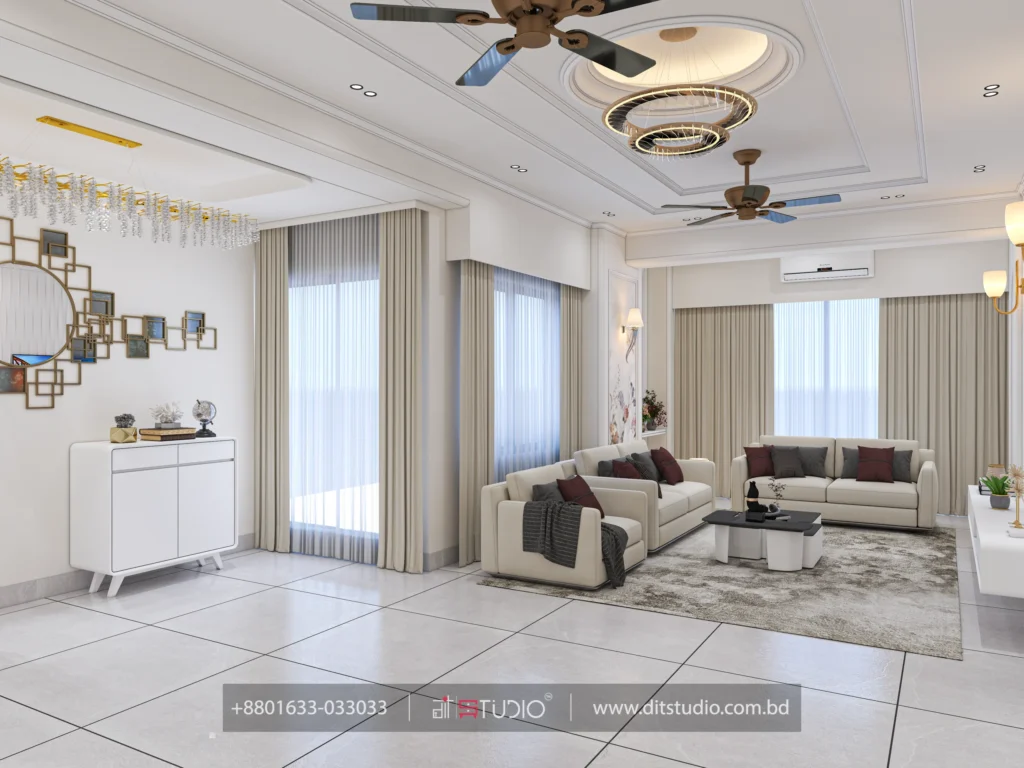
Dust, Humidity and Cleaning
Dhaka’s dust and monsoon humidity are the real test for fabric. Curtains collect dust in their folds, and damp cloth that doesn’t dry can grow mould. The World Health Organization’s guidelines on indoor dampness and mould note that the most important effects are increased prevalences of respiratory symptoms, allergies and asthma, and name preventing persistent dampness as the main safeguard. For curtains, that translates to a few habits:
- Keep curtains away from damp walls, window leaks and AC drip points.
- Let air move: open windows on dry days so the fabric dries fully.
- Vacuum with a brush attachment on a regular schedule, and wash or dry-clean sheers more often than heavy drapes.
- Choose fabrics that you can actually wash. Polyester blends and cotton blends survive repeated washing better than delicate silks or heavily lined drapes, which can shrink or warp.
Blinds shift the effort to wiping. Aluminium and PVC venetian blinds and coated roller fabrics can be wiped clean. Slats and zebra folds need attention because dust settles in them. In a dusty city, a blind you can wipe in five minutes is more likely to get cleaned than a curtain you have to take down.
Child Safety: Cords Are the Real Hazard
Cords, not fabric, are the real danger: any blind or curtain with a dangling or looped cord can strangle a young child. The US Consumer Product Safety Commission (CPSC) reported 46 deaths related to window covering cord strangulation of infants and young children between 2014 and 2019, and urges families to buy products described as cordless. In a later release, CPSC estimated that about nine children under 5 die every year from strangulation in window coverings with cords. These are US figures, but the mechanism is the same anywhere.
If you have a baby, toddler, or regular young visitors:
- Choose cordless operation (push-and-pull, spring-loaded, or motorised).
- If you keep corded blinds, shorten pull cords so none dangle, and anchor continuous-loop cords to the floor or wall.
- Check that cord stops on inner lift cords are installed and adjusted.
- Move cribs, beds and furniture away from windows and cords, ideally to a different wall.
Plain curtains on a rod have no operating cords, but check any tie-backs or wand cords. Our family-first interior design guide covers other child-safe choices.
Rod vs Track, and False Ceilings
A rod is visible and decorative, and it suits a single heavy drape or a wall with space above the window. A track is clean and quiet, handles sheers and drapes in two lanes, and works well for wide balcony doors and corner windows where rods would be awkward.
If your flat has a false ceiling, plan this early:
- Ceiling-mounted track gives the cleanest line, but needs solid fixing. As general installation practice, gypsum board alone is not relied on to carry the weight of lined curtains, so the fixing is taken through to a structural or timber support. Read our note on the truth about gypsum board before choosing where to fix.
- Recessed curtain pocket (a gap or box in the false ceiling) hides the track completely, and it must be built before the ceiling is closed. See our false ceiling design guide for how this fits with lighting coves.
- Roller and zebra blinds can sit inside the window recess or on the wall above it, so they need less ceiling planning.
Whatever you choose, leave room above the window so curtains can clear the glass and the frame. Floor-length curtains should stop just above the floor, which is a practical choice if floors are wet-mopped.
Room-by-Room Recommendations
| Room | Recommended covering | Why |
|---|---|---|
| Living room | Sheer + drape on a track, or sheer + zebra blind | Daytime privacy with light, evening privacy and a softer look |
| Bedroom | Blackout-lined curtain or blackout roller blind | Strong light control for sleep, shift workers, afternoon naps |
| Dining room | Roman blind or light roller | Neat, no floor-length fabric near food |
| Kitchen | Aluminium or PVC venetian, or wipeable roller | Withstands grease and steam; wipe-clean |
| Bathroom | Frosted film or PVC blind | No fabric to hold moisture |
| Study/kids’ room | Cordless roller blind | Glare control, no cords |
| Balcony door | Vertical blind, track curtain, or roller | Wide openings need smooth operation |
Living room. Sheers and a drape give you flexibility across the day. For design context, see our guide to living room interior design in Bangladesh.
Bedroom. Sleep is the point, so go for full light blocking, with overlap at the edges. Colour and lighting choices affect how the room feels once the covering is closed; see how lighting transforms your bedroom and our wider bedroom interior design in Dhaka page.
Kitchen and bathroom. Steam, oil and splashes ruin fabric. Choose materials you can wipe. If the kitchen is open to the living area, think about odour as well; our post on cooking odour in open kitchens explains why soft furnishings near the cooking zone are a poor idea.
So Which Should You Choose?
Choose curtains if you want a softer look, strong light blocking in bedrooms, and you’re willing to wash and vacuum them. Choose blinds if you want slim lines, quick wiping, precise light control, or a window in a wet or greasy zone. Choose both where privacy and comfort matter at once: a roller blind inside the frame with a sheer or drape over it.
Settle the window coverings at the same stage as lighting and ceilings, not after handover. If you’d like help planning them as part of a full room scheme, a living room design service can fold window treatments into the layout, lighting and ceiling plan.
Frequently Asked Questions
Are curtains or blinds better for Dhaka’s heat?
Neither wins outright. Closed, light-coloured coverings help in both cases, but interior coverings are less effective than exterior shading because sunlight has already passed through the glass. Blackout-lined curtains and blackout roller blinds perform similarly when closed and well fitted.
What is the best window covering for a bedroom?
The best choice is blackout-lined curtains or a blackout roller blind, mounted so they overlap the window edges. Choose cordless operation if children will be in the room.
Which blinds are easiest to keep clean in a dusty city?
Wipeable roller blinds and aluminium or PVC venetian blinds are the easiest to keep clean. Zebra blinds and slatted types need extra attention where dust collects in folds or on slats.
Are blind cords really dangerous?
Yes. The US CPSC links accessible cords on window coverings to child strangulation deaths and recommends cordless products wherever young children live or visit.
Can I hang heavy curtains from a false ceiling?
Yes, but only with proper fixing to a structural or timber support, or a recessed pocket planned before the ceiling is closed. Installers generally avoid relying on gypsum board alone.
About This Guide
Written and reviewed by the DIT Studio design team in Dhaka, an interior design and custom furniture studio that plans and builds residential interiors for flats and duplexes across the city. This guide was researched from the sources listed below; figures were checked against each source on the date of writing, and the guide is reviewed when those sources change. Read more about the studio, see why clients choose us, browse the interior design FAQs or contact the team.